Z.ai shipped GLM-5.3 on August 14, 2026, and the headline is how the gains arrived: the model reuses the same 743-billion-parameter base as GLM-5.2 and pushes every improvement through scaled post-training. On Terminal-Bench 3.0 it jumps from 4.6 to 28.3, on DeepSWE v1.1 from 46.2 to 66.9, and Z.ai's internal code benchmark improves roughly 50 percent. It is live now through the Z.ai API, the GLM Coding Plan, and ZCode, with open weights promised in about two weeks after safety hardening. For builders who lean on agentic coding models, this is the strongest open-weight system Z.ai has released, and it arrives without a retrain of the underlying network.
What Z.ai Shipped in GLM-5.3
GLM-5.3 is a post-training release, not a new foundation model. Z.ai kept the GLM-5.2 base intact and scaled up reinforcement and reasoning training to squeeze out large gains on long-horizon, tool-using tasks. That approach matters for creators and developers because it means the runtime footprint, context handling, and general behavior stay familiar while agentic reliability climbs. As MarkTechPost reported, the biggest movement shows up in terminal and software-engineering agent benchmarks, exactly the workloads that decide whether a model can carry a multi-step build to completion rather than stall halfway.
One behavior change is worth flagging up front: thinking mode cannot be disabled in GLM-5.3. Every response runs through the reasoning path, which raises quality on hard tasks but changes latency and token accounting for anyone who previously ran the model in a fast, non-reasoning mode.

GLM-5.2 vs GLM-5.3: The Benchmark Jump
The clearest way to read GLM-5.3 is against its immediate predecessor, since they share a base model. The table below collects the numbers Z.ai published across coding and security evaluations.
| Benchmark | GLM-5.2 | GLM-5.3 | What it measures |
|---|---|---|---|
| Terminal-Bench 3.0 | 4.6 | 28.3 | Command-line agent task completion |
| DeepSWE v1.1 | 46.2 | 66.9 | Real software-engineering fixes |
| Agents' Last Exam (CLI) | 23.8 | 28.5 | Hard multi-step agent reasoning |
| Z.ai Code Bench (internal) | baseline | +50% | In-house coding suite |
| CyberGym | 77.2% | 84.5% | Vulnerability discovery from source |
| ExploitBench | 24.4% | 54.4% | Validated exploit construction |
The Terminal-Bench leap from 4.6 to 28.3 is the number to watch. That benchmark rewards agents that keep a shell session coherent across many commands, and a six-fold gain there tends to translate into fewer dead-end runs when the model is driving a real terminal. Z.ai also says GLM-5.3 outscores Claude Opus 4.8 on its internal code benchmark at comparable effort, a claim worth testing against your own workload before you rely on it.
The Cyber Capability Z.ai Did Not Plan For
The most unusual part of this release is a capability Z.ai says it did not target. As offensive-security training scaled, the model's ability to find and validate software vulnerabilities kept compounding past internal expectations. On CyberGym it reaches 84.5 percent, and on ExploitBench it more than doubles to 54.4 percent. Z.ai describes the model as "forming coherent plans for complete exploitation chains" rather than isolated bug spotting, and Unite.AI's coverage frames this as a capability that outgrew its training budget.
For the defensive and builder audience, the relevant takeaway is not how to weaponize any of this. It is that Z.ai chose to delay the open-weight release by roughly two weeks specifically to run safety evaluation and hardening first. That sequencing, capable model to the API now, weights later after review, is becoming a common pattern for labs shipping strong code-and-security models, and it is why the download is not available on day one.

How GLM-5.3 Stacks Up Against Claude and GPT
GLM-5.3 does not top every chart. On several of the harder coding evaluations it still trails Claude Fable 5 and GPT-5.6 Sol, so it is not a clean frontier sweep. Where it leads is the combination of open weights on the horizon and strong agentic coding at a lower expected cost, the same value proposition that made recent open-leaning releases attractive. If you have been tracking that field, our breakdown of Grok 4.6's agentic coding benchmarks covers the closed-model side of the same trade-off. The practical question is rarely "which model wins one benchmark" and more often "which model finishes my task reliably at a price I can absorb at volume."
Where You Can Use GLM-5.3 Today
GLM-5.3 is available immediately through the Z.ai API, the GLM Coding Plan, and ZCode. Existing GLM Coding Plan subscribers were upgraded automatically, so if you already pay for the plan you are likely running 5.3 already. The open weights follow in roughly two weeks, per reporting on the release timeline, at which point self-hosting and fine-tuning become options.
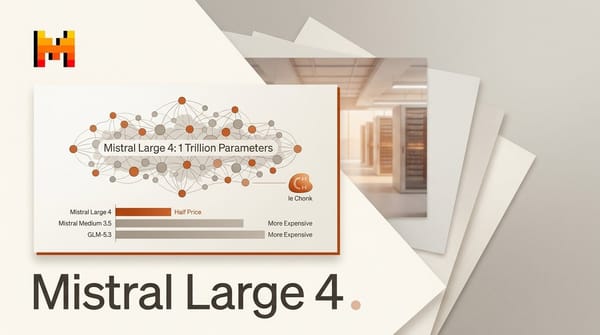
The GLM family is also spreading to third-party hosts. On August 11, Mistral began serving GLM-5.2 as the first outside model on its platform, exposed as zai-glm-5-2 at 1.40 dollars per million input tokens and 4.40 dollars per million output tokens. Mistral's regional inference announcement lets developers pin requests to Europe or the United States for data-residency control, a real consideration for teams with compliance constraints. GLM-5.2 is also listed on aggregators like OpenRouter, which is a fast way to A/B the family against other models before committing.

How to Integrate GLM-5.3 Into Your Coding Workflow
If you want to put GLM-5.3 to work today, here is a straightforward path from zero to a running agent loop.
- Pick an access route. For the newest model, use the Z.ai API or GLM Coding Plan directly. If you want to keep GLM alongside other models behind one key, route through an aggregator instead.
- Read the API surface. Z.ai's developer docs show the OpenAI-compatible request format the GLM line uses, so most existing SDK code works with an endpoint and model-name swap.
- Account for forced reasoning. Because thinking mode is always on in 5.3, budget for higher output-token counts and set your timeouts accordingly. Do not assume 5.2 latency numbers carry over.
- Wire it into an agent runner. Point a coding agent such as an editor-embedded assistant at the endpoint. Our look at Zed's Delta multiplayer coding agents shows the kind of editor loop where a stronger terminal-bench model pays off.
- Benchmark on your own tasks. Run five to ten of your real tickets through 5.3 and your incumbent model, then compare completion rate and cost, not just single-shot quality.
What This Enables for Creators and Builders
The concrete win in GLM-5.3 is agent reliability on long, tool-heavy tasks. A model that holds a terminal session together across dozens of commands can take on jobs that shorter-horizon models abandon: scaffolding a project, running a test suite and fixing failures in a loop, or migrating a codebase file by file. With the open weights now published, small teams also get a path to self-hosting a strong coding model, which changes the cost math for anyone running high request volumes or working under data-residency rules. The near-term action is to trial it against whatever you use now and let your own completion rates decide.
What to Do Next
If you already subscribe to the GLM Coding Plan, confirm you are on 5.3 and re-run a task that stalled under 5.2 to see the difference. If you are evaluating fresh, start on the API, hold your integration until you have measured the forced-reasoning token cost, and download the open weights from Hugging Face if self-hosting is your goal. Watch Z.ai's launch post for the exact weight-release date and license terms, since those determine whether the model fits commercial use.
The Open Weights Landed Under a Custom License
On August 28, 2026, Z.ai followed through and published the full GLM-5.3 open weights on Hugging Face, two weeks after the API launch. The released checkpoint is a 753-billion-parameter Mixture-of-Experts model, shipped in BF16, FP8 (F8_E4M3), and F32 safetensors, so a multi-GPU node or a rented cloud instance can serve the flagship instead of paying per token.
The twist is the license. Two days earlier Z.ai had opened the smaller GLM-5.3-Flash under plain MIT terms, but the 753B flagship ships under a bespoke "glm-5.3" license rather than MIT or Apache. Commercial use is permitted in most cases, but as The New Stack and DigitalApplied read the terms, any Model-as-a-Service operator above roughly 10 billion dollars in trailing-twelve-month revenue must pass a Z.ai security review before serving it. The clause reads as aimed at hyperscalers, not individual builders.
For a solo developer or a small studio the practical effect is simple: you can download, run, and fine-tune the flagship freely. But the revenue-gated review is a new pattern in a year when most open-weight drops used permissive MIT or Apache terms, and it signals how open labs are trying to court builders while fencing off the largest resellers. If you want the same family with no strings, the MIT-licensed Flash variant remains the unrestricted option.
Frequently Asked Questions
Is GLM-5.3 a new model or an update to GLM-5.2?
It is an update. GLM-5.3 reuses the 743-billion-parameter GLM-5.2 base and achieves all of its gains through scaled post-training rather than a full retrain.
When will GLM-5.3 open weights be available?
They are out. Z.ai published the full 753-billion-parameter GLM-5.3 weights on Hugging Face on August 28, 2026, in BF16, FP8, and F32 formats, under a custom "glm-5.3" license rather than MIT. The API and GLM Coding Plan remain live as well.
How much better is GLM-5.3 at coding?
On Terminal-Bench 3.0 it rises from 4.6 to 28.3, on DeepSWE v1.1 from 46.2 to 66.9, and Z.ai reports about a 50 percent gain on its internal code benchmark versus GLM-5.2.
Can I turn off thinking mode in GLM-5.3?
No. Thinking mode is always on in 5.3, which is a breaking change from 5.2. Plan for higher output-token usage and longer response times.
Does GLM-5.3 beat Claude and GPT models?
Not across the board. It leads on security benchmarks like CyberGym but still trails Claude Fable 5 and GPT-5.6 Sol on several harder coding evaluations. Test it on your own tasks before switching.
Where can I access the GLM family right now?
GLM-5.3 is on the Z.ai API, GLM Coding Plan, and ZCode. GLM-5.2 is also hosted by Mistral with EU or US regional inference and listed on aggregators such as OpenRouter.