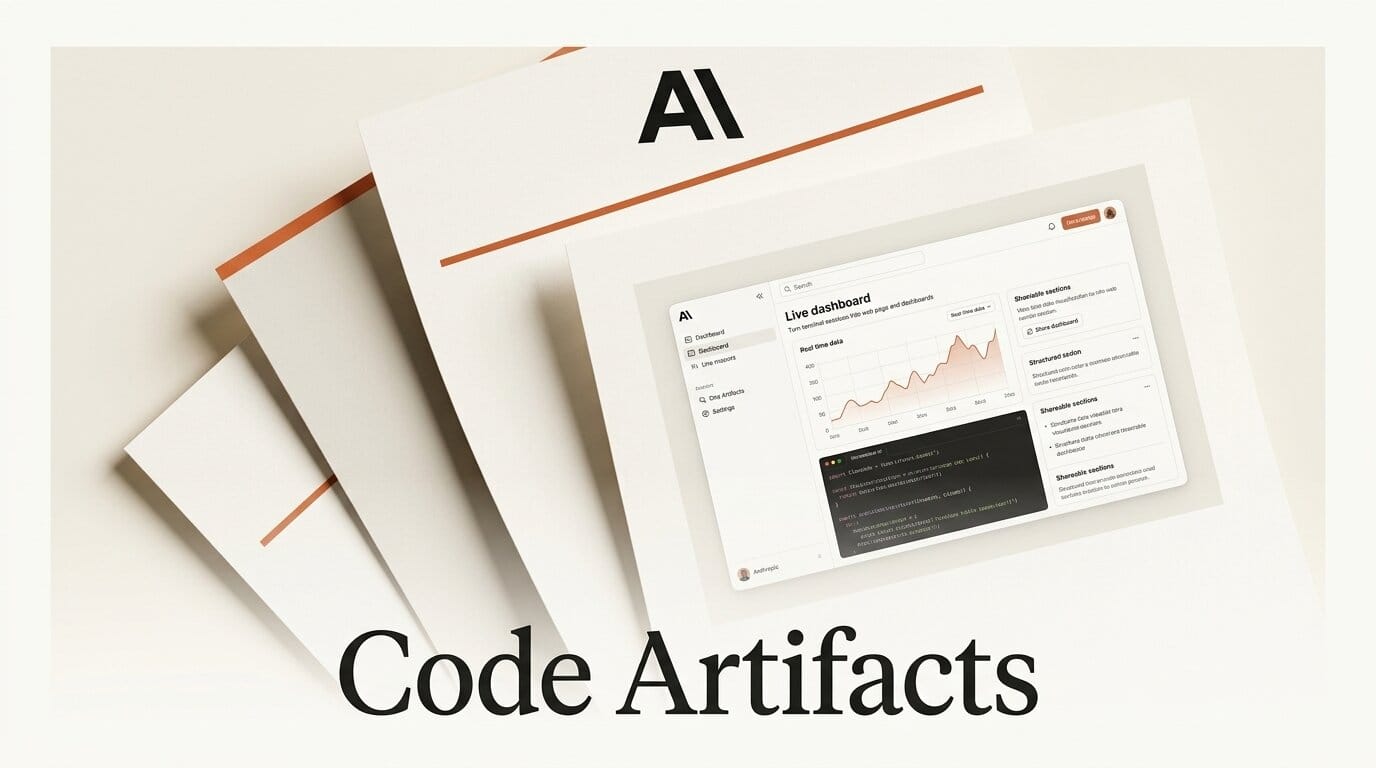
Anthropic has shipped Claude Code Artifacts, a feature that turns a coding session into a live, interactive web page you can share with a single link. Instead of pasting terminal output or screenshots into a pull request, you point teammates at a URL that updates in real time as Claude works. Anthropic announced the feature on June 18, 2026, in beta for Claude Team and Enterprise plans.
What this enables
Run a Claude Code session to build an internal dashboard, prototype an app screen, or summarize a refactor, then publish the result as an artifact: a self-contained HTML page hosted on a shareable URL. Teammates open the link in any browser and watch the page change as the session runs and as connected data sources update. For a solo builder it is a fast way to ship a working internal tool without standing up hosting. For a team it replaces the screenshot-and-paste status update with a living view of the work in progress.
Why it matters
Artifacts connect to outside services through the Model Context Protocol (MCP), so a page can read from and write to tools like Asana, Google Calendar, and Slack. That moves Claude Code beyond generating code toward producing interactive apps that act on live data, the same direction Claude's web artifacts took earlier this year. It also keeps the output inside the org: admins control artifact access at the organization level rather than leaving shared pages on the public web.
Key details
Artifacts is available now in beta from the Claude Code CLI and the desktop app, with pages viewable in any browser. It is limited to Team and Enterprise organizations, and organization admins can enable or disable artifact MCP access centrally. The feature builds on Anthropic's existing remote MCP connectors, which already power integrations across Claude, Claude Desktop, and the API. Recent Claude Code releases, tracked in the public changelog, have also added language-aware session titles and faster credential caching.
What to do next
If your org is on the Team or Enterprise plan, ask your admin to enable artifact access, then run a real session, building a status dashboard or a small internal tool, and publish it to test the live-sharing flow before you rely on it for client or team updates.