Claude Paid Subscriptions More Than Double in 2026
Anthropic confirmed that Claude paid subscriptions have more than doubled in 2026, with credit card data showing record subscriber growth in January and February.
Anthropic confirmed that Claude paid subscriptions have more than doubled in 2026, with credit card data showing record subscriber growth in January and February.
Apple researchers published LGTM on March 28, 2026, a method that enables 4K-resolution 3D scene rendering using Gaussian Splatting without requiring per-scene optimization.
NVIDIA has open-sourced Kimodo, the largest controllable motion diffusion model ever trained. Trained on over 700 hours of professional motion capture data, it generates 3D human and robot motions from text prompts.
Deezer has licensed its AI-generated music detection technology to Hungarys EJI performers rights body. The platform flags over 60,000 AI tracks daily, with 39% of all uploads now involving AI.
Shopify launched Tinker, a free mobile app bundling 100+ AI tools for product photos, videos, logos, and 3D content. No prompt expertise required.
Notion 3.4 introduces Custom Skills that turn repetitive AI tasks into reusable commands, AI image generation directly inside documents, and a new Presentation mode.
Windsurf released Wave 13 on March 6, 2026, delivering its SWE-1.5 coding model for free to all users, a new Arena Mode for blind model comparison, Plan Mode for structured task planning, and parallel multi-agent sessions.
Framer adds GPU-accelerated Shaders for animated gradients, particles, and image effects. Also ships Static Files for domain verification and custom A/B test distribution.
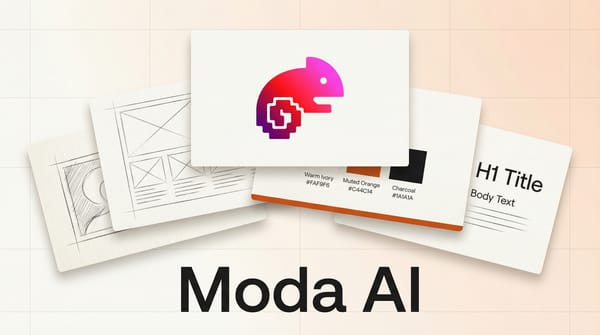
Moda AI raised $7.5 million in seed funding led by General Catalyst to build an AI design agent that learns a company's brand identity and generates fully editable presentations, social posts, and visual assets.
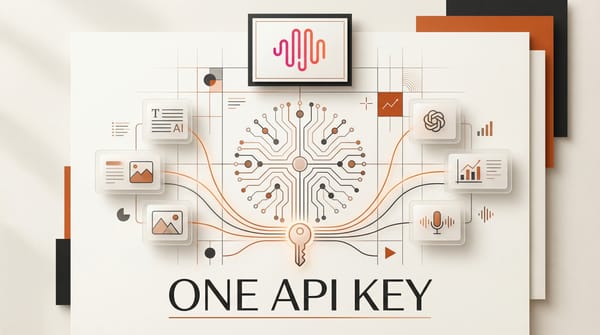
MiniMax upgraded its Coding Plan to the Token Plan, giving developers flat-rate access to Hailuo video, speech, music, image, and text models under one API key.
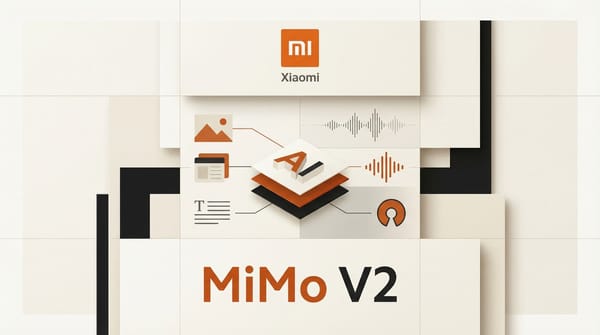
Xiaomi has launched the MiMo-V2 family, featuring a multimodal model that processes audio, images, and video alongside a TTS engine capable of contextual emotion and singing synthesis.
OpenAI has launched Parameter Golf, an open research competition offering $1M in computing credits to whoever can compress AI models into just 16MB with only 10 minutes of training time.
MiniMax, the company behind the Hailuo video generation platform, released M2.7 with 10 billion activated parameters and built-in self-improvement capabilities.
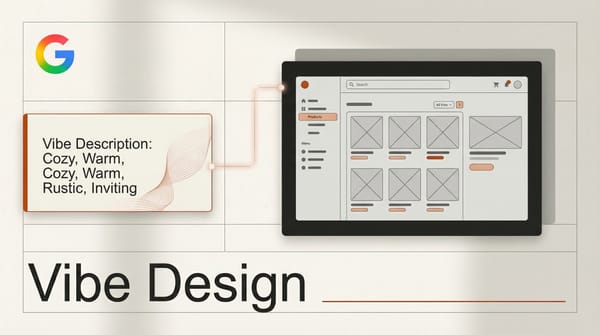
Google Labs launched Stitch, a free AI-native design platform that translates natural language descriptions into high-fidelity UI designs through what the company calls vibe design.
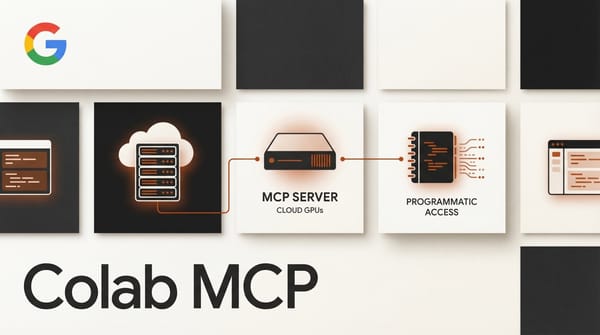
Google has released an open-source MCP server for Google Colab, letting AI agents like Claude Code and Gemini CLI create notebooks, execute Python code, and access cloud GPUs directly.
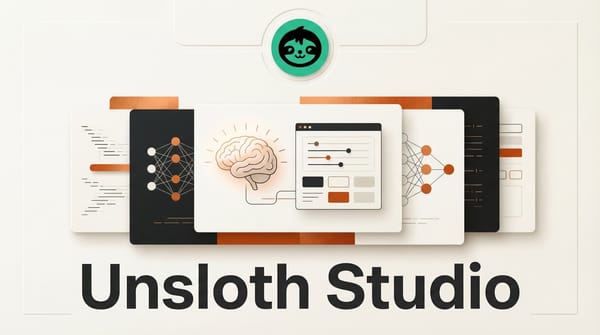
Unsloth AI released Studio, a free local application that provides a visual interface for fine-tuning large language models while using 70% less VRAM than standard training methods.
In a single week this March, the AI coding market announced numbers that would have seemed absurd 18 months ago. Cursor is negotiating a $50 billion valuation
Figma MCP server enables two-way design-to-code workflows with Cursor, VS Code, and more. New Vectorize tool converts raster images to editable vectors.
For years, the most powerful AI creative tools lived in the cloud. You uploaded your prompts, waited for a remote GPU cluster to process them, and downloaded the results
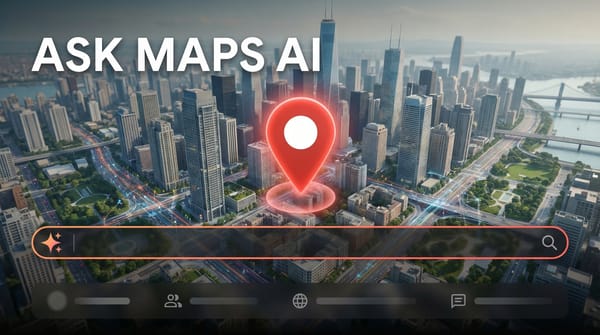
Google launched Ask Maps and Immersive Navigation on March 12, 2026, bringing Gemini AI to Google Maps for the first time. Ask Maps lets users ask complex conversational questions, and Immersive Navigation replaces flat 2D directions with photorealistic 3D views of the road ahead

Every AI assistant you have used so far has one fundamental limitation: it forgets you exist the moment you close the tab. Perplexity wants to change that
Framer launches Server API in open beta, enabling AI agents and automated workflows to sync CMS, publish changes, and update designs programmatically.
OpenAI launched GPT-5.4 on March 5, 2026, introducing native Computer Use mode that lets the model read screens and control mouse and keyboard inputs directly. The release also brings a 1M token context window, 33% fewer factual errors across benchmarks, and 47% token efficiency gains