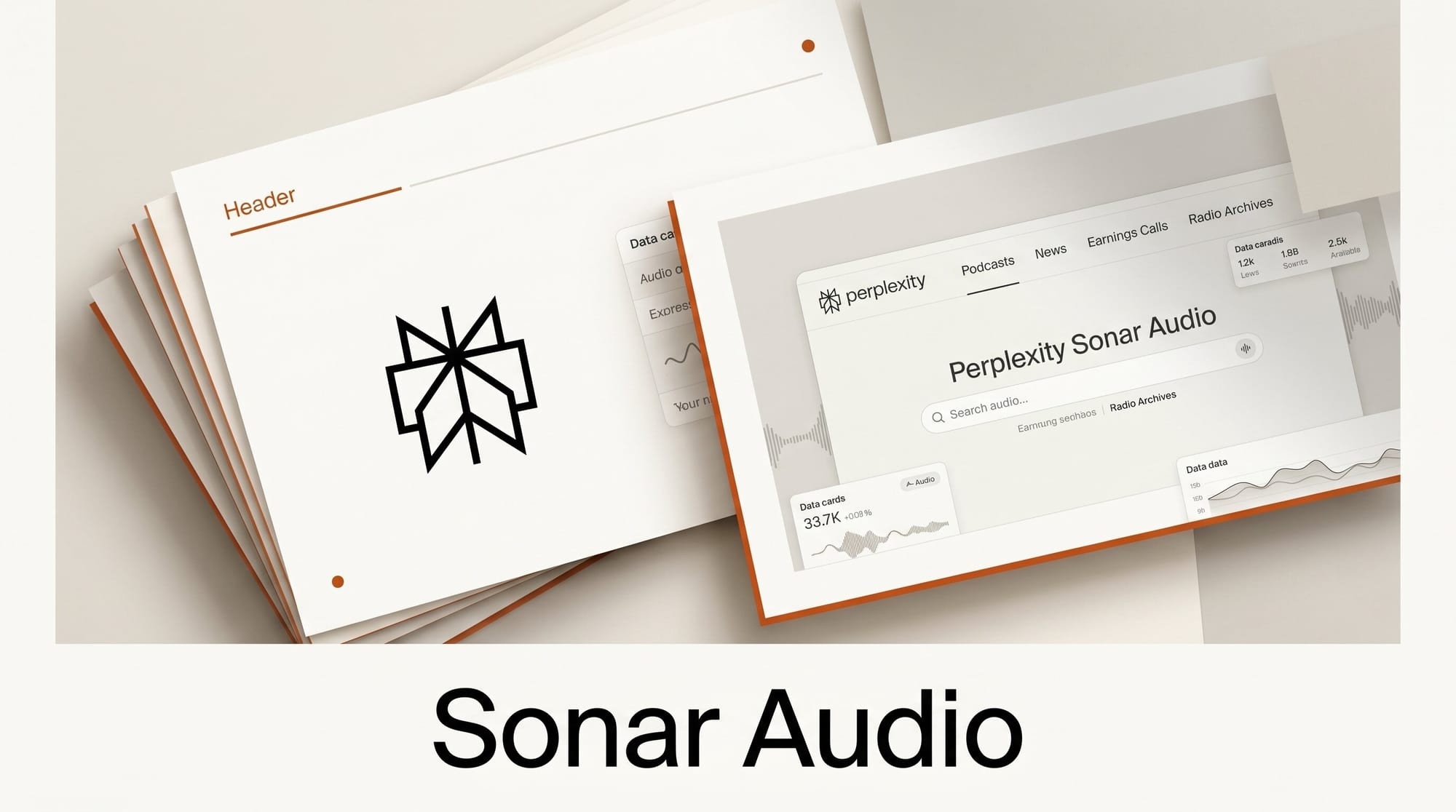
Sonar, an audio search API built for AI agents, entered public beta on May 21, 2026, offering natural-language queries across podcasts, news broadcasts, earnings calls, radio, and social audio archives. The API returns ranked clips with transcripts, timestamps, and speaker attribution formatted for direct use inside LLM pipelines. A free tier covers 500 queries per month without a credit card at sonarapi.com.
What Happened
A team called Sonar launched a public beta of an audio search API that indexes spoken-word content the way standard search engines index text. The tool processes queries through an embedding, approximate nearest neighbor search, and reranking pipeline to surface the most relevant audio clips from its corpus, which spans news, podcasts, radio broadcasts, earnings calls, and social audio.
The service is at version 0.4.1. API keys are approved within 24 hours and early-access developers receive a direct Slack channel with the Sonar team during beta.
Why It Matters
Audio has been an overlooked layer for AI tools. Transcription APIs like AssemblyAI convert speech to text from files you already own, but searching across a broad external audio index with natural language has not had a clean developer solution. Sonar operates more like a search engine for spoken content than a transcription service, which makes it useful for research and monitoring rather than processing your own recordings.
For creators, this gap matters practically: podcast research currently means manually scrubbing episodes or running keyword searches on transcripts you have to generate first. Sonar replaces that step with an API call.
Key Details
The API supports two modes. Retrieve performs fast semantic search and returns ranked clips. Research generates a full synthesis of a summary, key themes, and cited audio clips as evidence, comparable in approach to how Deepgram builds intelligence layers over audio, but applied across an external corpus instead of your own recordings.
Each response includes source, speaker, timestamp, and transcript per clip. The schema drops directly into tool-use definitions inside an LLM agent without custom parsing. Pricing: 500 free queries per month, no credit card. No public paid tier pricing listed at launch.
How Creators Can Use It
Podcast producers can query Sonar for specific topics to surface relevant quotes and coverage from other shows, useful for pre-recording research or sourcing companion articles. A query like "AI video generation tools discussed in early 2026" returns timestamped clips from relevant episodes without requiring you to find and transcribe each episode yourself.
Developers building AI content tools can integrate Sonar as the audio discovery layer alongside generation tools. It works alongside Stable Audio 3 for creation and Audio.Observer for audio monitoring, covering the research side of the audio AI stack.
What to Do Next
Apply for API access at sonarapi.com. The free tier is sufficient for testing a research or monitoring workflow. Start with Research mode to evaluate synthesis quality against a topic you know well, then test Retrieve mode to see whether the speed tradeoff fits agent-driven use cases where latency matters.