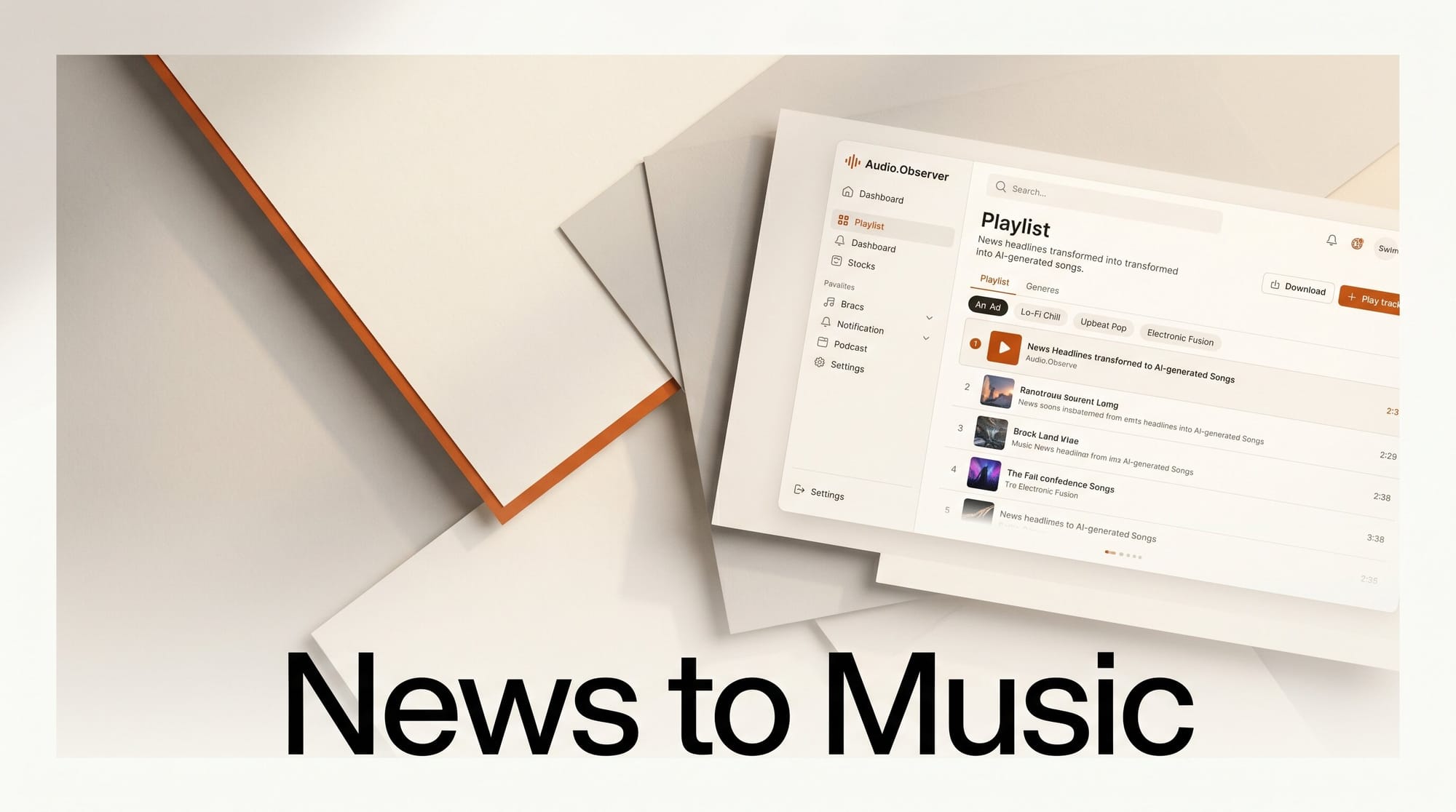
Audio.Observer is a new streaming platform that turns daily news headlines into AI-generated songs. It launched on May 19, 2026, and publishes new tracks every day across tech, markets, world events, and culture.
What Happened
A team launched Audio.Observer this week as a free platform that processes real news stories into original AI music tracks. The site describes itself as "a newspaper you can listen to." Each story gets a song with two or three auto-assigned genre tags that match the emotional tone of the news: a Musk vs. OpenAI trial story becomes Post-Punk and New Wave; a Cerebras Nasdaq debut becomes Indietronica and French House; a Google orbital data center story becomes Psychedelic Rock and Synth-Pop.
Tracks run between 90 seconds and 3 minutes 45 seconds. A Live Radio mode streams them continuously. Source links go back to original reporting, and the platform does not reproduce article text.
Why It Matters
Audio.Observer shows what fully automated topical audio production looks like. Most AI music tools today require a human to write a prompt. This platform removes that step: a structured data source (news) goes in, a finished song comes out. The genre assignment alone is notable. The system infers emotional tone from a headline and selects appropriate genres without any editorial input from a human.
That type of pipeline is a real workflow option for creators building audio content at scale. Tools like Suno and Udio can produce similar output when paired with a data pipeline. Audio.Observer shows what that looks like running daily at production quality.
Key Details
- Free to stream at audio.observer
- New tracks published every day across tech, markets, world, and culture
- Each story gets 2-3 AI-assigned genre tags based on topic and tone
- Tracks run 1:30 to 3:45 in length
- Live Radio mode for continuous playback
- Original source articles are linked; no article text is reproduced
What to Do Next
Visit the site and listen to a few tracks for stories you already know. The genre-to-headline mapping is the most useful part to study: pay attention to how the system reads tone from a short headline and outputs a genre decision. That decision logic is where the real workflow value is.
The launch thread with early creator discussion and technical questions from the builders is on Hacker News.