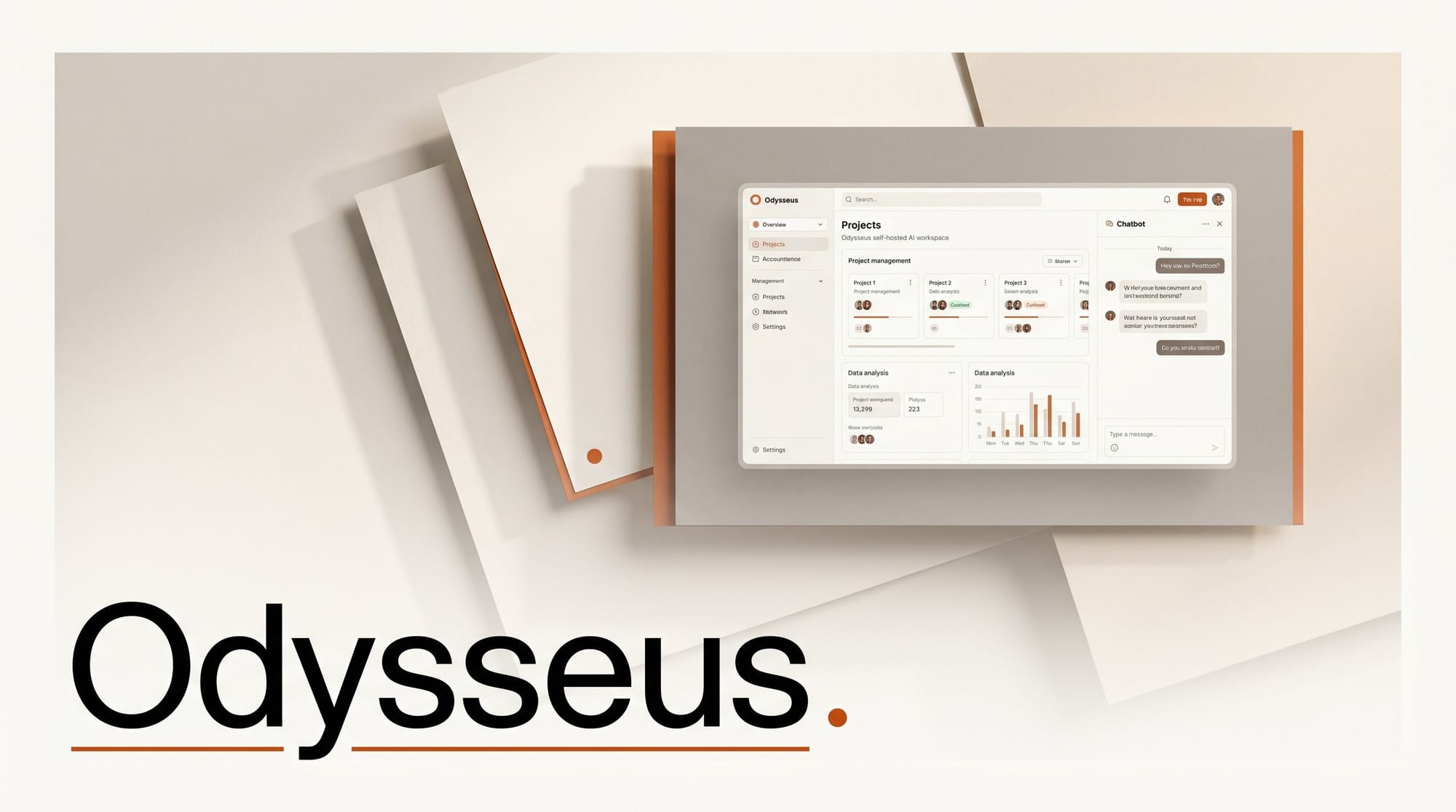
Felix Kjellberg, better known as PewDiePie, has open-sourced Odysseus, a self-hosted AI workspace that runs entirely on your own hardware. The MIT-licensed project landed May 31 alongside a YouTube announcement, "I might seriously regret releasing this..", and crossed 2,900 GitHub stars within hours, with the Hacker News thread climbing into the top stories of the day.
Try it: stand up a local-only ChatGPT clone
If you already run Ollama or have a workstation with a discrete GPU, the install path is one git clone. Pull the repo, follow the README to install dependencies, and Odysseus brings up a unified UI with multi-turn chat, autonomous agents that can plan and call tools, hardware-aware model recommendations across 270+ catalogued models, a deep-research mode that runs multi-step investigations and writes cited reports, and a side-by-side compare view for sending the same prompt to multiple models. Email integration over IMAP/SMTP is included for AI summaries and draft replies. Nothing leaves your box unless you wire it up that way.
Why it matters
The creator economy's biggest single account is now shipping infrastructure aimed at the privacy-conscious end of the AI tool stack. Kjellberg has spent the last year building out a self-hosted setup, documented in detail by Tom's Hardware: a 10-GPU rack running modded cards, Folding@home donation cycles, and a homegrown UI he previously called "Chad OS." Odysseus is the polished, open-source descendant. The audience this lands in front of is enormous, and the framing is unambiguous: local-first, privacy-first, no telemetry, no subscription tier.
Key details
Odysseus is built primarily in JavaScript and Python with a FastAPI backend, a React-style frontend, and ChromaDB for vector memory. The Cookbook feature handles model selection by reading your hardware specs and recommending compatible local models, then serving them with one click. Tool access includes shell, file system, web research, and any MCP server you connect, so it slots into the same agent-tooling ecosystem as Claude Desktop and Cursor. The project page lists nine flagship features including persistent memory across conversations and a "self-evolving skills" system where the assistant refines its own capabilities over time.
What to do next
Clone the repo and try the Cookbook against your existing local hardware before committing to a setup. The MIT license means you can fork it for client work or strip it down to the modules you actually need. For creators evaluating local AI seriously, the most useful next step is reading Hugging Face's writeup of Kjellberg's full setup, which covers the GPU choices, quantization tradeoffs, and which open-weights models he ended up using day to day.