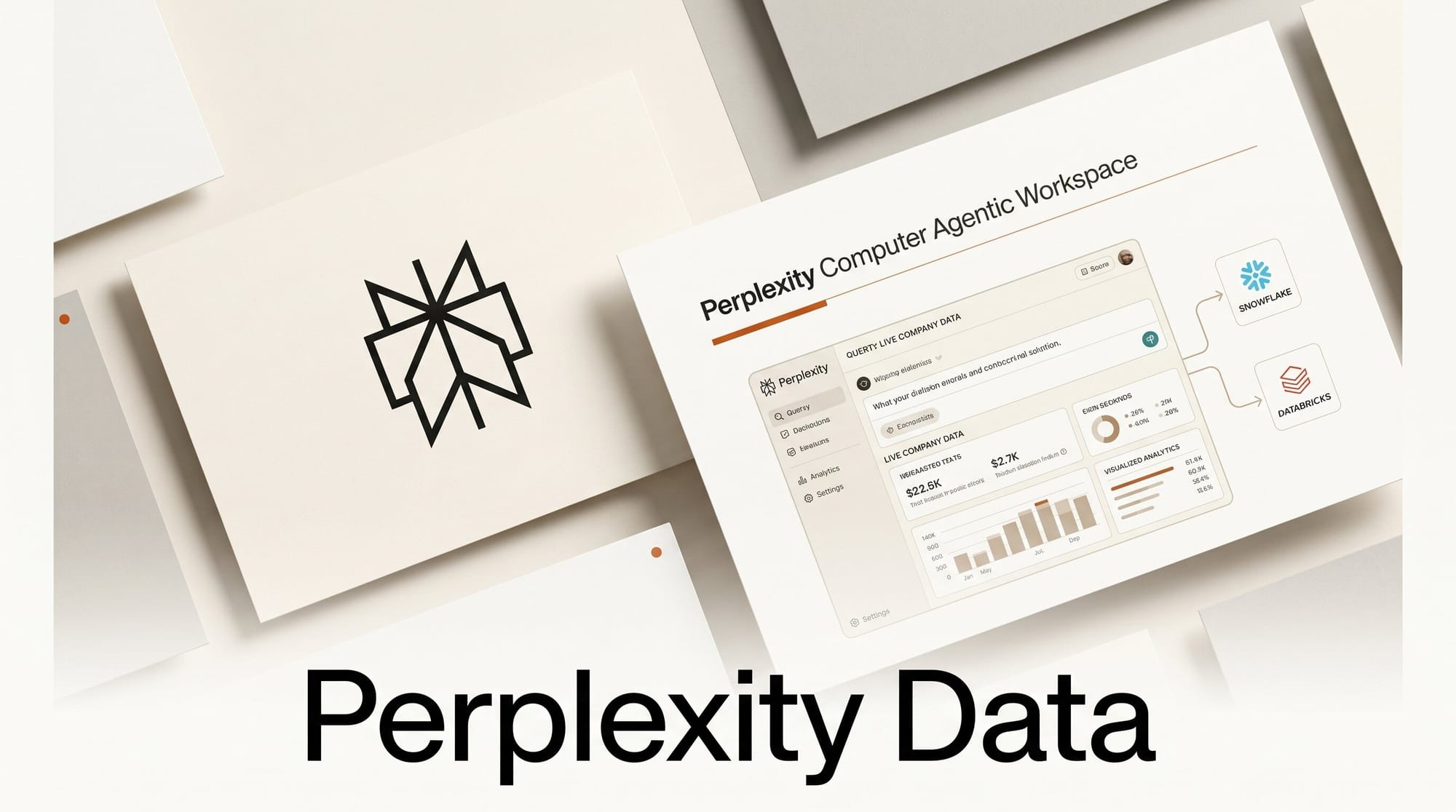
Perplexity has connected its Computer agentic workspace to live company data in Snowflake and Databricks, turning the agent into a data analyst that can answer business questions in plain English. The release ships May 14, 2026 to Pro, Max, Enterprise Pro, and Enterprise Max users, with admin-managed organization controls.
Try it: Replace one SQL request this week
If your team queues recurring SQL requests with a data engineer, route the next two through Computer instead. Connect a Snowflake or Databricks workspace in Perplexity Settings, point Computer at the relevant tables, and ask the question you would have filed as a ticket: "weekly active users in EU regions, last six weeks, broken out by plan tier."
Computer generates the SQL, runs it against the warehouse using your existing permissions (Snowflake RBAC or Databricks Unity Catalog), and returns the metric with a citation pointing back to the source tables. The first few tickets you offload are the test: if Computer's answers match what your data team would have produced, the rest of the queue can follow.
Why It Matters
The bottleneck on data-driven content has always been SQL. Marketers, product managers, and creator-economy operators who want a chart for a deck wait days behind enterprise reporting queues. Computer collapses that wait by giving any user on the plan a natural-language interface to the same warehouse the analytics team uses, governed by the same access rules. The May 7 Mac launch of Perplexity Computer Pro put the agent on creator desktops; the Snowflake and Databricks connectors put real business data behind it. For independent creators and small teams running on a warehouse like Snowflake, the new connector means hiring a data analyst stops being the gate on data-driven decisions.
Key Details
Computer's new analytics capability is anchored by a "Data Map": a semantic layer the agent builds from warehouse structure, table relationships, historical query patterns, and admin-provided business context. The Data Map gives Computer enough context to pick the right tables, apply the correct joins, and respect business definitions like "active user" the way your team defines them.
Supported data types include databases, schemas, tables, views, and structured file formats (CSV, JSON, Parquet). All queries inherit existing platform permissions, so a user who lacks access to a table cannot read it through Computer either. The integration models on hard-coded data connections Perplexity has used internally, now packaged for customer deployment. TestingCatalog first surfaced the launch on May 15.
What to Do Next
Open Perplexity Computer, connect a warehouse, and run one query that previously required a ticket. If the SQL Computer generates looks reasonable, share the workflow with one teammate who currently bottlenecks on data. The fastest way to know whether agentic analytics belongs in your stack is to put it head-to-head with the SQL request you already have queued, not to wait for a vendor demo.