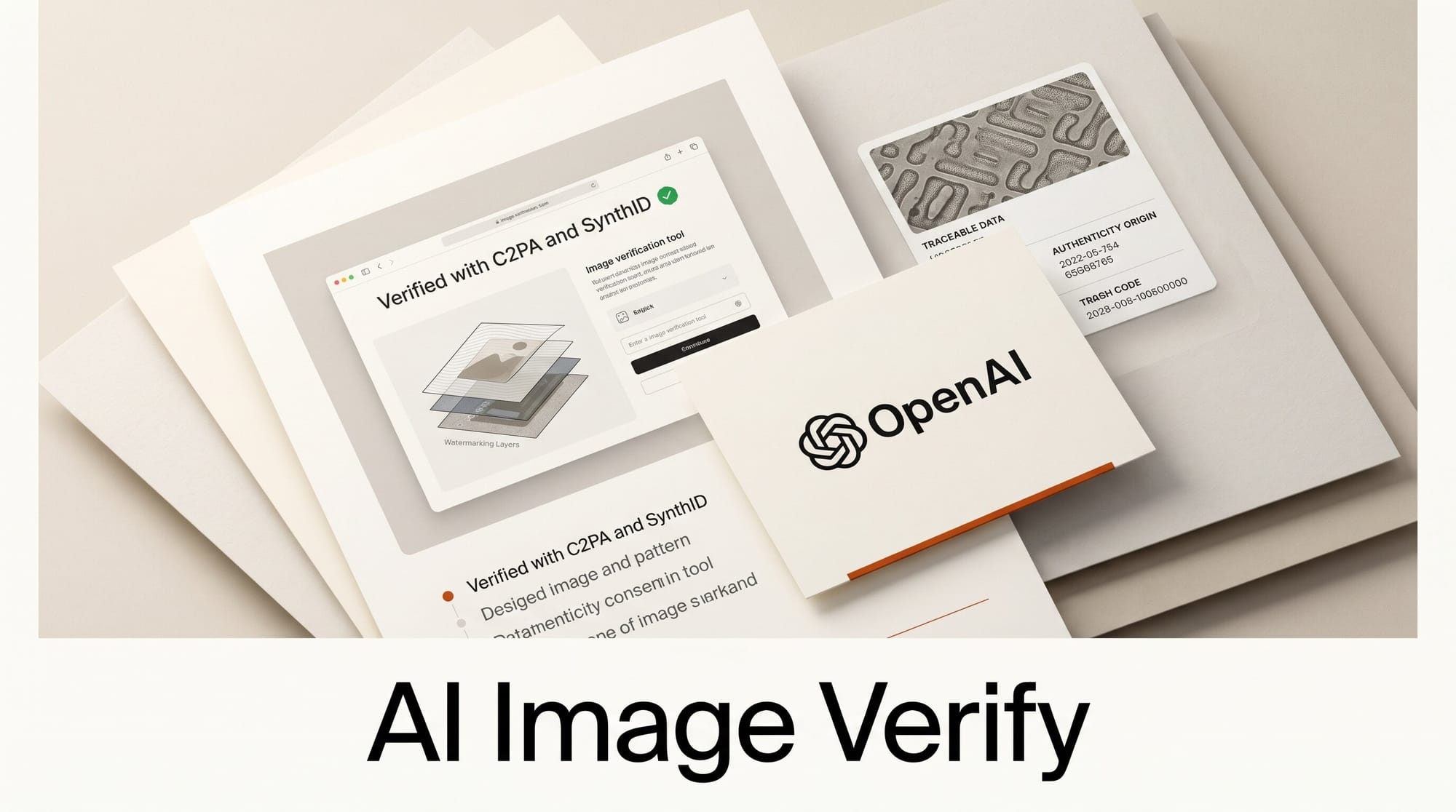
OpenAI announced on May 19 that it is joining the C2PA standard (Coalition for Content Provenance and Authenticity) and integrating Google DeepMind's SynthID watermarking technology into its image products. The combination makes it possible to verify whether an image was generated by an OpenAI model.
What Happened
OpenAI is adopting two complementary approaches to AI image verification at once. C2PA is an open industry standard that embeds cryptographically verifiable metadata into image files, recording where and how the content was created. SynthID is Google DeepMind's imperceptible watermarking system that survives compression, resizing, and common editing operations without being visible to the human eye.
Together, these two systems give platforms, publishers, and individual users a way to check whether a given image originated from an AI model, according to TechCrunch's coverage of the announcement. OpenAI said both features will be integrated into its products, though specific rollout timelines were not disclosed.
Why It Matters
AI-generated images are increasingly indistinguishable from photographs. That creates problems in two directions: misinformation (fake images presented as real) and attribution (real work falsely flagged as AI). Provenance tools attack the first problem directly. A C2PA-compliant image carries a verifiable chain of custody. SynthID adds a second layer that survives the compression and re-upload cycles common on social platforms.
For creators, this is protective infrastructure. If your AI-generated assets carry verifiable provenance metadata, the content can be traced back to you as the human who commissioned it. If your photos are falsely accused of being AI-generated, verified absence of AI watermarks becomes evidence in your defense.
Key Details
- C2PA: Open standard for content provenance metadata. Cryptographically signed, file-level. Survives most file operations if re-saved in a compliant format.
- SynthID: Google DeepMind's imperceptible watermark. Embedded at the pixel level, survives compression and scaling, invisible to viewers.
- Scope: Images generated by OpenAI models (GPT image generation, DALL-E). Announcement did not specify video or audio coverage.
- Access: Features will be integrated into OpenAI products. No standalone verification tool announced.
- Industry context: Adobe's Content Authenticity Initiative and Meta's AI labels both use C2PA. OpenAI joining brings the standard's reach to one of the largest AI image generation platforms.
Creator Outcome: What This Changes for Your Workflow
If you publish AI-generated images professionally or commercially, provenance metadata is now a workflow consideration, not just a policy debate. Here is what to do:
- Export images from OpenAI tools once these features ship and check that C2PA metadata is embedded using a tool like c2pa.org's verify tool
- For photography: shoot in RAW and export with camera metadata intact. The absence of AI watermarks in files with camera EXIF data provides verification that the photo is genuine
- Track C2PA adoption: platforms that display "AI-generated" labels (LinkedIn, Meta, YouTube) rely on this metadata to trigger their disclosure requirements
What to Do Next
OpenAI has not published a specific launch date for C2PA or SynthID integration. Check the original TechCrunch article for updates and watch OpenAI's product changelog for rollout details. For background on the C2PA standard and which tools already support it, visit c2pa.org.