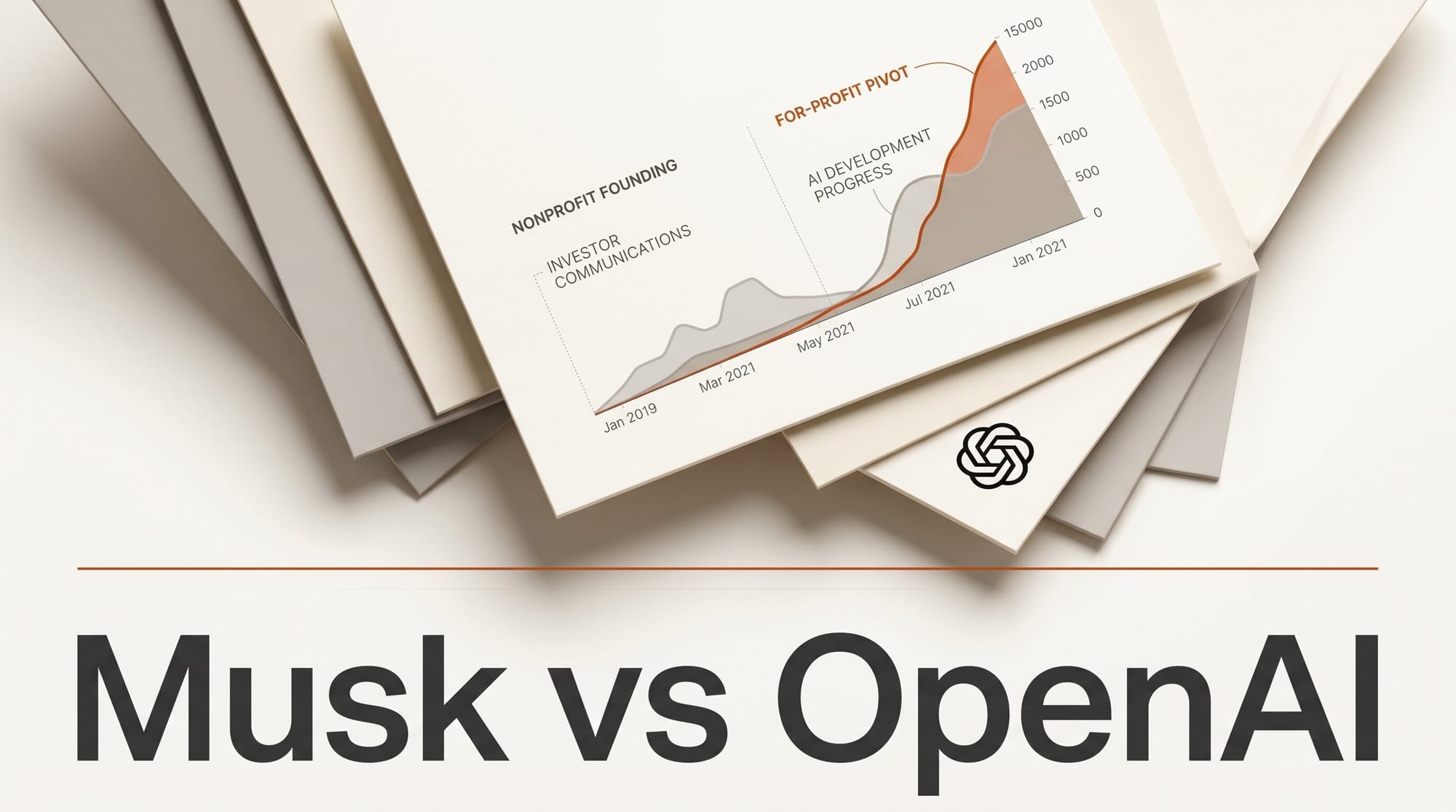
The civil trial Musk v. OpenAI is in its final days in Oakland, California. TechCrunch reports that trust has been the defining theme of the closing phase, as Elon Musk's core allegation is that he was deceived about OpenAI's conversion from a nonprofit to a for-profit entity. A jury verdict is expected within days.
What Happened
The trial began April 30, 2026, at the Ronald V. Dellums Federal Building in Oakland. Musk claims he invested millions in OpenAI's early nonprofit phase believing it would remain open and mission-driven, only to see it transform into a capped-profit company now valued in the hundreds of billions.
OpenAI's defense inverted that narrative. Altman testified that Musk himself sought control over the for-profit entity, even discussing placing the company under his children's ownership. OpenAI also claims Musk sent threatening messages to co-founders Greg Brockman and Altman after settlement talks collapsed.
Why It Matters for Creators
OpenAI's products power a significant portion of creative AI workflows. ChatGPT drives writing and ideation. GPT Image 1 handles image generation after DALL-E 3 was retired on May 12. Sora handles text-to-video. A verdict in Musk's favor could force OpenAI into a structural reorganization, with unpredictable consequences for pricing, access, and product development across all of these tools.
The trial has also drawn public attention to OpenAI's safety commitments and how they coexist with its commercial ambitions. How OpenAI characterizes its mission in court will shape how regulators and enterprise partners think about the company's long-term reliability.
Key Details
- Trial location: Ronald V. Dellums Federal Building, Oakland, CA
- Trial started April 30, 2026; final days as of May 17, 2026
- Defendants: OpenAI and CEO Sam Altman
- Core allegation: Musk invested believing OpenAI would stay nonprofit; it restructured into a capped-profit company
- Altman's key testimony: Musk sought control of the commercial arm himself
- The jury is deciding specific fraud and breach-of-contract claims related to promises made to Musk when OpenAI was formed
What to Do Next
DALL-E 3 shut down on May 12 with short notice, requiring rapid migration. The OpenAI-Apple partnership fell apart earlier this year. The trial is one more signal that anchoring your creative stack to a single provider carries real risk.
Build parallel capabilities now:
- Image generation: FLUX in ComfyUI or Midjourney as alternatives to GPT Image 1
- Video: Kling, Runway Gen-3, or Hailuo as alternatives to Sora
- Text: Claude, Gemini, or a self-hosted Llama model as alternatives to ChatGPT
A verdict is expected before the end of May 2026. The creative AI stack you build today should be ready for either outcome.