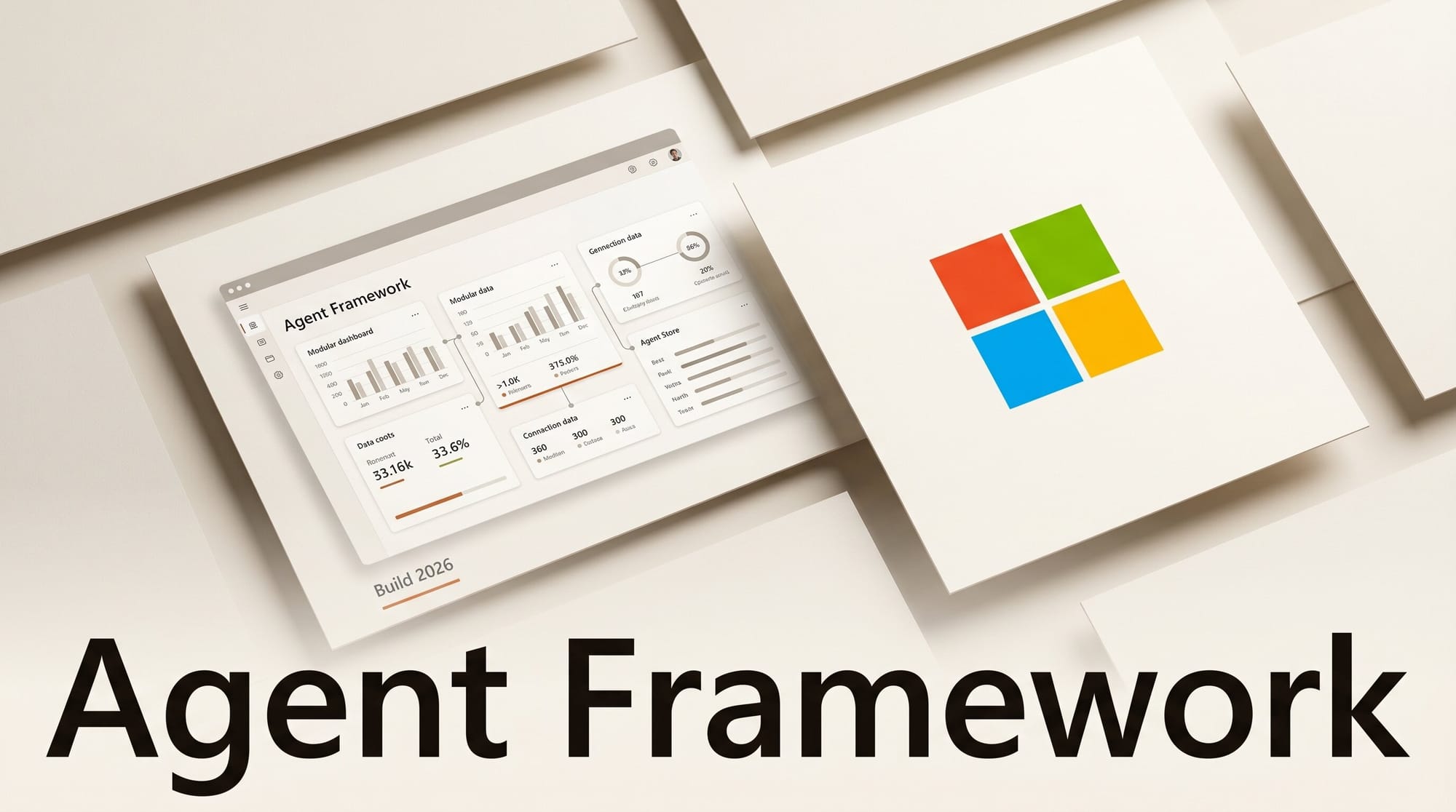
At Microsoft Build 2026 on June 2, Microsoft open-sourced the Windows Agent Framework under an MIT license and previewed a Windows Agent Store with an 85 percent developer revenue share. Together the two announcements turn Windows into a first-class agent host that ships with the OS rather than relying on third-party runtimes, and they give independent developers a direct monetization path that mirrors the Microsoft Store economics.
What This Enables
Windows Agent Framework v1.0 is a set of APIs, SDKs, and tools that handle session management, memory, planning, tool use, and multi-agent coordination as native OS services. The source on GitHub includes YAML agent manifests that can be deployed locally, in Azure, or to edge devices from the same definition. The MIT license means studios building custom creator agents (asset organizers, render queue managers, plugin generators) can ship them without a per-seat licensing layer. The Windows Agent Store then provides a curated marketplace where those agents become buyable products, with Microsoft taking 15 percent and the developer keeping 85.
Why It Matters
The 85 percent revenue share is the headline. Apple's App Store and Google Play both top out at 70 percent for individual developers without enterprise commitments, so an MIT-licensed runtime plus an 85 percent marketplace is the most developer-friendly agent distribution channel any major platform has shipped. According to Build recap coverage, Microsoft will ship WAF with the Windows 11 26H2 SDK in July 2026, alongside a private internal catalog inside Microsoft 365 and a public marketplace targeted for Q4 2026.
Key Details
- Windows Agent Framework (WAF) v1.0: MIT-licensed, YAML agent definitions, deployable to local, cloud, and edge.
- Windows Agent Runtime: OS-level execution preview rolling out in June 2026; handles JSON, XML, PDF text agents.
- Windows Agent Store: 85 percent developer revenue share, private internal catalog inside Microsoft 365, public marketplace Q4 2026.
- Ships with: Windows 11 26H2 SDK in July 2026.
- Azure Agent Mesh: Federated execution control plane, GA targeted Q4 2026, ties WAF agents to Azure for orchestration at scale.
What to Do Next
If you already build VS Code extensions, Photoshop plugins, or Blender add-ons, sketch a WAF agent equivalent now. Pick one repetitive workflow your audience does manually, write the YAML manifest against the WAF v1.0 preview, and have it ready when the Agent Store opens its public marketplace. Teams shipping internal-only tools can start earlier through the Microsoft 365 private catalog without waiting for Q4.