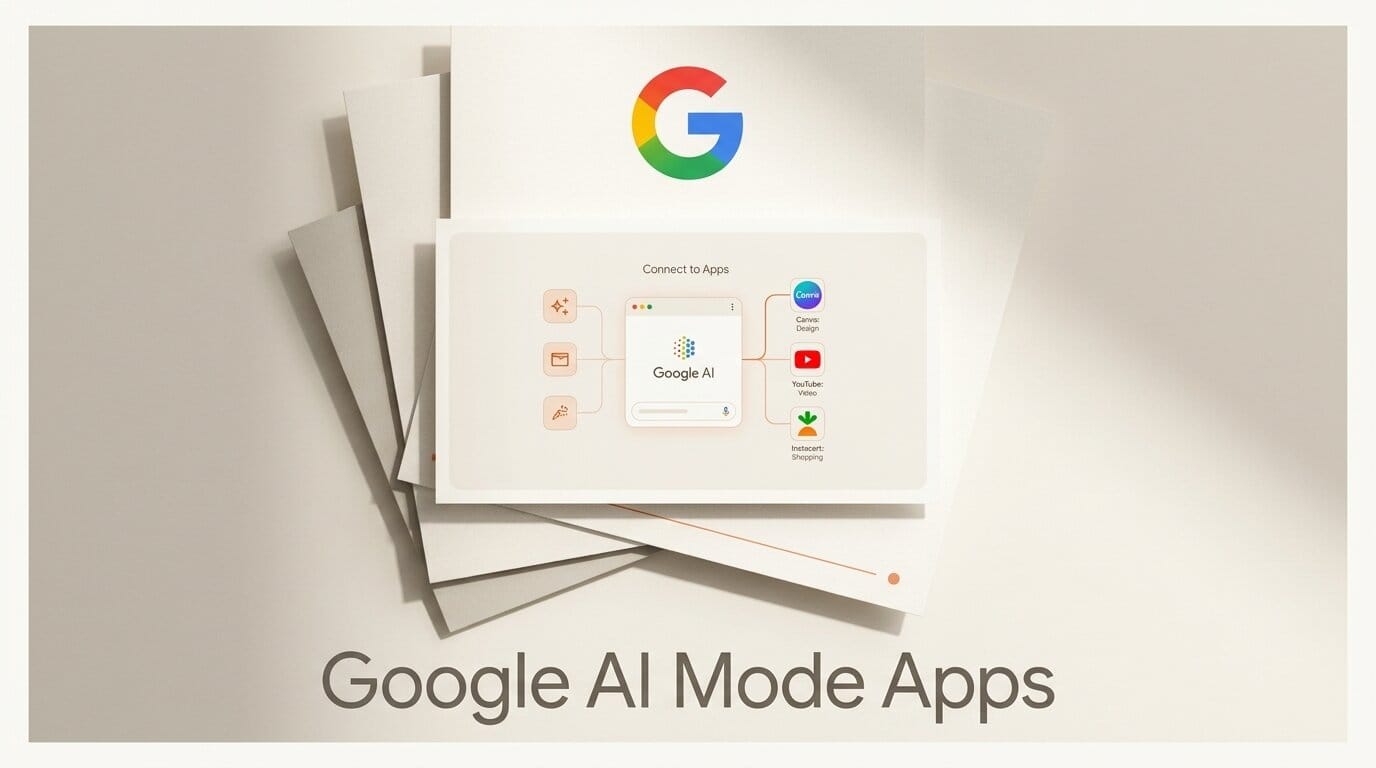
Google is turning its AI Mode search experience into an agent that can reach into other apps. On July 16, 2026, Google announced that AI Mode can now link to and interact with a first set of third-party services, starting with Instacart, Canva, and YouTube, for users in the United States. As first reported by TechCrunch, the feature lets Search complete tasks rather than just answer questions.
What This Enables
Instead of switching tabs, you can ask AI Mode to do the work and hand you an editable result. Ask it to pull a Canva design template for a social post and it opens one you can refine, ask it to build and save a playlist to YouTube Music, or add a recipe's ingredients straight to an Instacart cart. For creators, the Canva hook is the interesting one: a natural-language request in Search becomes a starting design you finish in Canva, collapsing the "search, find a template, open the tool" loop into a single step.
Why It Matters for Creators
This is Google's answer to the app-integration push already shipping from its rivals. We covered ChatGPT Work building docs and apps and Claude Cowork acting across surfaces. Now the same agentic pattern lands inside the search box a billion people already use. The connections build on the Model Context Protocol integrations Google previewed at I/O 2026, and they signal that discovery for creator tools is shifting from links to actions. If your audience finds your work through Search, the surface that sends them traffic is starting to complete tasks itself.
Key Details
Feature: AI Mode can link to and interact with select third-party apps directly from Google Search.
Launch apps: Instacart, Canva, and YouTube, with more promised soon.
Availability: Rolling out to users in the United States as of July 16, 2026.
Under the hood: Built on the same Model Context Protocol app connections Google showed at I/O 2026.
What to Do Next
If you publish through Canva or YouTube, open AI Mode and test how it surfaces and acts on your kind of content, then make sure your templates, titles, and metadata are structured so an agent can pick them up cleanly. Watch which apps Google adds next, since each new connection changes how your tools reach people through Search.