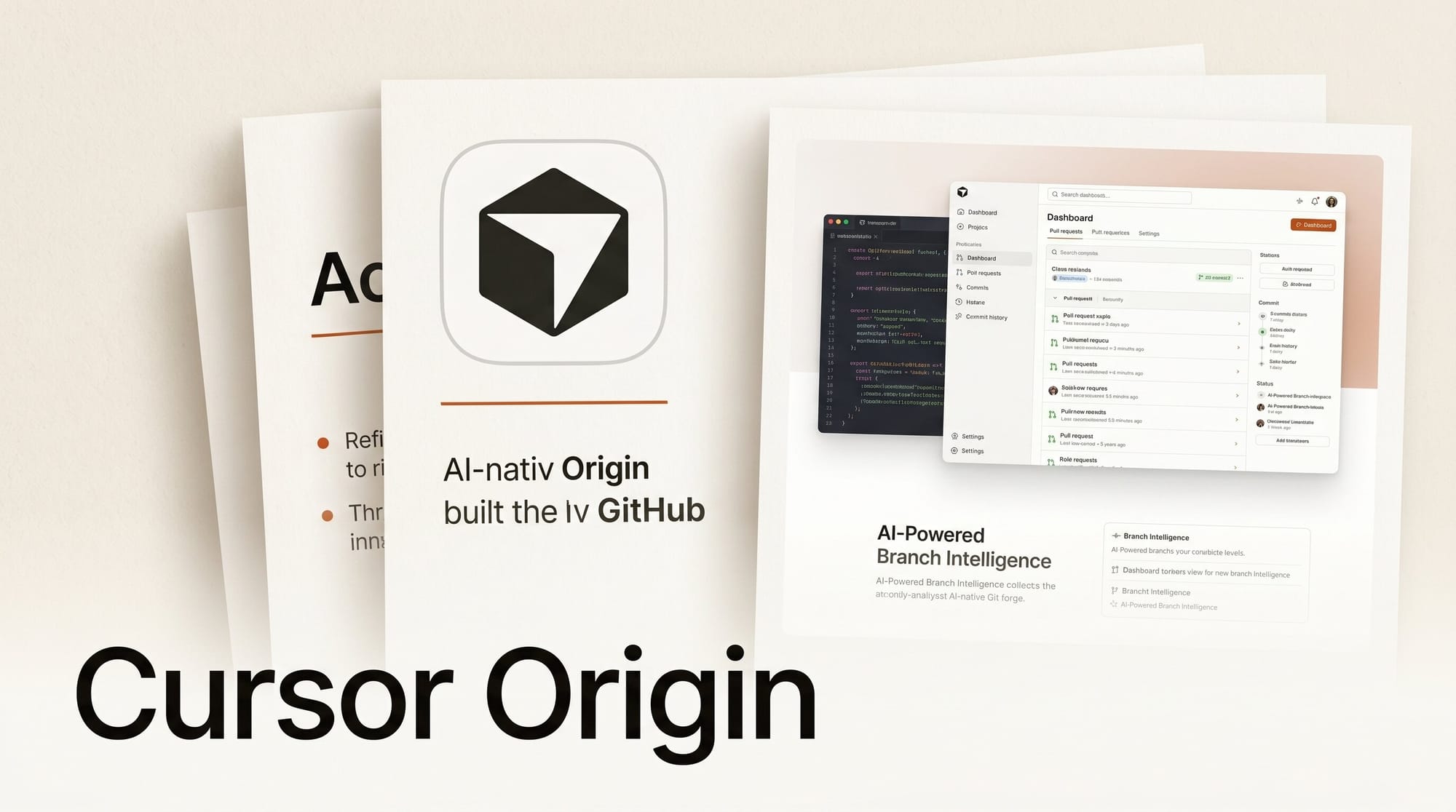
Cursor has entered the code-hosting business. On June 16, 2026, the company announced Origin, a Git-compatible forge it calls "a git forge for the agentic era." It is a direct shot at GitHub, built on the assumption that fleets of AI agents, not just humans, will be cloning, branching, committing, and reviewing code in parallel.
What Happened
Tomas Reimers introduced Origin on behalf of Cursor, framing it as code hosting designed for AI agent workloads rather than retrofitted for them. According to launch coverage, the platform handles 22.6 commits per second in a single repository and synchronizes worldwide in under 400 milliseconds. Cursor's stated pitch is simple: "Origin gives teams and agents a place to host, review, and collaborate on code."
Why It Matters
For more than a decade, GitHub has been the default home for source code. Origin is the first serious attempt to rebuild that home around autonomous agents instead of human pull requests. If you already run Cursor's agents, the appeal is owning the whole loop: write code in the editor, dispatch parallel agents, review the diffs, then host and merge on infrastructure tuned for that exact traffic pattern. It also signals where AI coding tools are heading, the same direction Cursor pushed with its 3.6 auto-review and run mode.
Key Details
Origin is built on the engineering foundation of Graphite, the stacked-pull-request company Cursor acquired, and Reimers worked on Graphite before leading Origin. The platform bakes in agent-powered merge conflict resolution and CI/CD failure fixing, so a failed pipeline can be triaged and patched without a human in the loop. Pricing, plan tiers, and migration support remain unannounced. General availability is scheduled for fall 2026, with a waitlist open now.
What This Enables
If your workflow already leans on AI agents, Origin points to a near future where the repository itself participates in the work rather than just storing it. Parallel agents that today bottleneck on rate limits and slow CI could run dozens of concurrent branches against a host built for that load. Cursor is assembling the full stack here, the same consolidation play behind its Postgres-for-Cursor MCP integration. The open question for creators and small teams is lock-in: a single vendor owning editor, agents, and host is convenient until you want to leave.
What to Do Next
Origin is not generally available yet, so there is nothing to migrate today. If you run AI agents at scale and feel GitHub's limits, join the waitlist at cursor.com/origin and note what you would need before trusting a new host with production code: import tooling, branch protection, and clear pricing. Treat fall 2026 as the real evaluation window, and keep your repositories portable until then.