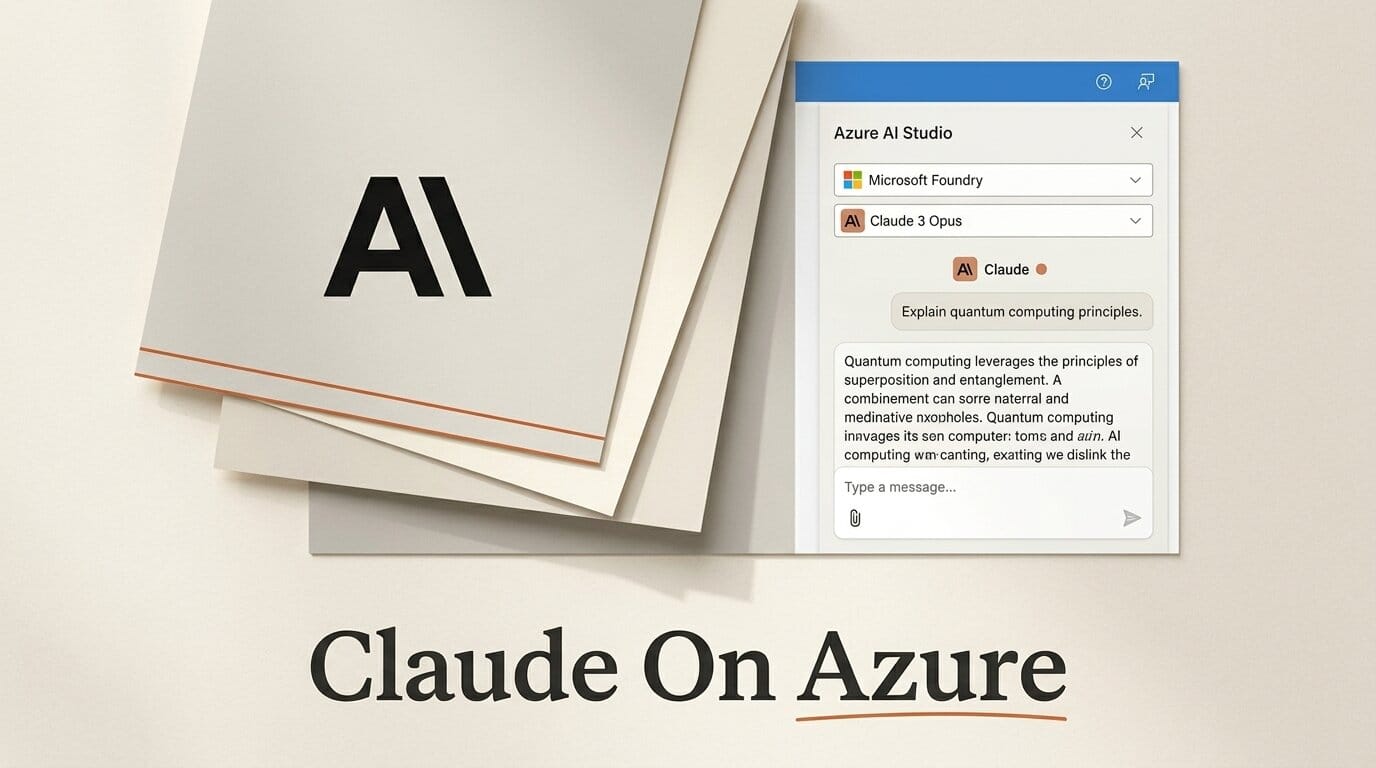
Anthropic and Microsoft made Claude generally available in Microsoft Foundry on June 29, 2026, letting teams run Claude inside their existing Azure environment with Azure identity, billing, and governance. Claude Opus 4.8 and Claude Haiku 4.5 are the two models live at launch, aimed at coding, agentic work, and complex reasoning.
What Happened
Claude reaching general availability in Microsoft Foundry means Azure customers no longer need a separate Anthropic contract or billing relationship to build on Claude. Eligible Microsoft Enterprise Agreement customers can draw Claude usage against their existing Azure commitments and receive a single consolidated invoice. Inference runs on NVIDIA GB300 hardware, with Anthropic operating the models and acting as data processor.
Key Details
The GA release supports the Messages API, prompt caching, and extended thinking, the same core capabilities developers use when building directly on Claude. There are two deployment options: hosted on Azure with a US data zone for residency requirements, or hosted on Anthropic. Azure identity and networking controls apply either way, so existing security policies carry over without rework.
Opus 4.8 is the flagship for hard reasoning and agent orchestration, while Haiku 4.5 is the fast, low-cost model for high-volume calls. Having both available in Foundry lets a team route heavy planning to Opus and cheap, frequent steps to Haiku inside one platform.
Why It Matters for Creators
For builders already standardized on Azure, this removes the biggest friction in adopting Claude: procurement and governance. You can prototype an agent or a coding workflow against Opus 4.8 and ship it under the same compliance, networking, and billing controls your organization already approved. One customer, Everstar, said the pairing let them compress a safety analysis that would have taken 200 human days into a single day.
What to Do Next
If your stack lives in Azure, open Microsoft's Foundry documentation for Claude and deploy Opus 4.8 or Haiku 4.5 from the model catalog, then call it through the Messages API exactly as you would on Anthropic's platform. Anthropic's build guide covers prompt caching and extended thinking setup. If you are weighing where to run agents, this is the moment to test whether Azure-native billing and governance outweigh going direct.
This builds on Anthropic's recent push to make Claude agents easier to run in production, including managed agents with self-hosted sandboxes.