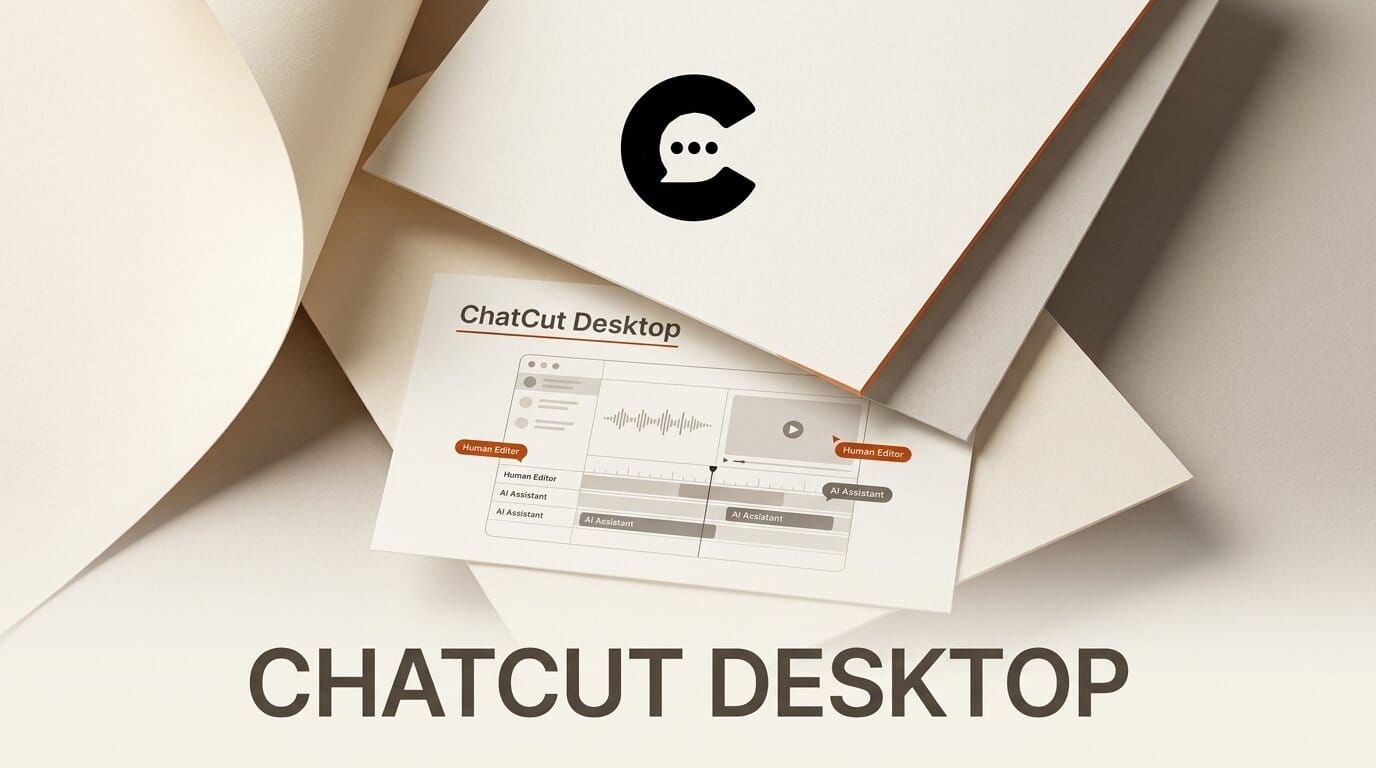
ChatCut released ChatCut Desktop on August 26, 2026, a local video editor built for humans and AI agents to co-edit on the same timeline. It reached the top of Product Hunt on launch day. The pitch is direct: edit with GPT and Claude, connect your existing subscription, and get core editing for free.
Try It: Co-Edit a Rough Cut With Your Own Agent
Because ChatCut Desktop runs locally, it handles larger source files than the earlier web version. Import your footage, then instead of manually trimming every clip, describe the edit and let the agent work the timeline with you: cut to the beats, drop in generated B-roll, add music or sound effects, and tighten pacing. You connect your own OpenAI Codex or ChatGPT account, or a Claude Code subscription, so the core editing runs on tokens you already pay for rather than a separate per-seat fee.
Why It Matters for Creators
Most AI video tools either generate a clip from a prompt or bolt a chatbot onto a fixed template. ChatCut keeps a real, editable timeline and treats the agent as a collaborator on it, which is closer to how editors actually work. Bring-your-own-subscription pricing also changes the math: if you already run Claude Code or ChatGPT daily, the editor's core features cost nothing extra. It fits the broader move toward AI-native editing that tools like idea-to-video generators started, but keeps you in control of the cut.
Key Details
Product: ChatCut Desktop, the third launch from ChatCut and the first native desktop app, after web and ChatGPT versions.
Editing: Editable timeline with agent-assisted cuts, plus generation of video, images, music, and sound effects.
Models: Works with GPT, Codex, and Claude using your own subscription for core editing; premium features need a ChatCut plan.
Interop: Exports project XML to DaVinci Resolve, Premiere Pro, and CapCut, so an agent-assisted rough cut can move into your finishing tool.
What to Do Next
Download ChatCut Desktop from chatcut.io and run one short-form edit end to end, connecting the AI subscription you already have. Judge it on whether the agent's timeline edits save real time versus manual trimming, then export the XML into your usual editor to confirm the round-trip holds up before trusting it on client work.