The honest verdict after testing ten AI design tools through May 2026: Figma wins for product designers who already work in component-based systems, Canva wins for marketers and small teams who need finished output in minutes, and Framer wins for designers who want a real production website without writing code. Everything else is a specialist. We tested each tool against three jobs designers actually do every week: ship a marketing landing page, design an app onboarding flow, and produce a brand asset pack. Pricing, time-to-output, and how cleanly the result hands off to engineering decided the rankings.
Quick Picks
Pick Figma if you already use Figma daily, work with engineers on a real product, or need design tokens and component libraries to survive the handoff. Figma Design Agent drops AI directly inside the canvas you already know, and Figma Make now opens pull requests against your production repo.
Pick Canva if you are a marketer, solo creator, social media manager, or run a small business that needs polished output across decks, social, video, and print without thinking about design systems. Canva Magic Studio bundles image generation, text rewriting, video, and brand kits inside the same editor your non-designer colleagues already understand.
Pick Framer if you want one tool that handles design and the production website end-to-end. Framer's AI generates real components with hover states, breakpoints, and CMS bindings, then publishes to a $10 a month custom domain. No export step, no engineer required.
How We Tested
Each tool produced three deliverables: a five-section SaaS landing page, a three-screen mobile onboarding flow, and a brand asset pack covering logo, social profile imagery, and a one-page pitch deck. We timed each output from first prompt to final exportable file, scored visual fidelity against a senior designer rubric, and noted how cleanly the result handed off to a frontend developer or a marketing team. All testing happened between May 5 and May 27, 2026, using paid tiers wherever a free tier capped features.
The Ten Tools Compared
Figma (Design Agent + Make)
Figma went from "the design tool with an AI sidebar" to "the design tool where AI drafts the screen for you" in two May 2026 releases. Design Agent generates frames directly inside the canvas, reads your existing component library, and respects auto-layout. Figma Make extends that into code: a prompt produces a working React or Vue prototype, and as of May 28 it can open a pull request against your local repo. The trade-off is the learning curve. Figma assumes you understand variants, constraints, and design tokens. If you do not, the AI output buries you in panels you cannot navigate.
Canva Magic Studio
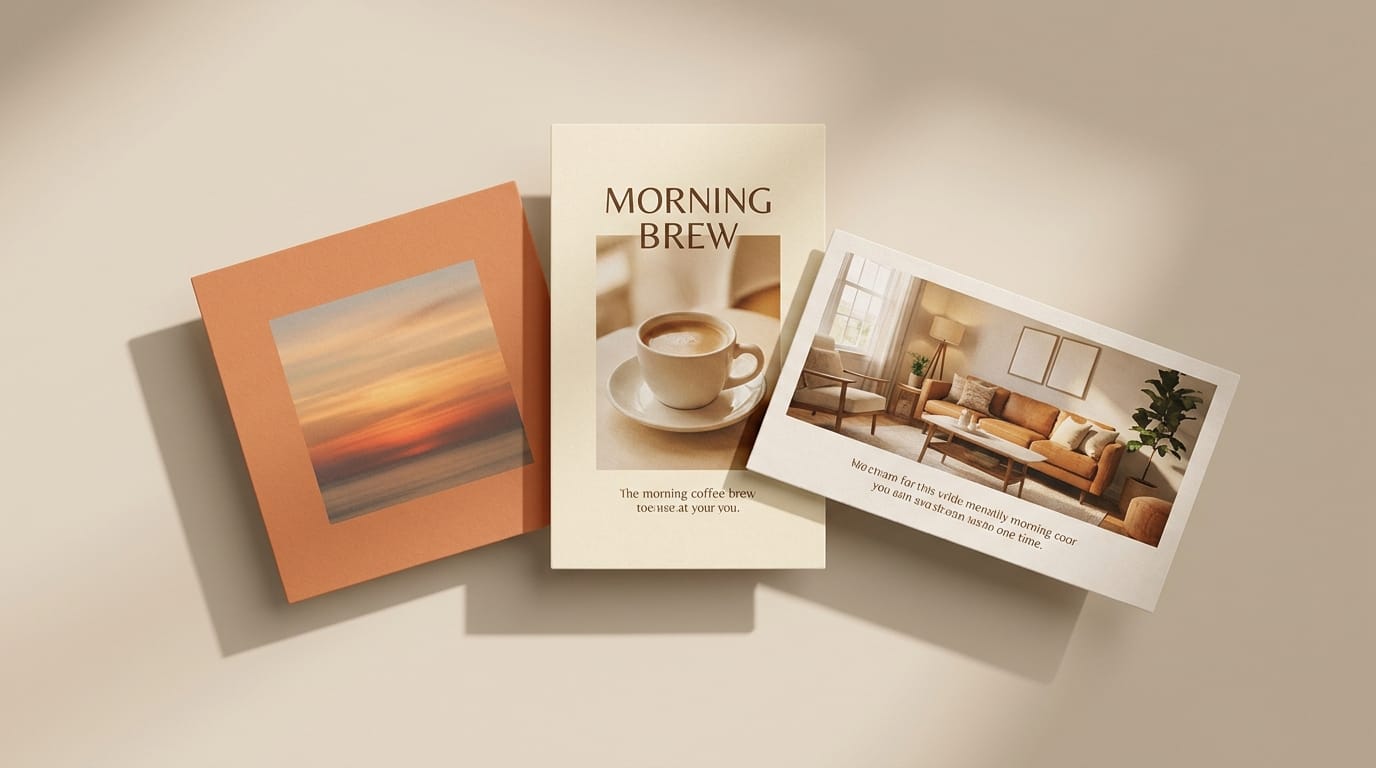
Canva remains the most accessible AI design tool on the market and the only one most non-designers will ever use. Magic Studio bundles Magic Design (generate full layouts from a prompt), Magic Media (text-to-image, text-to-video), Magic Write (copy generation), and Magic Switch (resize and reformat a design for every platform in one click). The Canva Pro tier at $14.99 per month unlocks Brand Kit, premium templates, and background removal. Output quality is consistent and on-brand. The ceiling is product design: Canva will never replace Figma for shipping a real app.
Framer
Framer's AI now generates production websites with real responsive behavior, CMS schemas, and SEO metadata. The Workshop AI feature accepts a prompt or an image and returns a multi-page Framer site with editable sections. The Basic plan at $10 a month publishes one site to a custom domain with AI tools included, and Pro at $30 a month unlocks staging, roles, relational CMS, and A/B testing. Framer is the best answer to "I am a designer and I need a real website live this week." It is not a product design tool, and it does not pretend to be.
Adobe Firefly + Creative Cloud
Adobe shipped Firefly inside Photoshop, Illustrator, Premiere, and Express through 2025 and continued integrating it through 2026. Generative Fill, Generative Expand, Text Effects, and the new Generative Workspace handle most asset production tasks. The IP-clean training data still matters for agency and enterprise work. Pricing is the friction point: a full Creative Cloud All Apps subscription runs roughly $60 per month, which only makes sense if you also need the rest of the Adobe stack. Firefly is now also callable from inside Gemini, which is a credible workflow if you live in chat.
Google Stitch (formerly Galileo)
Stitch is Google's AI UI generator, a successor lineage to Galileo AI. A prompt produces a multi-screen mobile or web design with editable components and a one-click export to Figma. The quality of the first draft is high enough to be useful as a starting point, especially for early-stage product teams that do not yet have a design system. Stitch is free during preview and integrates cleanly with the rest of the Google Workspace stack. It is not a finishing tool. Plan to take output into Figma for polish.
Uizard
Uizard generates app and web UIs from text prompts, screenshots, or hand-drawn sketches. The autodesigner feature produces a multi-screen flow with theme variants. Output is template-flavored, which is fine for internal tools, early prototypes, and pitch decks, and less fine for consumer products that need a distinctive visual voice. Free tier covers two projects with watermarks. Pro tier runs $12 per month.
Visily
Visily occupies the same niche as Uizard with a stronger emphasis on sketch-to-design. Take a whiteboard photo or a screenshot, get back an editable wireframe or high-fidelity mockup. The free tier is generous, the AI Theme feature retheme entire designs instantly, and the export to Figma works without complaint. The tool is most useful inside product discovery: turn a stakeholder's napkin into something a PM can review the same day.
Microsoft Designer
Microsoft Designer is the consumer-facing AI design tool bundled into Microsoft 365 Copilot and available standalone for free. It generates social posts, invitations, presentations, and stickers from text prompts using DALL-E. The output skews toward consumer occasions: birthday cards, party invitations, simple social graphics. Power users will outgrow it within an hour, but for the Microsoft 365 install base it removes one more reason to leave the Office suite.
Recraft
Recraft is the only tool on this list that generates both raster and vector output. The vector models produce editable SVG icons, illustrations, and brand marks in a consistent style. The infinite canvas, style references, and brand controls make it the best AI tool for solo brand designers and small studio owners. Recraft V3 sits at or near the top of the Image Arena leaderboard. Pricing starts at $12 per month for the Basic tier.
Khroma
Khroma is a single-purpose AI color palette generator trained on the colors you personally rate from an initial swatch quiz. It produces palettes, gradients, type pairings, and image references in real time. Free to use. Not a design tool by itself, but the fastest way to get a defensible palette into Figma or Canva.
Comparison Table
| Tool | Best for | Starting price | Output ceiling | Engineer handoff |
|---|---|---|---|---|
| Figma (Design Agent + Make) | Product design at scale | $15/editor/mo | Production apps | Excellent (PR-ready) |
| Canva Magic Studio | Marketing and social | $14.99/mo | Brand and content | Limited |
| Framer | Websites end-to-end | $10/mo | Live production sites | Publishes directly |
| Adobe Firefly | Asset production | ~$60/mo (CC All Apps) | Print and pro creative | Manual export |
| Google Stitch | First-draft UI | Free (preview) | Early prototypes | Figma export |
| Uizard | Internal tool UIs | $12/mo | Template-flavored UIs | Figma export |
| Visily | Sketch-to-design | Free tier generous | Discovery artifacts | Figma export |
| Microsoft Designer | Office 365 consumer use | Free | Social and invites | None |
| Recraft | Vector brand assets | $12/mo | Icon sets and brand | SVG export |
| Khroma | Color palettes | Free | Palettes only | Copy hex codes |
When Each One Wins
Product Design at Scale: Figma
If your design output ships as a real product to real users, Figma is not optional. Design Agent and Make let your existing component library do the work instead of forcing you to redraw screens. The PR-creation flow shipped May 28 closes the gap between design and engineering further than any competitor. The Professional tier at $15 per editor per month is the baseline. Enterprise teams pay more for Design System and SSO features.
Marketing, Social, and Brand Content: Canva
Canva Pro at $14.99 per month replaces five or six freelance assignments per quarter for most small businesses. The Brand Kit feature locks colors, fonts, and logos across every output, so non-designer teammates cannot drift the visual identity. Magic Switch alone justifies the Pro tier if you publish to more than two platforms. Read the side-by-side workflow comparison in our coverage of Claude for Small Business and the AI marketing stack.
Production Websites: Framer
Framer's Basic plan at $10 a month gets a designer-led website live with a custom domain, CMS, and AI generation. No engineer required, no migration to WordPress, no Webflow learning curve. If your output is "a marketing site that converts and a designer needs to ship and own it," Framer is the answer. Larger sites and team workflows move up to Pro at $30 per month for staging, roles, and A/B testing.
Pricing and ROI
For a solo designer working across product, marketing, and brand, the lowest-cost defensible stack in May 2026 is Figma Professional ($15) plus Canva Pro ($14.99) plus Framer Basic ($10), totaling under $40 per month. Replace one freelance logo or landing page assignment per quarter and the stack pays for itself. Agency designers and in-house product teams that already pay for Adobe Creative Cloud should keep Firefly access via that subscription rather than double-paying. The hidden cost is not the seat license: it is the time spent learning each tool well enough to skip the templated output. Plan two weeks of practice per tool before counting it as a productivity gain.
Verdict
Three tools earn a permanent spot on a 2026 designer's home screen: Figma for product, Canva for marketing, Framer for websites. Add Recraft if you produce vector brand assets, Adobe Firefly if you already pay for Creative Cloud, and Stitch as a free first-draft accelerator inside the Google ecosystem. Everything else is a specialist that earns a seat when a project demands it. The next twelve months will compress this list further: expect Figma to absorb more of Framer's website territory and Canva to keep pushing into video and code. For now, the boundaries are clear, and the math favors a multi-tool stack over a single AI suite.
FAQ
What is the best free AI design tool in 2026?

Google Stitch in preview, Microsoft Designer, Khroma, and Visily's free tier all deliver real output without a paid plan. Stitch wins if you need a UI starting point, Microsoft Designer wins for casual social and invitation graphics, Khroma owns color palette generation, and Visily handles sketch-to-design at the discovery stage.
Can AI replace a human designer in 2026?
For templated marketing output, social content, and first-draft UIs, AI now produces work indistinguishable from a junior freelancer. For brand systems, product design at scale, accessibility compliance, and any work that requires defending decisions to a stakeholder, AI is an accelerant, not a replacement. The senior designer role is shifting toward editing AI output and owning systems, not drawing pixels.
Is Figma Make a Framer competitor?
Figma Make generates working code from prompts and can open pull requests against your local repo, which overlaps with Framer's value. The difference is destination: Make produces React or Vue code that engineers ship, while Framer publishes a hosted website directly. If your team already has engineers, Make fits inside the existing build pipeline. If you want a designer-owned site live this week without engineering, Framer remains the right tool.
Do I need to learn prompt engineering to use these tools?
No. Each tool ships with prompt templates, visual style controls, and reference image inputs. The teams getting the most out of AI design tools in 2026 are the ones using image references and component libraries, not the ones writing longer text prompts. Start with a reference image or a brand asset, then refine through edits.
Will Adobe Creative Cloud still be necessary in 2026?
If you produce print, work in motion or video at a professional level, retouch photography, or take agency-level brand commissions, yes. For digital-first creators who only need raster image generation and quick edits, Canva, Recraft, and Framer cover the workflows that used to require Photoshop and Illustrator. The $60 per month all-apps subscription is hard to justify on AI features alone.