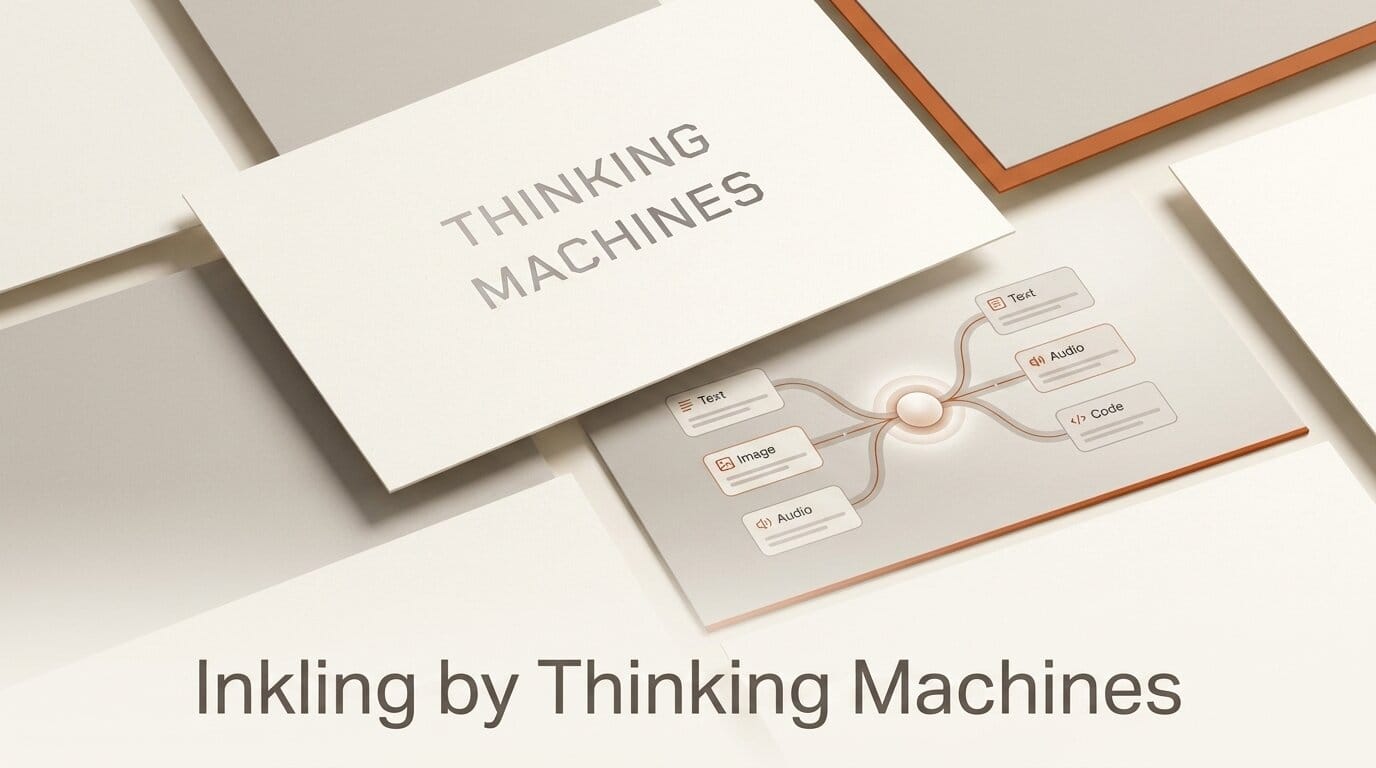
Thinking Machines, the lab founded by former OpenAI CTO Mira Murati, has released its first open model. Inkling is a 975-billion-parameter Mixture-of-Experts model that reads text, images, and audio, and it shipped on July 15, 2026 with open weights on Hugging Face and a one-click path to fine-tuning. For creators and builders, this is the first frontier-scale multimodal model from the lab that you can actually download, quantize, and adapt to your own work.
What Happened
Inkling is a decoder-only Mixture-of-Experts model with roughly 1 trillion total parameters (975B) and 256 experts, of which only 41 billion parameters are active on any given token. That sparse design is what lets a model this large stay affordable to run: you pay compute for 41B active parameters, not the full trillion. Thinking Machines trained it on 45 trillion tokens spanning text, images, audio, and video, and the released checkpoints accept text, image, and audio input out of the box.
The weights are live on the Hugging Face model repository as open weights, with day-one support across the inference stack: Transformers 5.14+, vLLM, SGLang, and llama.cpp. The lab published a full write-up with benchmark tables on the Hugging Face blog. On the standard reasoning and agentic suites, Inkling reports AIME 2026 of 99.2, GPQA-Diamond of 91.2, and SWE-bench Pro of 62.1, putting it in the same conversation as the top closed frontier models on math, science, and coding.
How to Run It: Three Deployment Tiers
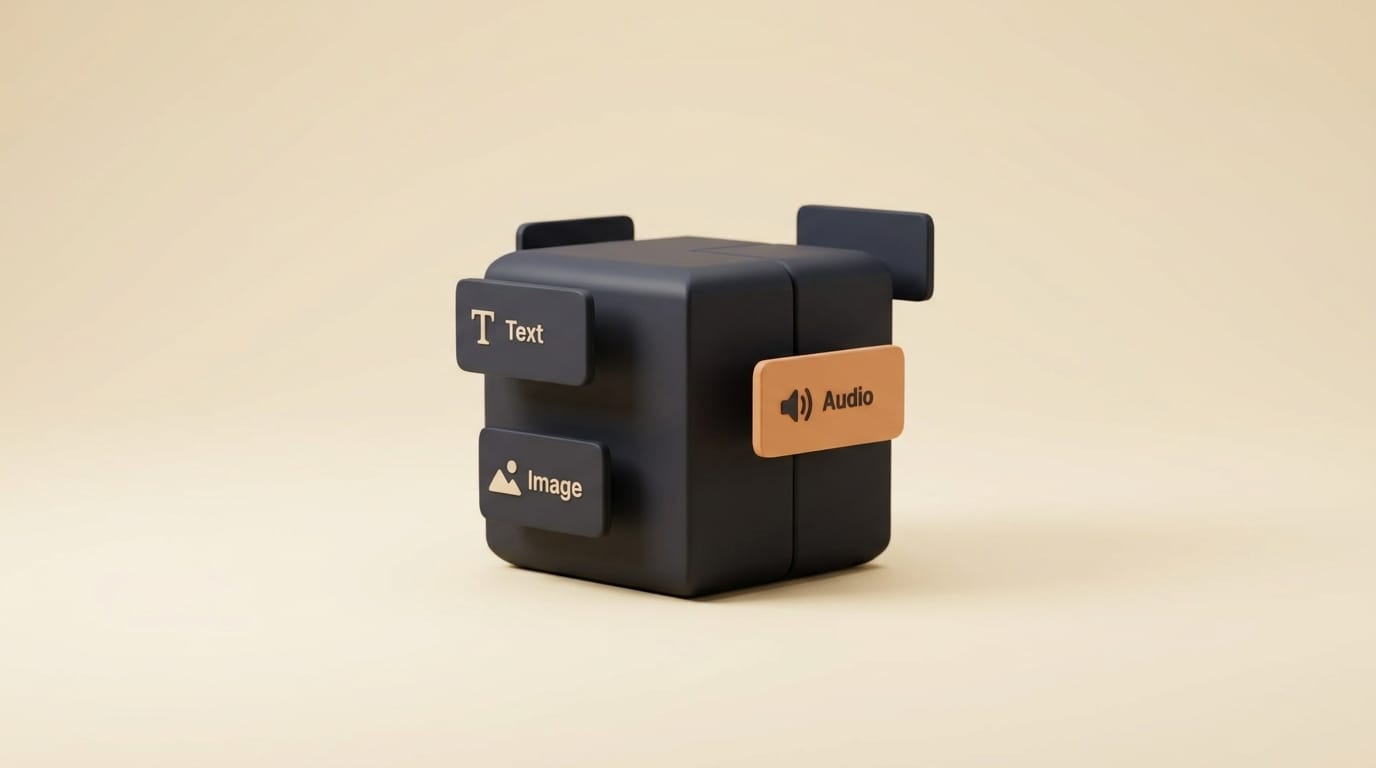
The reason Inkling matters for working creators is that Thinking Machines shipped it in tiers, so you do not need a datacenter to touch it. The full-precision BF16 build is a research-lab artifact, but the quantized variants bring it down to a single high-end node, and the community GGUF builds push it onto enthusiast hardware.
| Variant | Precision | Minimum VRAM | Who it is for |
|---|---|---|---|
| Inkling (BF16) | 16-bit | 2 TB | Labs and cloud inference providers |
| Inkling-NVFP4 | 4-bit (Blackwell) | 600 GB | Single 8-GPU server |
| Unsloth GGUF | 1-bit dynamic | Up to 95% reduction | Enthusiasts and local tinkerers |
The NVFP4 checkpoint targets Nvidia Blackwell GPUs and fits in about 600GB of VRAM, which is one dense 8-GPU box rather than a cluster. The Unsloth team has already published dynamic 1-bit GGUF quantizations that cut memory by up to 95 percent, the same approach that put earlier giant models on consumer rigs. If you have followed our coverage of running GLM-5.2 on consumer hardware or 1-bit models on a phone, the playbook here is familiar.
Fine-Tuning Without the Infrastructure
Open weights are only half the story. The other half is that Inkling plugs straight into Tinker, Thinking Machines' managed fine-tuning platform. Instead of standing up your own training cluster, you send LoRA and full fine-tuning jobs to Tinker and get back an adapted model, with the context window extendable to 256K tokens on the platform versus the 64K default. The Tinker documentation walks through the API, so a small team can specialize Inkling for a domain, a house style, or an agent workflow without owning a single GPU.
For a builder, that combination is the point. A multimodal base that understands images and audio, released under open weights, that you can both self-host and fine-tune through a hosted API, is a stack you can build a product on without betting everything on a single closed vendor's roadmap or pricing.
Why It Matters for Creators
Most frontier multimodal models arrive as closed APIs. You call them, you pay per token, and you cannot inspect, quantize, or adapt them. Inkling breaks that pattern at the top of the capability curve. A model that scores in the 90s on graduate-level science and near the ceiling on competition math, while accepting audio and images, is now something you can pull down, run behind your own firewall, and tune on your own data.
That opens concrete workflows. A video team can build an audio-aware assistant that reasons over raw footage. A studio bound by client confidentiality can run a capable multimodal model entirely on-premises. A developer can fine-tune a house model for a niche where the closed APIs are mediocre, then serve it with the quantized build to keep costs sane. The "controllable effort" setting, which trades speed for depth per request, means the same weights can power both a fast interactive tool and a slow, careful agent.
Key Details
Model: Inkling, decoder-only Mixture-of-Experts, 975B total / 41B active parameters, 256 experts.
Modalities: Text, image, and audio input.
Context: 64K tokens by default, extendable to 256K on Tinker.
Availability: Open weights on Hugging Face; BF16 and NVFP4 checkpoints, plus community GGUF builds.
Fine-tuning: Managed LoRA and full fine-tuning via the Tinker platform.
Released: July 15, 2026 by Thinking Machines.
What to Do Next
If you have the hardware, pull the NVFP4 checkpoint and benchmark it against whatever closed API you currently pay for on your own tasks. If you do not, request access to Tinker and try a small LoRA fine-tune on a domain sample before committing. Either way, treat this launch as a signal: open-weights multimodal models are now close enough to the closed frontier that self-hosting is a real option for creator tools, not just a research exercise.
Frequently asked questions
What is Inkling?
Inkling is the first open model from Thinking Machines, a 975B-parameter Mixture-of-Experts model with 41B active parameters that accepts text, image, and audio input. It was released with open weights on Hugging Face on July 15, 2026.
Is Inkling actually open source?
Thinking Machines released it as open weights, meaning the model checkpoints are downloadable and you can run and fine-tune them yourself. Check the license terms on the Hugging Face repository before commercial use, as open weights and OSI-approved open-source licenses are not always the same thing.
What hardware do I need to run Inkling?
The full BF16 build needs roughly 2TB of VRAM. The NVFP4 quantized variant fits in about 600GB on Nvidia Blackwell GPUs, and Unsloth's dynamic 1-bit GGUF builds cut memory by up to 95 percent, bringing it within reach of enthusiast multi-GPU setups.
How does Inkling compare to closed models like GPT-5.6 or Claude?
On reported benchmarks, Inkling posts competitive numbers including AIME 2026 of 99.2 and GPQA-Diamond of 91.2, placing it near the top closed frontier models on math, science, and coding. The practical difference is that you can download and adapt Inkling, which the closed models do not allow.
Can I fine-tune Inkling on my own data?
Yes. Beyond self-hosting, Thinking Machines offers the Tinker platform for managed LoRA and full fine-tuning, so you can specialize the model without running your own training cluster. On Tinker the context window extends to 256K tokens.
What can Inkling do that text-only models cannot?
Because it accepts image and audio input, Inkling can reason over screenshots, photos, and recorded audio directly, which suits multimodal creator tools such as footage-aware video assistants or audio-transcription-plus-analysis pipelines.