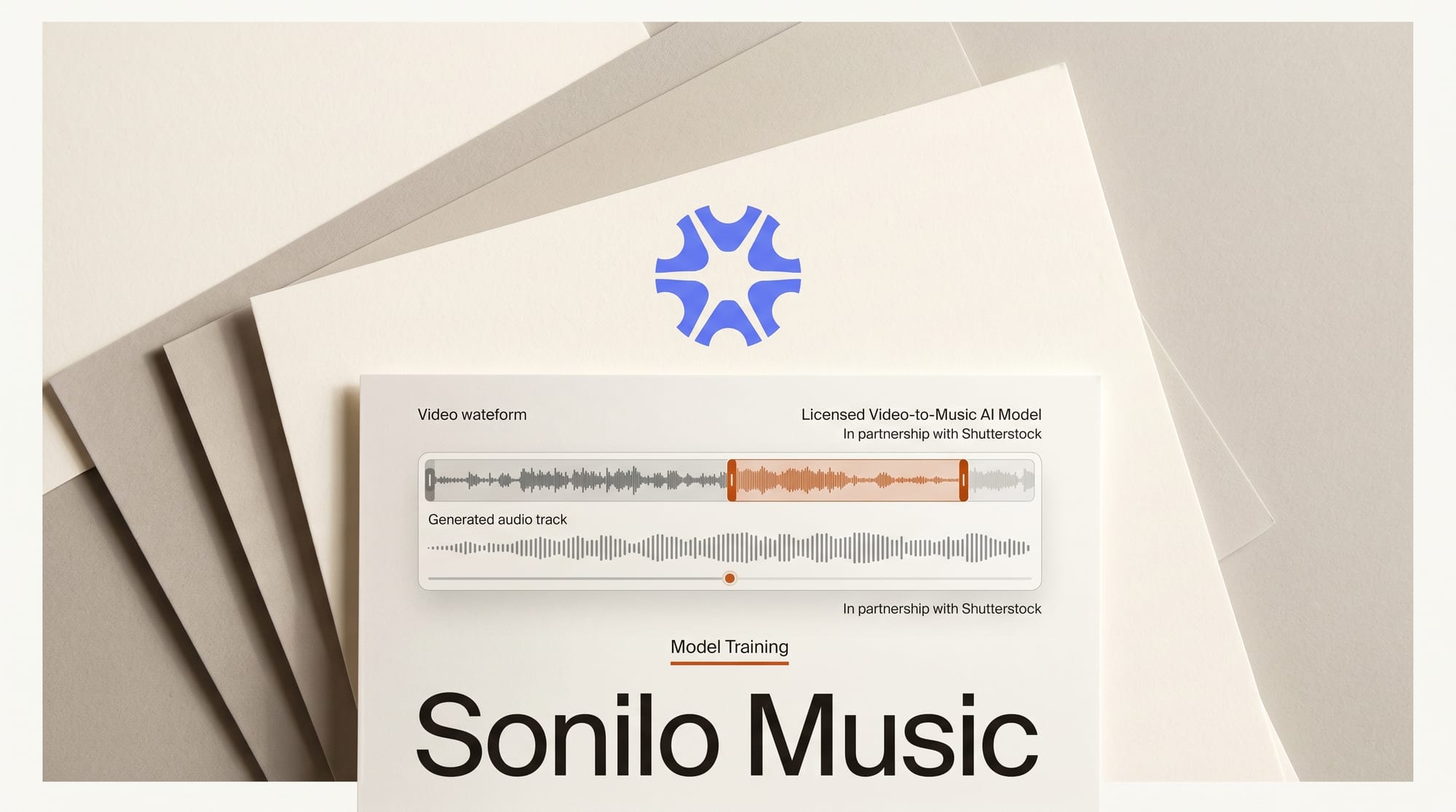
Sonilo, a San Francisco startup behind a video-to-music AI model, announced on May 11, 2026 that it has licensed Shutterstock's full music catalog for AI model training. The deal is Shutterstock's first partnership with a video-to-music platform, and it positions Sonilo as one of the few generative music tools that ships commercially cleared output by default. Creators who hit publish on a Sonilo soundtrack now get a track that is licensed at the dataset layer, not just the output layer.
What Sonilo and Shutterstock Just Did
Sonilo's v1.0 model takes a video file as input and generates an original soundtrack scored to the footage. No text prompt, no library search, no manual sync work. The May 11 partnership adds Shutterstock's catalog to Sonilo's training data, and Shutterstock takes a stake in the broader video-to-music category by being the licensor.

Shawn Song, Sonilo's CEO, framed the deal as a deliberate licensing play: "Music has always been the last unsolved layer of video creation. We've chosen a different path, one where artists are compensated from day one." Jessica April, Shutterstock's VP of Data Licensing and AI Services, called it a response to "growing demand for responsibly sourced training data and commercially safe AI workflows." Sonilo is backed by B Capital, the Boston Consulting Group affiliate.
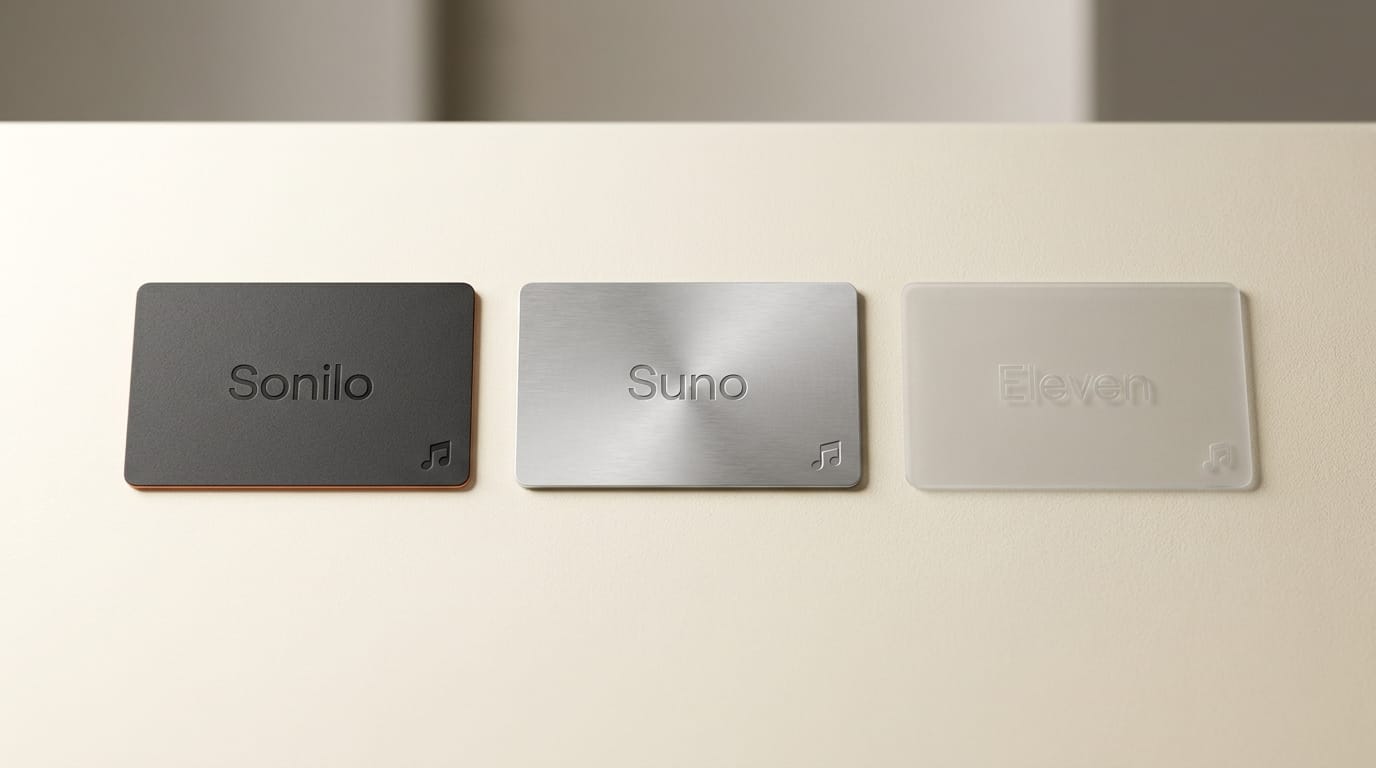
How Sonilo Compares to Suno, ElevenMusic, and Mubert
The video-to-music slice of the AI music market is small but growing. Most generative music tools start from text prompts or seed audio. Sonilo's video-first approach maps closer to traditional film scoring than to the lyric-driven workflows behind Suno or ElevenMusic.
| Tool | Input | Output Length | Commercial Use | Licensed Training Data |
|---|---|---|---|---|
| Sonilo v1.0 | Video file | Up to 15 min (Premium) | Yes (Pro+) | Yes, Shutterstock catalog |
| Suno v5.5 | Text + optional voice | Up to 8 min | Yes (Pro+) | Disclosed mix, partial licensing |
| ElevenMusic | Text prompt | Up to 5 min | Yes (paid tiers) | Kobalt and Merlin licensing |
| Mubert | Text prompt | Up to 25 min loops | Yes (paid tiers) | Royalty-free artist pool |
Sonilo's differentiator is two-sided. Video creators get a track structured to their cut without prompt engineering, and they get a chain of title that goes back to a named catalog. For a brand video team or a YouTube channel chasing monetization, that second part is the entire ballgame. Tracks scraped from undisclosed sources are increasingly a takedown risk on platforms that scan music IDs.
Try Sonilo in a Production Workflow
The fastest way for an existing video team to test Sonilo is through the ComfyUI integration that shipped on April 14, 2026. Comfy's blog announced the native partner node, which slots into any ComfyUI graph that already produces a video. A working test flow looks like this:
- Render or import a 30 to 60 second video clip in ComfyUI.
- Add the Sonilo node from the partner nodes registry.
- Connect the video output to the Sonilo input. Set the desired mood tag if you have one.
- Run the graph. Sonilo returns multiple soundtrack variations sized to the clip.
- Pick a variation and route it to the audio output of your render node.
For teams that prefer a hosted pipeline, the same model is available on sonilo.com as a web app. The web flow accepts uploads up to 1.5 GB on the Pro tier and 3 GB on Premium, which covers most short-form and mid-length edit lengths.
Why Licensed AI Music Is Consolidating
The Sonilo and Shutterstock deal is the third licensed music event in roughly six weeks. ElevenLabs signed Kobalt and Merlin licensing into its unified ElevenMusic creator platform on April 30. Suno picked up structured concert data from Songkick to anchor its live-music feature stack on May 3. The full landscape, including these and earlier deals, lives in our 2026 AI music guide.

The pattern is consistent. Generative music vendors that started without catalog deals are now buying them, and catalog holders that resisted AI training are now picking partners. Sonilo's April ComfyUI partnership previewed this shift on the distribution side. The Shutterstock deal closes it on the supply side.
For creators, the practical effect is that the cleared catalog is becoming the floor, not the ceiling. A year ago, cleared AI music was the premium tier. By the second half of 2026, vendors without licensing claims will sit on the wrong side of platform policy.
Pricing and Plan Breakdown
Sonilo lists four tiers on its pricing page. The Free plan caps at 8 video generations per month, 3 minutes per video, and 7 day project retention. It does not include commercial use rights, which makes it a trial tier rather than a production tier.
The Pro plan is $14.99 monthly or $11.99 with annual billing. It unlocks 30 video generations, 8 minute clips, 1.5 GB uploads, commercial use, and watermark-free exports. The Premium plan is $29.99 monthly or $23.99 annually. It moves the cap to 62 video generations, 15 minute clips, and 3 GB uploads. Enterprise plans are custom and add a dedicated dashboard plus priority processing.
The cost curve is competitive against Suno Pro at $10 a month and ElevenMusic Creator at $22 a month, particularly for teams whose primary need is a soundtrack matched to existing footage rather than text-to-music generation.
Frequently asked questions
Can I sell videos that use Sonilo soundtracks?
Yes on the Pro and Premium tiers. Sonilo's terms grant commercial use to paid subscribers and ship tracks that are cleared for advertising, social, branded video, and broadcast use. The Free tier does not include commercial rights.
Does Sonilo generate vocals or only instrumental music?
Sonilo v1.0 ships primarily instrumental output structured around the pacing of the input video. Vocal generation is not the focus. For lyric and vocal generation, Suno and ElevenMusic remain the more direct fits.
How does the Shutterstock licensing affect what Sonilo can output?
The licensing covers training data, not output style. Sonilo generates original compositions rather than catalog clips. The deal means the underlying model was trained on consented and paid catalog material, which removes the data provenance dispute that haunts text-to-music tools that scraped public audio.
Is Sonilo available outside the web app and ComfyUI?
Yes. The platform exposes an API for integration into video tools, creator platforms, game engines, and AI systems. The ComfyUI partner node remains the simplest entry point for solo creators who already run a graph-based pipeline.
How does Sonilo compare to Veo 3's native audio generation?
Veo 3 generates video and audio in one pass, with sound effects and ambient audio baked into the clip. Sonilo runs as a post step on any video file regardless of generator. The two are complementary rather than competitive. Many production workflows use Veo or Runway for the visual and Sonilo for the score on top.
What to Watch
Three signals are worth tracking through Q2 2026. First, whether other stock catalogs follow Shutterstock's lead and pick partners. Getty and Pond5 are obvious candidates. Second, whether platform music ID systems start crediting Sonilo's output as cleared, which would settle one of the harder questions for monetized creators. Third, whether the next wave of video generators bundles Sonilo or a Sonilo-style scoring layer rather than relying on text prompts for the soundtrack.