Snap added five generative AI features to its Lens+ subscription on 21 September 2026, and the one everybody is talking about turns a text message into music. Press and hold a message in Chat, tap Generate Song, pick a genre, and Snapchat returns what Snap calls "short original songs" set to your own words. The other four are Photoshoot, AI Remix, Sticker Remix and AI Fonts, and all five are locked behind the $8.99 a month tier.
The feature is real, it is shipping now, and it is a productized version of something people were already doing by hand. Music-industry trade publication Music Ally reported on 22 September that the idea comes from a TikTok trend of feeding screenshots of chat messages into Suno, a trend strong enough to push Suno's iPhone app to the top of the US App Store charts earlier this year. Snap watched that happen and built it into the message bubble.
What Snap did not do is answer either of the questions that decide whether a generated song is a toy or an asset: what model made it, and what you are allowed to do with it. Neither answer appears in the announcement, the help documentation, or Snap's own generative AI policy page. This article maps what is actually documented, sets it against what Suno and ElevenLabs put in writing, and shows where the output stops.
What Snap shipped on 21 September
Chat to Song is the headline, and Snap's support article is the only place the mechanics are written down. The flow is five taps: open a Chat, press and hold the message, tap Generate Song, choose a genre pill, then tap Generate Song again. You get a preview, you can pick album art, and then you tap Send Sound to put it in the conversation.
Three constraints sit in that page and none of them are in the announcement. First, "a Lens+ subscription is required to generate songs." Second, the feature "may not be available in every Chat or for every account while Snapchat is testing." Third, the troubleshooting section lists "reaching a daily or rate limit" as a reason generation fails, without publishing what that limit is. You cannot plan around a cap whose number is not disclosed.
Forwarding is asymmetric in a way worth noticing: the page states that if you generated the song, you can forward it to other friends. The person who received it does not get the same permission. The song is attached to the conversation and to the account that made it.
The other four features follow the same shape. AI Photoshoot cleans up blinks, averted gazes and poor lighting without a reshoot. AI Remix reimagines a friend's Snap in a new style. Sticker Remix restyles a saved or received sticker. AI Fonts turns caption text into bubble letters, spray paint, foam and similar treatments. Snap says all of it is "rolling out now in all markets where Lens+ is available, but access may vary by region over the coming weeks."
The two questions Snap did not answer
Music Ally, whose readership is record labels and publishers rather than Snapchat users, asked the questions directly and got nothing: "Is this Snapchat's own AI-music model or one of a partner, and if the latter, whose?" and "What music was that model trained on, and if it was commercial music, was it licensed?"
Both are open. Snap has form building generative models in house rather than licensing them, having used its own video model for AI Lenses since 2025, so an in-house music model is plausible. Plausible is not disclosed. For a creator the training-data question is not academic, because it is the question that determines whether a generated track carries downstream risk.
Snap's generative AI policy page is detailed about the direction that flows toward Snap and silent about the direction that flows back. It states that Snap may use "images, videos, audio, and text content that you have posted publicly on Snapchat (such as posts to Spotlight, Public Stories, and the Snap Map) to develop, train, and improve Snap's generative AI content creation models," with an opt-out under Settings, then Privacy Control, then Manage My Information. It lists song generation from Chat messages among its AI features. It contains no statement about who owns a generated output or whether you may use one commercially.
Where the song actually goes
Labelling is where the gap becomes visible. Snap marks AI content with a sparkle icon, disclaimers, Context Cards or tool tips, and generated songs carry an "AI Song" label when sent. For generated images, Snap goes further: the policy page describes a watermark of a Snap Ghost with sparkles applied when an image is exported, so that it is clear the picture "was created with generative AI and is not real or based on real events."
Read that carefully. Snap has an export-marking policy for generated images, which implies an export path for images. For songs there is a label that lives inside a chat bubble and no documented way to get the file out at all. The comparison against the two tools people already use for this makes the difference concrete.
| Dimension | Snapchat Chat to Song | Suno | ElevenLabs Music |
|---|---|---|---|
| Where the output lives | Inside a Snapchat Chat | Your Suno library | Your ElevenLabs workspace |
| Documented download | None | Yes, allocation varies by tier | MP3 on all plans, WAV lossless on higher plans |
| Ownership stated | Not stated anywhere | Assigned to Pro and Premier users | Governed by plan terms |
| Commercial use | Not stated | Paid tier plus a download; free tier is "personal and non-commercial" | Free and Starter personal only; Creator and Pro commercial except film, TV and Studio Games |
| Model disclosed | No | No, but versioned and named | "Built in partnership with artists, labels, and publishers" |
| Marking | "AI Song" label in chat | Fingerprint or watermark you may not remove | Per plan terms |
| Price | $8.99 a month Lens+ | Tiered, download caps per tier | Free to $99 a month Pro |
The row that matters is not price and it is not quality. It is the second one.
Download is the switch that turns an effect into an asset
Suno makes the logic explicit in its terms of service, and it is the clearest statement of how this category works that any vendor has published. For paid accounts, "Suno hereby assigns to you all of its right, title and interest in and to any Output owned by Suno and generated from Submissions made by you." For free accounts, "you will only use such Outputs for your lawful, personal and non-commercial purposes."
Then comes the sentence that does the work: "You may not commercially exploit Output that has not been downloaded by you through an approved channel." The download is not a convenience in Suno's model. It is the act that converts a generation into something you can use. Suno also draws a hard line around marking, requiring that you "not remove, alter, obscure or circumvent any fingerprint, watermark or metadata Suno appends to an Output."
ElevenLabs Music structures it the same way with different words, tying rights to the plan and shipping MP3 on every tier with lossless WAV higher up. Its self-serve plans permit "online and offline commercial use, except for film, TV, and Studio Games," and it describes its catalogue as "cleared for broad commercial use" with rights varying by subscription.
Apply that framework to Chat to Song and the answer falls out. There is no documented download, so there is no documented act that could convert the generation into an asset, so there is nothing to attach commercial rights to even if Snap wanted to grant them. That is not an oversight to be fixed in a patch note. It is consistent with what the feature is: a message effect that makes a conversation funnier, sitting in the same product category as a Lens, not in the category occupied by Suno and ElevenLabs.
Who should pay the $8.99, and who should not
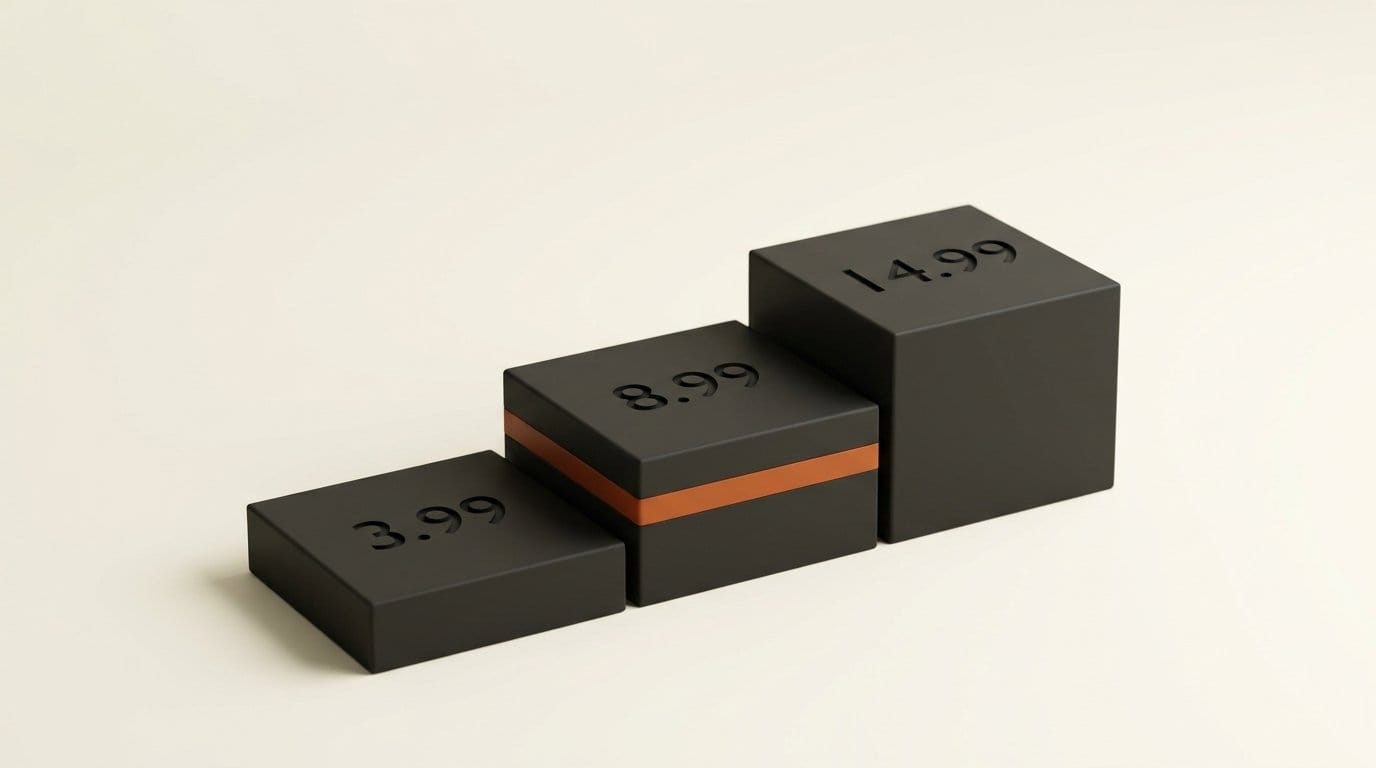
Lens+ costs $8.99 a month and has since it launched on 11 June 2025. It sits above the standard $3.99 Snapchat+ tier and below Platinum at $14.99, and it includes the Snapchat+ perks. The direction of travel is the interesting part: Snapchat+ had over 14 million paid subscribers when Lens+ launched, and passed 25 million in February 2026, carrying Snap's direct revenue to a $1 billion annualized run rate. AI creation features are not being given away to grow engagement. They are the upsell.
So the decision is clean. If your creative work ends inside Snapchat conversations, the five features are worth the money and Chat to Song is the most fun of them. If you need a track for a video, a client, a release or anything that leaves the app, none of this replaces a minute of Suno or ElevenLabs time, because the thing you need is a file and there is not one.
The group most likely to be caught out sits between those two: creators who post to Spotlight and Public Stories. Snap's policy page says publicly posted content feeds model training unless you opt out, so if you are producing work on Snapchat at any volume, the Manage My Information setting is worth a look regardless of whether you subscribe.
How to get a usable song out of a chat message today
If what you actually wanted was the TikTok trend rather than the Snapchat feature, the original route still works and it ends with a file you own.
- Write the message as lyrics, not as a chat. The models respond to line breaks and repetition. A two-line hook repeated beats a paragraph.
- Generate on a paid tier. On Suno, commercial use requires both a paid plan and a download through an approved channel. On ElevenLabs, commercial rights start at the Creator tier. Free-tier output is personal use on both.
- Download immediately. Treat the download as the step that creates the asset, not as an afterthought, and watch your tier's monthly allocation.
- Keep the marking intact. Both vendors prohibit stripping watermarks, fingerprints or metadata, and platforms increasingly read that metadata for AI-content labelling.
- Then send it into Snapchat if you want. Nothing stops you sharing a file you own into a chat. The route that starts in the chat is the one that does not come back out.
Frequently asked questions
Do I need a subscription to use Chat to Song?
Yes. Snap's support page states that a Lens+ subscription is required to generate songs. Lens+ is $8.99 a month. Snap also notes the feature may not be available in every Chat or for every account during testing, so a subscription does not guarantee access yet.
Can I download or export a song Snapchat generates?
No download or export path is documented anywhere in Snap's announcement, support article or generative AI policy page. You can preview a song, send it into the conversation, and if you generated it, forward it to other friends. Nothing published describes getting the audio file itself.
Can I use a Snapchat-generated song commercially?
Snap has published no ownership or commercial-use terms for generated songs. Compare that with Suno, which assigns output rights to paid users but only permits commercial exploitation of output you have downloaded, and ElevenLabs, which ties commercial rights to your plan tier. With no stated rights and no download, there is no documented basis for commercial use.
Which model generates the songs?
Snap has not said. Music Ally asked whether it is Snap's own model or a partner's, and whether the training data was licensed commercial music, and received no answer. Snap has built its own generative models for AI Lenses in the past, which makes an in-house model plausible but not confirmed.
Is there a limit on how many songs I can generate?
Yes, and the number is not published. Snap's troubleshooting guidance lists hitting a daily or rate limit as a reason generation can fail, but no figure appears in the documentation.
How will people know a song was made by AI?
Songs sent in a chat carry an "AI Song" label alongside the sparkle icon Snap uses to disclose generated content. For generated images Snap applies a Snap Ghost watermark on export. No equivalent file-level marking is documented for songs, because no file export is documented.
Are the other four Lens+ AI features worth it on their own?
AI Photoshoot is the most practically useful of the set, since fixing a blink or bad lighting without a reshoot saves a real step. AI Remix, Sticker Remix and AI Fonts are conversational effects. All five share the same boundary: they improve what you send inside Snapchat and produce nothing you take elsewhere.