One week after OpenAI killed Sora, Runway walked onto its own stage in New York City and laid out a plan to own what OpenAI left behind. The company did not announce a new model. It announced a fund, a startup program, and an ecosystem strategy designed to make Runway the default platform for AI video, not just the best tool.
For the broader landscape, see our complete guide to AI video generation in 2026.
The Runway AI Summit, held March 31 at The Glasshouse in Manhattan, brought together executives from Lucasfilm, Paramount, EA, Adobe, NVIDIA, Spotify, and Block. While other AI video companies scrambled to absorb Sora refugees, Runway used its summit to unveil a $10 million venture fund and a Builders program that hands startups 500,000 free API credits. The message was clear: Runway is no longer competing on video quality alone. It is building a platform that other companies build on top of.
Background
Runway has spent the past year transforming from a video generation startup into what increasingly resembles a platform company. The February 2026 Series E raised $315 million at a $5.3 billion valuation, up from $3.3 billion just ten months earlier. Gen-4.5 holds the top spot on the Video Arena leaderboard. Projected revenue for 2026 sits at $265 million, representing over 200% year-over-year growth.
Then came March 24. OpenAI shut down Sora, dissolved a $1 billion Disney partnership, and exited AI video generation entirely. The move reshuffled the competitive landscape overnight. Runway, Google Veo, Kling, and Pika suddenly operated in a market without the threat of a well-capitalized newcomer resetting pricing expectations. Runway chose this exact moment to double down.
Deep Analysis
The $10M Fund: Building Distribution Through Startups
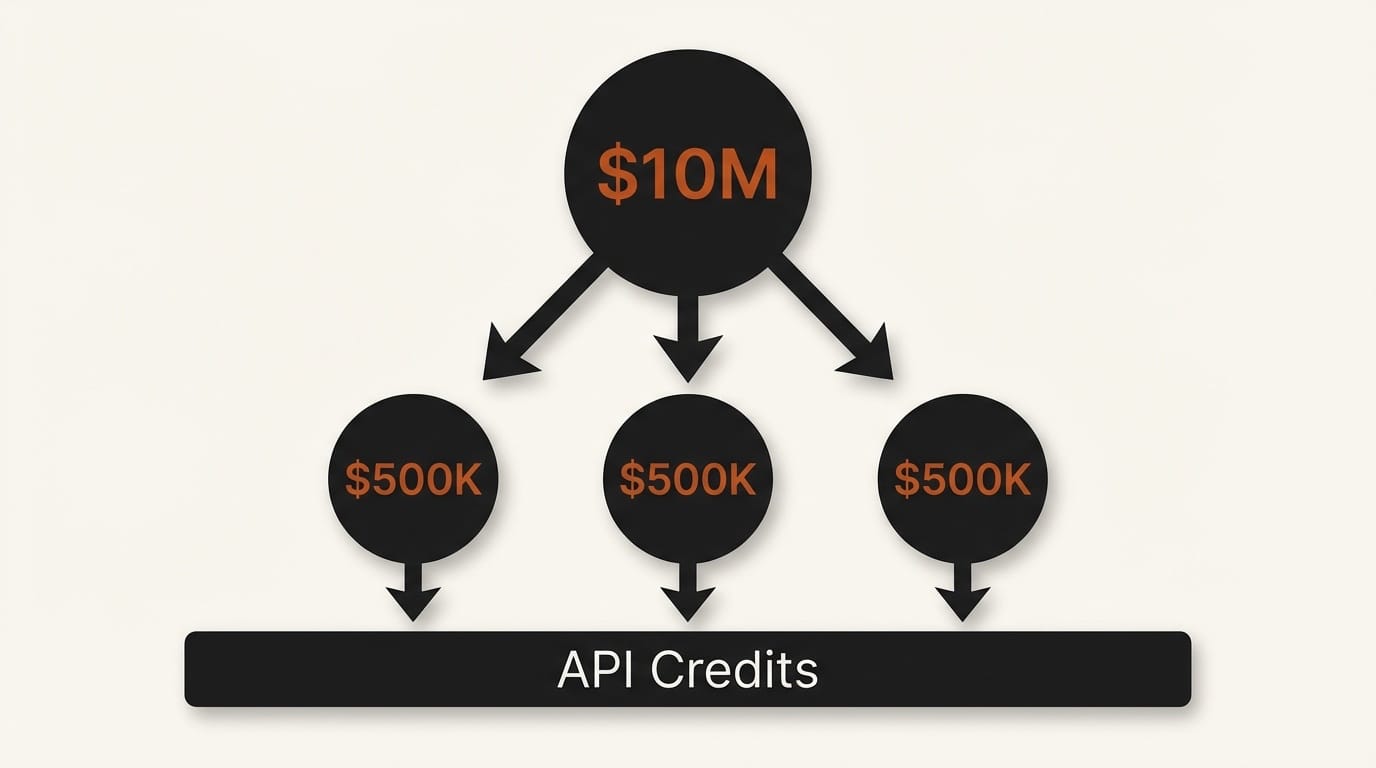
The fund, seeded by Runway's existing investors and partners, writes checks of up to $500,000 into pre-seed and seed-stage companies building across AI, media, and world simulation. This is not philanthropy. It is a calculated distribution strategy.
By funding startups that build on Runway's API, the company creates a network of external teams that pressure-test its technology, discover new use cases, and lock their products into the Runway stack. Every startup in the portfolio becomes a customer, a case study, and an R&D extension. Runway executives told TechCrunch they expect the Builders program to "surface use cases and partners the company cannot pursue alone," effectively outsourcing product discovery to an externally funded ecosystem.
The Builders program complements the fund with a broader net. Startups from seed to Series C can apply for 500,000 API credits and access to Characters, Runway's real-time video agent API. A founding cohort is already live: Cartesia (low-latency voice AI), MSCHF (viral consumer products), Oasys Health (healthcare avatars), Spara (spatial computing), Subject (AI photography), and Supersonik (music production). The diversity of this cohort is intentional. It signals that Runway sees its world models powering applications far beyond video editing.
GWM-1 and Characters: The Platform Layer
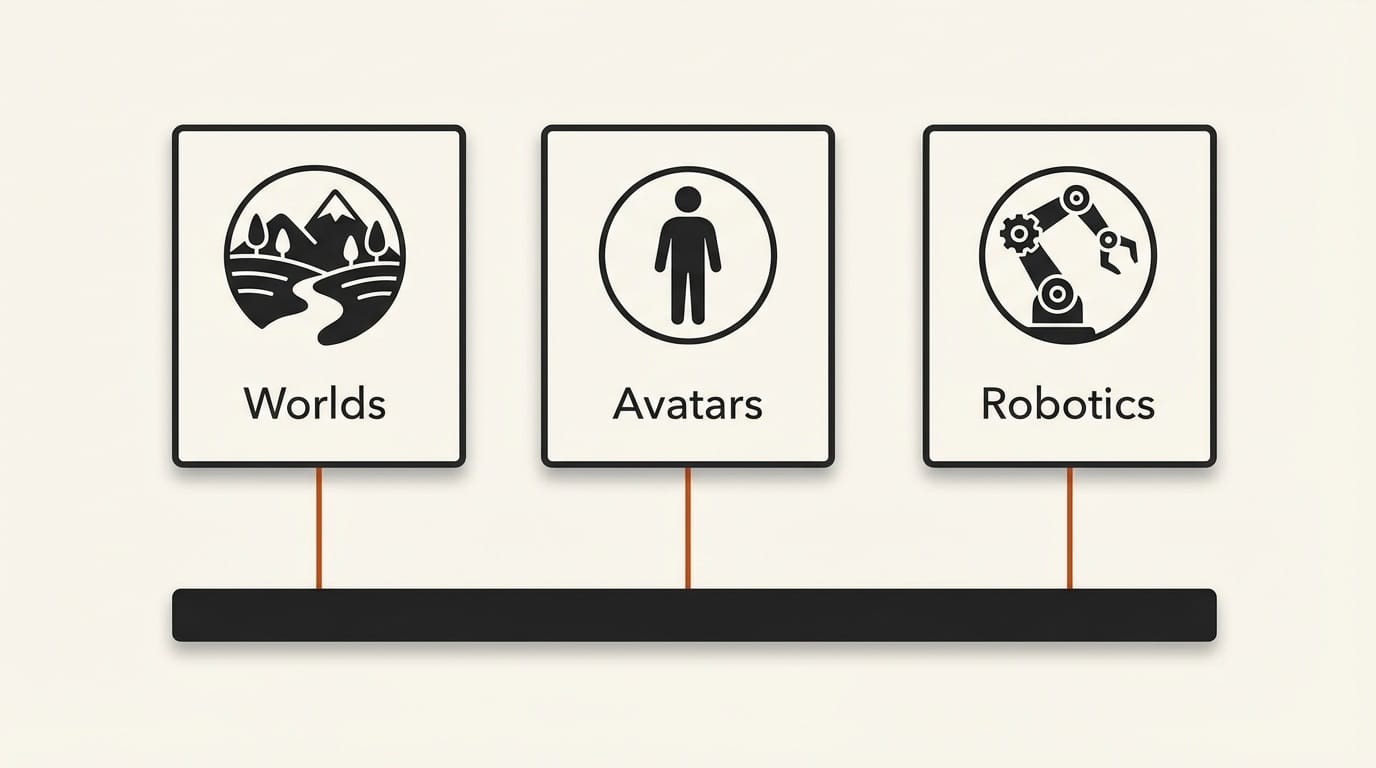
The technical foundation for Runway's ecosystem play is GWM-1, the company's first general world model family. Built on top of Gen-4.5, GWM-1 is an autoregressive model that generates frame-by-frame in real time and accepts interactive controls including camera pose, robot commands, and audio input. It ships in three variants: Worlds for explorable 3D environments, Avatars for conversational characters, and Robotics for manipulation tasks.
Runway Characters, launched March 9, is the first consumer-facing product built on GWM-1 Avatars. It generates expressive digital personas from a single reference image with zero fine-tuning. Users configure voice, physical characteristics, personality, and knowledge through the API, then deploy characters into products, websites, or applications. The system maintains natural facial expressions, eye movements, lip-syncing, and gestures during both speaking and listening states.
BBC and Silverside are already building with Characters. The product turns Runway from a tool creators use manually into infrastructure that runs inside other people's software. That distinction matters enormously for long-term revenue. Manual tools grow linearly with users. Platform APIs grow with every application built on top of them.
The Post-Sora Competitive Landscape
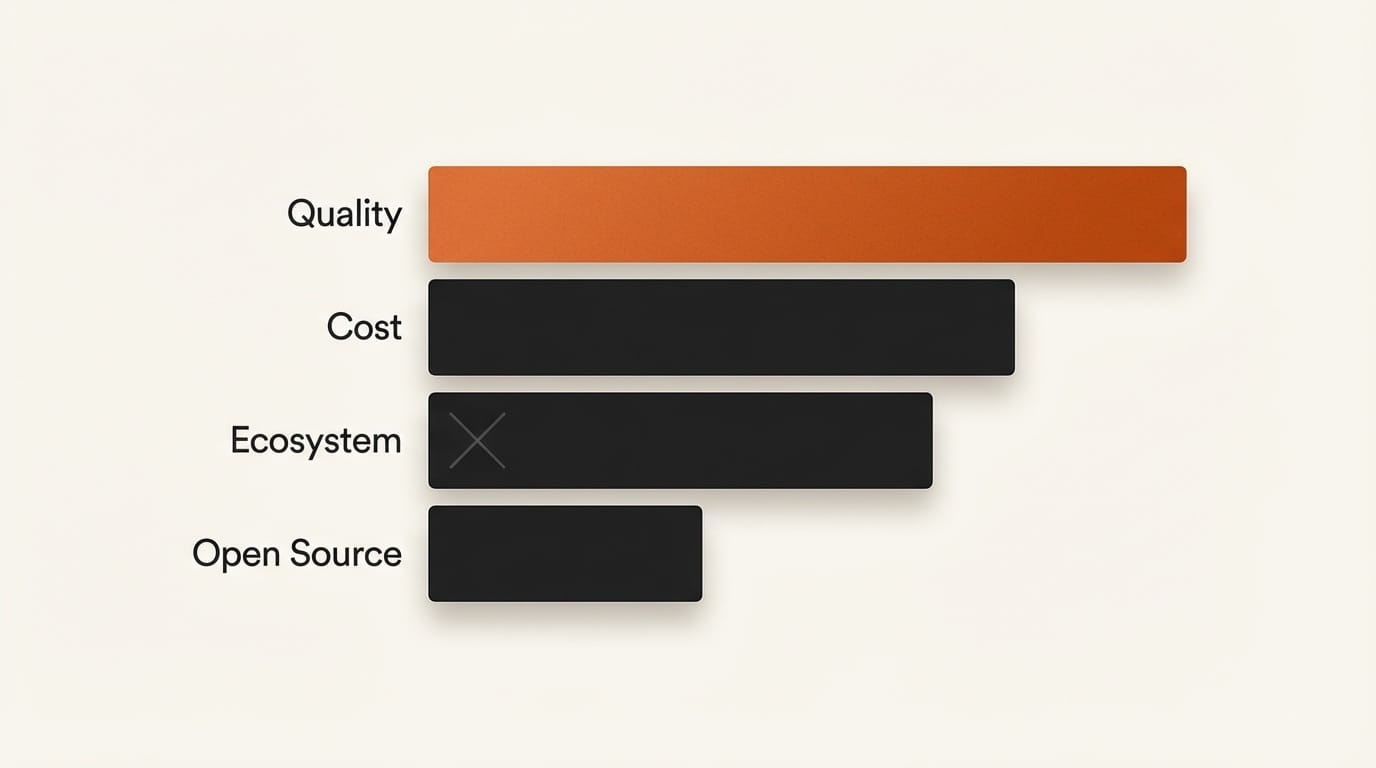
Sora's departure crystallized the AI video market into four distinct tiers. Runway occupies the quality-first position with Gen-4.5, targeting professional advertising and narrative content. Kling and Seedance compete on cost efficiency, bundled into consumer platforms like CapCut. Google Veo 3 plays the ecosystem-integration game through Vertex AI and YouTube. Open-source projects like Seedance 2.0 and LTX serve developers who want local control.
What makes Runway's position distinctive is that it is the only pure-play AI video company executing a platform strategy. Google has its cloud. ByteDance has CapCut. Stability has open source. Runway is building its own platform gravity from scratch through the fund, the Builders program, and the Characters API. The summit itself, with $350 tickets and speakers from Lucasfilm and Paramount, functions as a platform conference in the model of Dreamforce or AWS re:Invent, just at a fraction of the scale.
Hollywood Signals: Lucasfilm, Paramount, and EA
The speaker lineup at the summit was a signal in itself. Kathleen Kennedy of Lucasfilm sat for a fireside chat with Runway co-CEO Cristobal Valenzuela on storytelling and creative vision. Paramount CTO Phil Wiser discussed production technology evolution. EA's Mihir Vaidya spoke on AI in interactive entertainment. Adobe's Hannah Elsakr and NVIDIA's Richard Kerris rounded out the keynotes.
This is not a startup demo day. It is an industry alignment event. Runway's existing partnership with Lionsgate already covers previz, concept development, and VFX work on Oscar-winning films. The summit suggests similar relationships are forming with other major studios. For these companies, Runway offers something the hyperscalers cannot: a focused partner that does not also compete with them in content distribution.
Impact on Creators
For individual creators and small studios, Runway's ecosystem strategy is a net positive in the near term. The Builders program means more third-party tools built on Runway's video models, which creates more ways to use the technology without paying Runway directly. Characters API opens real-time interactive video to developers who previously needed to build avatar systems from scratch.
The risk is lock-in. As more tools depend on Runway's API, switching to Kling, Veo, or an open-source alternative becomes harder. Creators building workflows on Runway-powered third-party tools may find themselves dependent on Runway's pricing decisions without having chosen the dependency intentionally.
Pricing pressure from the fund could also help. With $10 million flowing into startups building on Runway, there is strong incentive to keep API costs competitive. Runway needs its ecosystem companies to be viable businesses, which means the API cannot be prohibitively expensive.
Key Takeaways
- Runway launched a $10 million venture fund and Builders program at its first AI Summit, writing checks up to $500,000 for startups building on its platform
- The Builders program gives startups 500,000 free API credits and access to Characters, Runway's real-time video agent API powered by GWM-1
- GWM-1, Runway's first general world model, ships in three variants (Worlds, Avatars, Robotics) and runs in real time on top of Gen-4.5
- The summit drew executives from Lucasfilm, Paramount, EA, Adobe, and NVIDIA, signaling deepening entertainment industry adoption
- Coming one week after Sora's shutdown, the announcements position Runway as the platform company for professional AI video
What to Watch
Track the Builders program cohort for signals on where Runway's technology is headed. The diversity of the founding companies (voice AI, healthcare, spatial computing, music) suggests GWM-1 applications well beyond video editing. Watch for native audio generation in Gen-4.5, which multiple analysts expect by year-end. And monitor whether Runway's fund model gets replicated by competitors. If Kling or Veo launch similar ecosystem programs, it confirms that the AI video market has permanently shifted from model competition to platform competition.