The first week of April 2026 delivered something the commercial audio industry was not prepared for: three significant open-source audio AI models that directly challenge paid alternatives in voice synthesis, sound effects, and multilingual speech. From a 600-language text-to-speech system built by the creators of Kaldi to the first open foundation model designed specifically for sound effects, these releases signal that open-source audio AI has crossed a critical quality threshold.
For the broader landscape, see our complete producer guide to AI music and audio in 2026.
Background
For the past two years, commercial audio AI has been dominated by a small group of well-funded companies. ElevenLabs captured the text-to-speech market with natural-sounding voices and an easy API, charging per character across its paid tiers. Professional sound design remained locked behind expensive sample libraries and proprietary plugins. And while open-source alternatives existed, they consistently lagged behind commercial offerings in output quality, language support, and production readiness.
That gap closed faster than anyone expected. In the span of two days between April 1 and April 2, 2026, two open-source audio projects landed while a third published benchmark results proving it could beat the market leader. Each one addresses a different segment of the audio production pipeline, and together they represent the most significant week for open-source audio AI since Bark first demonstrated what was possible in 2023.
Deep Analysis
OmniVoice Rewrites the Language Coverage Map
Released on April 1 by the k2-fsa team behind the Kaldi speech recognition toolkit, OmniVoice is a 0.8B parameter text-to-speech model that covers more than 600 languages under an Apache 2.0 license. The model uses a diffusion-based non-autoregressive architecture initialized from Qwen3-0.6B pre-trained weights, trained on 581,000 hours of multilingual audio from 50 open-source datasets.
The numbers are striking. OmniVoice achieves a word error rate of 1.30% on LibriSpeech test-clean and runs at 40 times real-time speed on consumer hardware. It supports zero-shot voice cloning from as little as 3 seconds of reference audio, and offers voice design from text descriptions without any reference at all. The model has already attracted 2,253 GitHub stars in its first week.
What makes this release significant beyond the raw benchmarks is the team behind it. Daniel Povey, the creator of Kaldi, is the senior author on the technical report. Kaldi has been the backbone of speech recognition research and production systems for over a decade. When that team ships an open-source TTS model covering 600 languages, it carries weight that a random HuggingFace upload does not. Testing across 102 languages on the FLEURS benchmark shows 82 languages under 5% character error rate.

Sony Opens the First Sound Effects Foundation Model
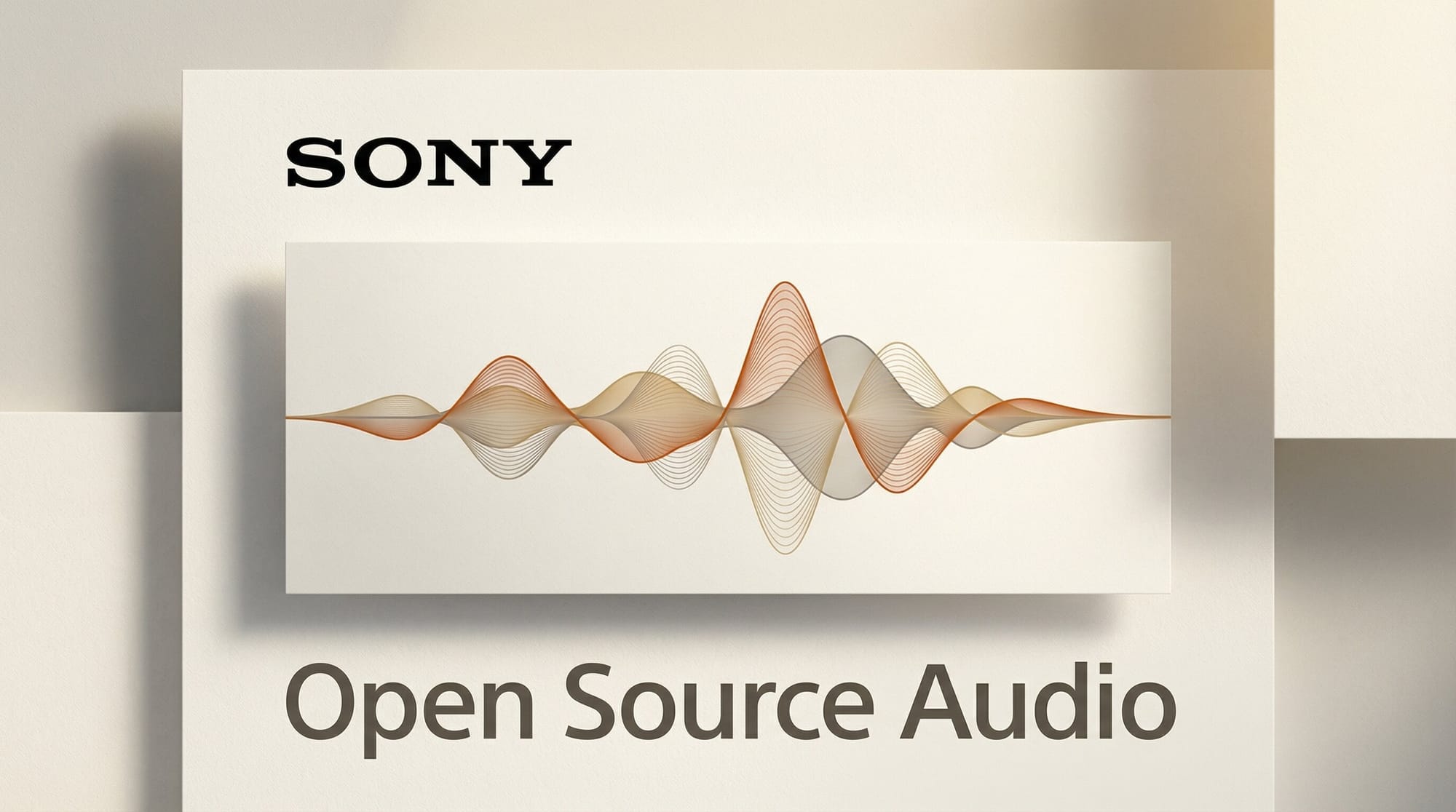
On April 2, Sony AI published the technical report for Woosh, the first open foundation model built specifically for sound effects generation. Unlike music generation models or general-purpose audio systems, Woosh is purpose-built for the SFX workflow that sound designers, game developers, and post-production teams rely on daily.
The release includes a modular six-component system: an audio encoder/decoder, a text-audio alignment model, text-to-audio and video-to-audio generators, and distilled versions of both for fast inference. The full pipeline ships with Gradio demos, a FastAPI server for deployment, and a REAPER DAW integration script that connects the model directly to professional audio production workflows.
The video-to-audio capability is particularly relevant for post-production. Sound designers can generate synchronized foley and sound effects directly from video footage, a task that traditionally requires manual recording or curating from sample libraries. Sony benchmarks show competitive or better performance compared to StableAudio-Open and TangoFlux across evaluation datasets.
One important caveat: while the code is MIT licensed, the model weights use CC-BY-NC, which restricts commercial use. Production studios will need a separate license from Sony to deploy Woosh in commercial projects.
Fish Audio S2 Beats ElevenLabs in Blind Tests
While OmniVoice and Woosh target breadth and new categories, Fish Audio S2-Pro goes directly after the commercial TTS market leader. The 5B parameter model, built on a dual-autoregressive architecture with a Qwen3 backbone, has been accumulating benchmark wins since its March release. The most convincing evidence came from a blind A/B production test conducted between March 26 and April 5 across 5,098 audio pairs.
The results: Fish Audio S2-Pro won 65.7% of all comparisons. In direct head-to-head matchups against ElevenLabs V3, Fish Audio won 60% to 40% across 581 paired samples. The model also achieved a 0.54% word error rate in Chinese and 0.99% in English on the Seed-TTS benchmark, matching or beating every other system tested.
Fish Audio S2 introduces 15,000 free-form natural language inline tags for controlling tone, emotion, and delivery at the word level. Rather than choosing from a preset list of emotions, creators can insert natural descriptions like "[whispers excitedly]" or "[thoughtful pause]" directly into the text. No other production TTS system offers this level of granular control. The model runs at sub-100ms time to first audio on a single NVIDIA H200, making it practical for real-time applications.

The License Spectrum Shapes Adoption
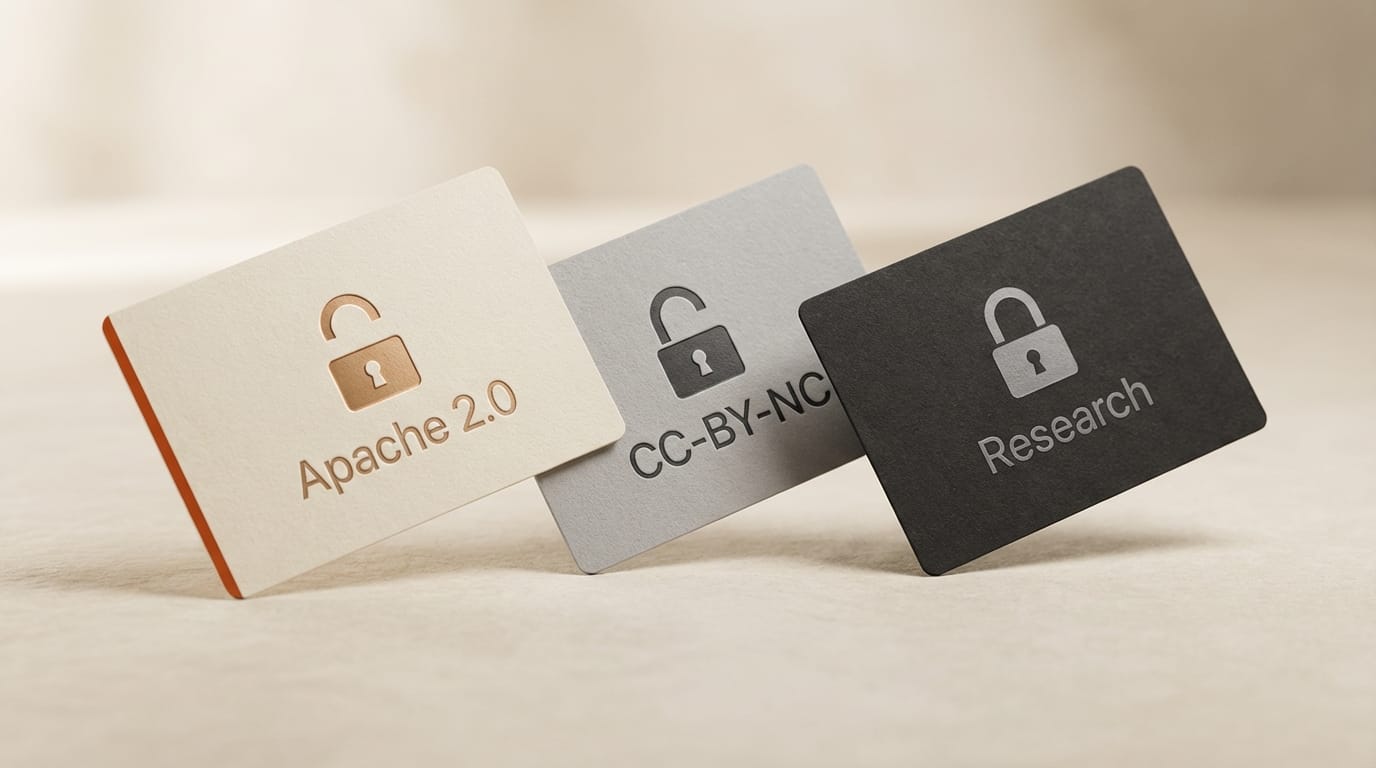
These three models sit on different points of the licensing spectrum, and the distribution reveals where open-source audio AI actually stands commercially. OmniVoice ships under Apache 2.0, the most permissive option, allowing unrestricted commercial use. Sony Woosh uses CC-BY-NC, free for research and personal projects but requiring commercial licensing. Fish Audio S2 uses a custom research license that requires a separate agreement for any commercial deployment.
This gradient matters for creators evaluating these tools. A podcast producer can integrate OmniVoice into a commercial workflow today with zero licensing concerns. A sound designer experimenting with Woosh for a client project will need to contact Sony. A developer building a product on Fish Audio S2 will need to negotiate terms with the team at Hanabi AI. The quality ceiling may be similar, but the path to production use varies significantly.
Impact on Creators
For audio and video creators, the practical implications are immediate. Multilingual content producers now have access to a 600-language TTS system that runs on consumer hardware and costs nothing to use. Sound designers working on independent games or short films can prototype with Woosh before deciding whether to invest in a commercial license. And anyone evaluating TTS providers should test Fish Audio S2 against their current stack, because the blind test data suggests the quality gap with premium commercial services has effectively closed.
The broader pattern extends beyond audio. Open-source creative AI has been steadily closing quality gaps across image generation, video synthesis, and now audio production. Each category follows a similar trajectory: commercial pioneers establish the quality bar, open-source alternatives gradually improve, and then a cluster of releases crosses the threshold within a compressed timeframe. For audio, that week was the first week of April 2026.
Key Takeaways
- OmniVoice covers 600+ languages under Apache 2.0 with 40x real-time inference, built by the team behind Kaldi
- Sony Woosh is the first open foundation model for sound effects, with both text-to-audio and video-to-audio capabilities
- Fish Audio S2-Pro beat ElevenLabs V3 in 60% of 581 blind head-to-head comparisons
- Licensing ranges from fully permissive (Apache 2.0) to research-only, with commercial paths varying by model
- The quality gap between open-source and commercial audio AI closed faster than the industry expected
What to Watch
The immediate question is whether ElevenLabs and other commercial providers respond with pricing adjustments or feature additions to defend their competitive position. Fish Audio blind test results are the kind of data that shifts enterprise procurement conversations. Meanwhile, the OmniVoice team has been pushing weekly releases, with version 0.1.3 landing on April 7 and signaling rapid iteration ahead. Sony REAPER integration could expand to other DAWs as the community builds around the model. And with the Voxtral team at Mistral also pushing open-weight speech synthesis, the competitive pressure on commercial audio AI is only accelerating.