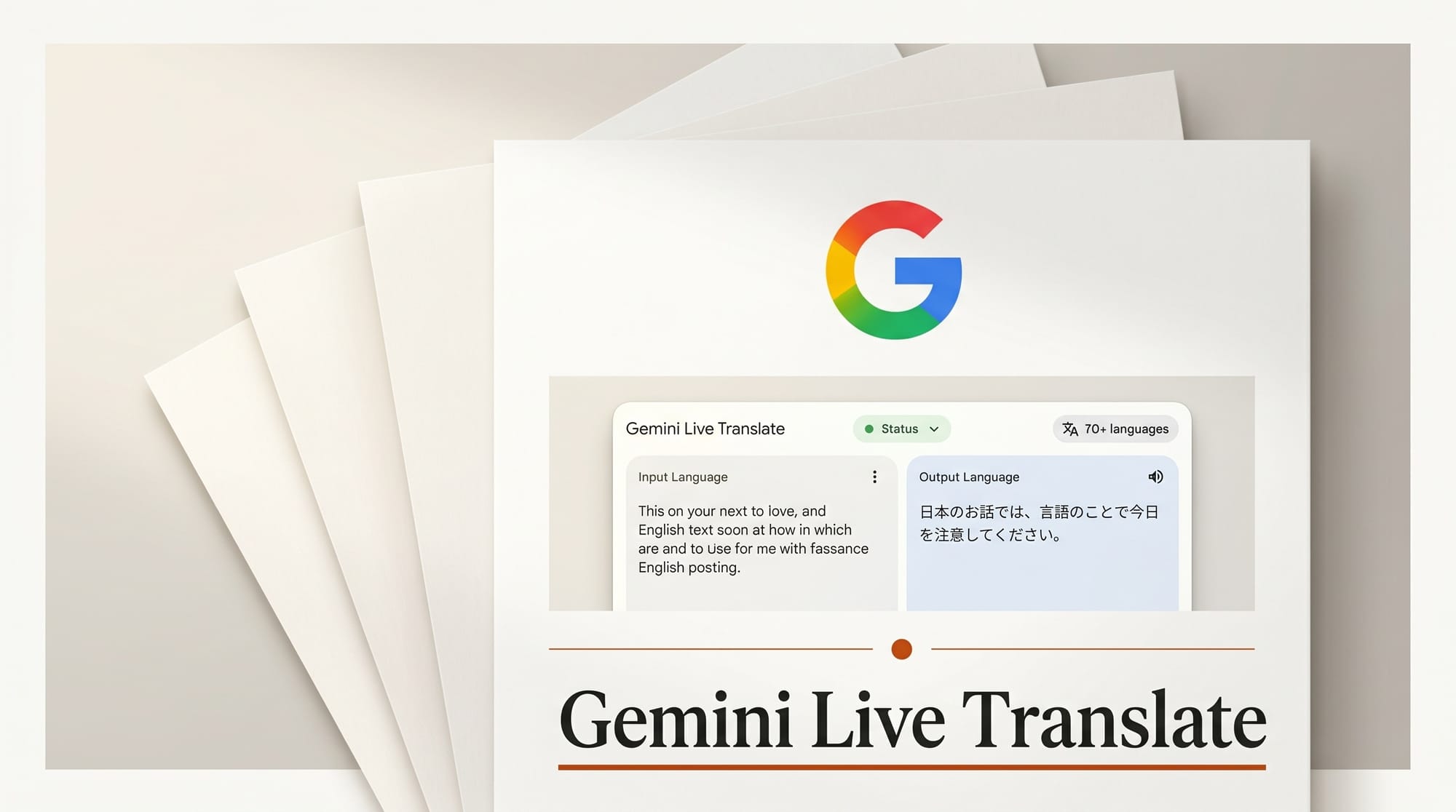
Google has launched Gemini 3.5 Live Translate, a new audio model that delivers near real-time speech-to-speech translation across more than 70 languages while keeping the speaker's own voice. Instead of waiting for a sentence to finish, it streams translated audio continuously, staying just a few seconds behind the person talking. For creators who publish in more than one language, it turns live translation from a clunky, turn-by-turn process into something close to a natural conversation.
What Happened
On June 9, 2026, Google introduced Gemini 3.5 Live Translate as its latest audio model for live voice translation. The system automatically detects language pairs and generates smooth, natural-sounding speech that preserves the original intonation, pacing, and pitch. As Slator reported, the model covers 70-plus languages and more than 2,000 language combinations, a major jump over older systems that handled only a handful. Every output is watermarked with SynthID so AI-generated audio stays identifiable.
Why It Matters
Voice is the hardest part of going multilingual. Subtitles are cheap, but dubbing that sounds human has stayed slow and expensive. Continuous speech-to-speech translation that retains a speaker's voice changes the math for podcasters, livestreamers, and video creators who want to reach audiences in other languages without re-recording. It also pairs naturally with dedicated dubbing tools like ElevenLabs Dubbing v2 and the wider Gemini creator-tool ecosystem, giving you a real-time option for live work and a polished option for finished edits.
Key Details
Live Translate is rolling out across several surfaces. A beta is live in the Google Translate app on Android in the U.S., Mexico, and India, working with any pair of headphones, with iOS and more countries coming later in 2026. Google Meet will soon use the model for speech translation, expanding from five languages to 70-plus. Developers can already build with it through the Gemini Live API in Google AI Studio, and partner platforms including LiveKit, Pipecat, and Agora support it for custom voice apps.
What to Do Next
If you create in more than one language, start by testing Live Translate in the Translate app for live conversations or interviews, then judge whether the preserved-voice output is clean enough for your audience. Builders who want to wire real-time translation into a stream, an app, or a community tool can prototype against the Gemini Live API documentation. Treat it as the fast, live layer of your localization workflow and keep a higher-fidelity dubbing pass for evergreen content where every word matters.