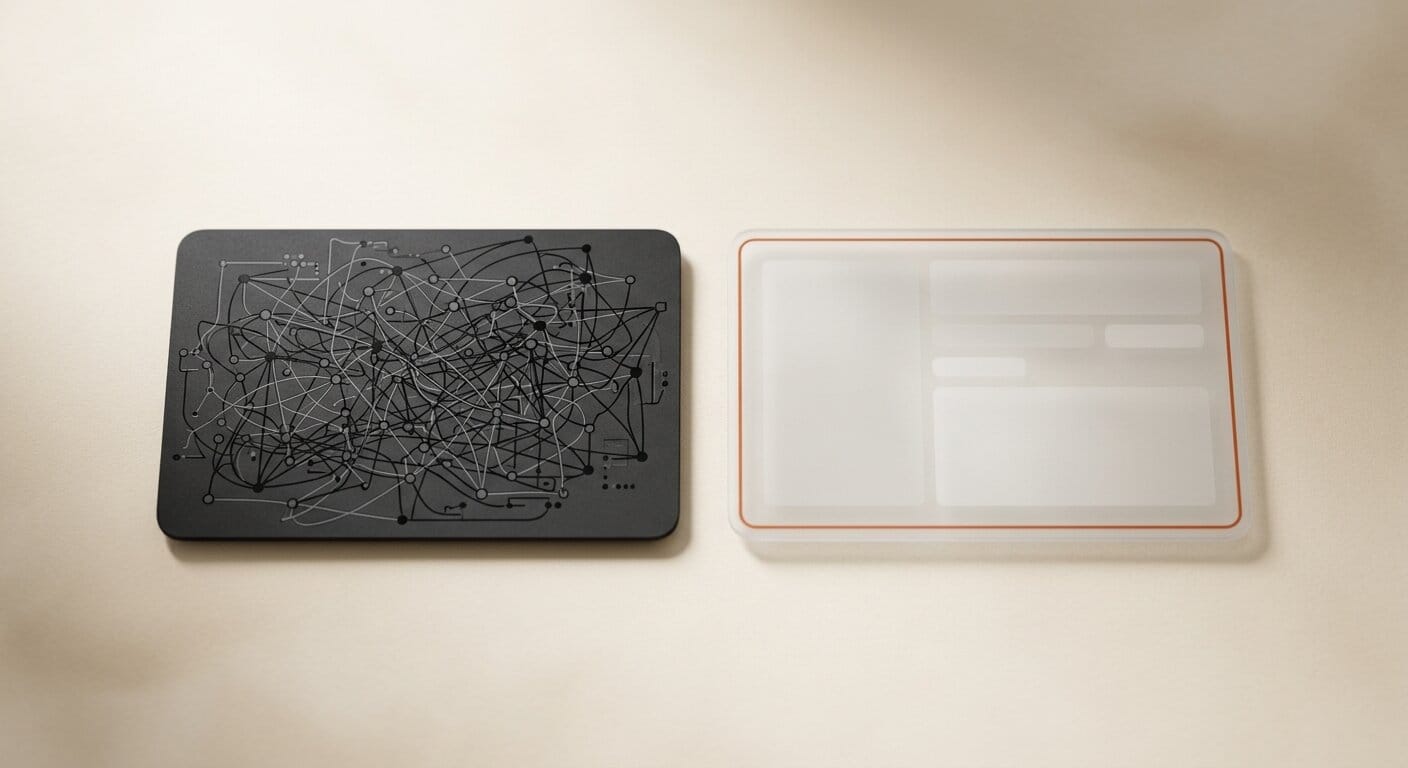
MooshieUI, updated May 24, 2026, is an open-source ComfyUI frontend built for beginners. It replaces the node graph with a three-panel interface covering settings, preview, and model controls. Installation runs in one click on Windows and Linux with no manual Python configuration. The project supports 13 model families out of the box, including Anima and Illustrious, with architecture-specific presets that apply correct quality tags automatically.
What Is MooshieUI?
MooshieUI is a Svelte 5 frontend paired with a Rust backend (Tauri) that wraps ComfyUI for desktop use. It runs as a native app on Windows and Linux, or as a web server accessible over a local network or through Docker. The interface is responsive and works on mobile browsers, which makes it usable from a tablet while a desktop machine handles generation.
The project has 112 GitHub stars and 240 commits as of today. It is actively maintained and MIT-licensed. Unlike commercial alternatives, there are no subscriptions, telemetry, or cloud dependencies. Your models, generated images, and settings stay local.
Generation Modes and Controls
MooshieUI supports three generation workflows from a single interface:
Text to Image. Enter a prompt and generate from scratch. The interface exposes sampler selection, scheduler, step count (1 to 150), CFG scale (0 to 30), seed management, and batch size (1 to 8 images per run). Negative prompts are fully supported.
Image to Image. Upload a reference image and generate a variation. A denoise strength slider controls how much the output deviates from the input, from subtle refinements to near-complete regeneration.
Inpainting. Paint a mask over areas you want to change using the built-in canvas tool, then generate replacements. The mask editor handles rough selections adequately for most use cases.
Resolution control works through a ratio-first approach: select one of eight aspect ratio presets or define a custom ratio, then move a resolution slider from 64 to 2048 pixels. Dimensions update automatically to maintain the selected ratio, which reduces the guesswork that trips up new users.
Anima and Illustrious Model Support
The most notable feature for the current wave of anime-style image generation is built-in support for the Illustrious XL model family, which includes Anima. When you select an Anima-class model, MooshieUI automatically:
- Applies customizable positive and negative quality tags suited to the architecture
- Flags tiled diffusion as required (Anima models need it for proper generation at standard resolutions)
- Offers one-click auto-download of recommended base models with a progress indicator
This preset system extends to 12 other model families as well. Instead of manually configuring sampling parameters for each architecture, you select the family and MooshieUI loads defaults that have been tested to work. For users coming from Civitai model pages with no ComfyUI experience, this removes the biggest source of early frustration.
Built-In Upscaling

MooshieUI ships with two upscaling paths:
Tiled Diffusion. Uses MultiDiffusion and SpotDiffusion algorithms to upscale images while re-running the diffusion process. Optional "soft guidance" and "smart guidance" nodes are available to reduce hallucinated details that sometimes appear in tiled generation. This produces the highest quality results but takes longer.
Model and Algorithmic Upscaling. Supports dedicated upscale models like Omni-SR at 2x or 4x magnification, plus standard Lanczos interpolation at 1 to 4x for fast results when quality is less critical.
Both paths are available without switching tools or installing additional nodes. For comparison, getting equivalent upscaling in stock ComfyUI requires manually placing and wiring tiled diffusion nodes and configuring the pipeline, which takes significant time for new users.
Compare Grid
The Compare Grid feature lets you create a spreadsheet-like grid of parameter variations, generate all combinations, and view results stitched into a single labeled image. This is useful for dialing in prompts, sampling settings, or LoRA strengths across a series of tests rather than running single generations and comparing them manually.
The gallery preserves all generated images with their generation parameters, so you can return to a previous result and reproduce it exactly.
How MooshieUI Compares to Alternatives
| Interface | Target User | Install Complexity | Node Graph | Anima Presets | Tiled Upscale |
|---|---|---|---|---|---|
| MooshieUI | Beginners | One click | No | Built-in (13 families) | Built-in |
| ComfyUI Default | Advanced | Manual Python | Yes | Manual setup | Manual nodes |
| AUTOMATIC1111 | Intermediate | Moderate | No | Extension required | Extension required |
| SwarmUI | Intermediate | Moderate | Optional | Manual setup | Extension required |
| InvokeAI | Beginner+ | Installer | Optional | Limited | Built-in |
MooshieUI occupies a specific gap: users who want to run Anima or Illustrious models locally without investing time in node graph configuration. It is not trying to replace ComfyUI for power users who need custom workflows. Its value is in making the first 20 minutes of local generation work without requiring prior knowledge.
Installing MooshieUI
On Windows and Linux, download the release executable from the GitHub releases page. On first launch, a setup wizard runs automatically and:
- Downloads uv, a fast Python package manager
- Installs an isolated Python 3.11 environment
- Detects your GPU (NVIDIA, AMD, Intel, or CPU fallback)
- Installs PyTorch with the appropriate acceleration backend
- Downloads ComfyUI and its dependencies
- Installs MooshieUI's custom nodes into ComfyUI
Expect 5 to 15 minutes and roughly 5 to 10 GB of disk space for the base installation, not counting models. No manual Python installation or environment management is required.
For self-hosted or Docker deployment:
cp .env.example .env
docker compose up -d --build
Access via http://localhost:3200 (configurable). This path works for running MooshieUI on a home server and accessing it from other devices on the network.
macOS users currently need to build from source using Node.js 18+, Rust, and Xcode Command Line Tools, then run npm run tauri build.
Frequently Asked Questions
Does MooshieUI support LoRA models? Yes. The interface allows adding unlimited LoRAs with independent strength controls per LoRA. You can stack multiple LoRAs in a single generation, the same as in a manual ComfyUI workflow.
Does it require a separate ComfyUI installation? No. The setup wizard downloads and configures ComfyUI automatically. MooshieUI manages ComfyUI as a local backend. If you already have ComfyUI installed, MooshieUI can be configured to use your existing installation by pointing it to your ComfyUI directory.
What GPU is required? MooshieUI inherits ComfyUI's hardware support. NVIDIA GPUs with 8+ GB VRAM are ideal. AMD GPUs are supported via ROCm (Linux only as of May 2026). Intel Arc is supported with some limitations. CPU-only generation is possible but significantly slower.
Can I use custom models from Civitai? Yes. Place checkpoint files in the ComfyUI models directory (typically ComfyUI/models/checkpoints/). MooshieUI scans this directory at startup and lists all available checkpoints in the model selector. LoRAs, VAEs, and upscale models follow the same pattern with their respective subdirectories.
Is there a mobile app? No dedicated mobile app exists, but MooshieUI's web server mode is accessible from any browser on the same local network. The interface is responsive and functional on tablet-sized screens. Phones with smaller screens work but the three-panel layout is tight.
How does MooshieUI handle NSFW content? MooshieUI does not apply content filters at the interface layer. Content filtering depends on the model. Anima and Illustrious models available on Civitai include both SFW and NSFW variants; which content the model generates depends on the checkpoint you choose, not MooshieUI.
What to Do Next
MooshieUI is available now on GitHub under the MIT license. The Windows and Linux installers handle the full setup automatically. If you are already running ComfyUI workflows and want to understand what MooshieUI is abstracting away, our ComfyUI 2026 guide covers the full node-based system in detail. For production-tested workflow templates compatible with the models MooshieUI supports, see our best ComfyUI workflows roundup.