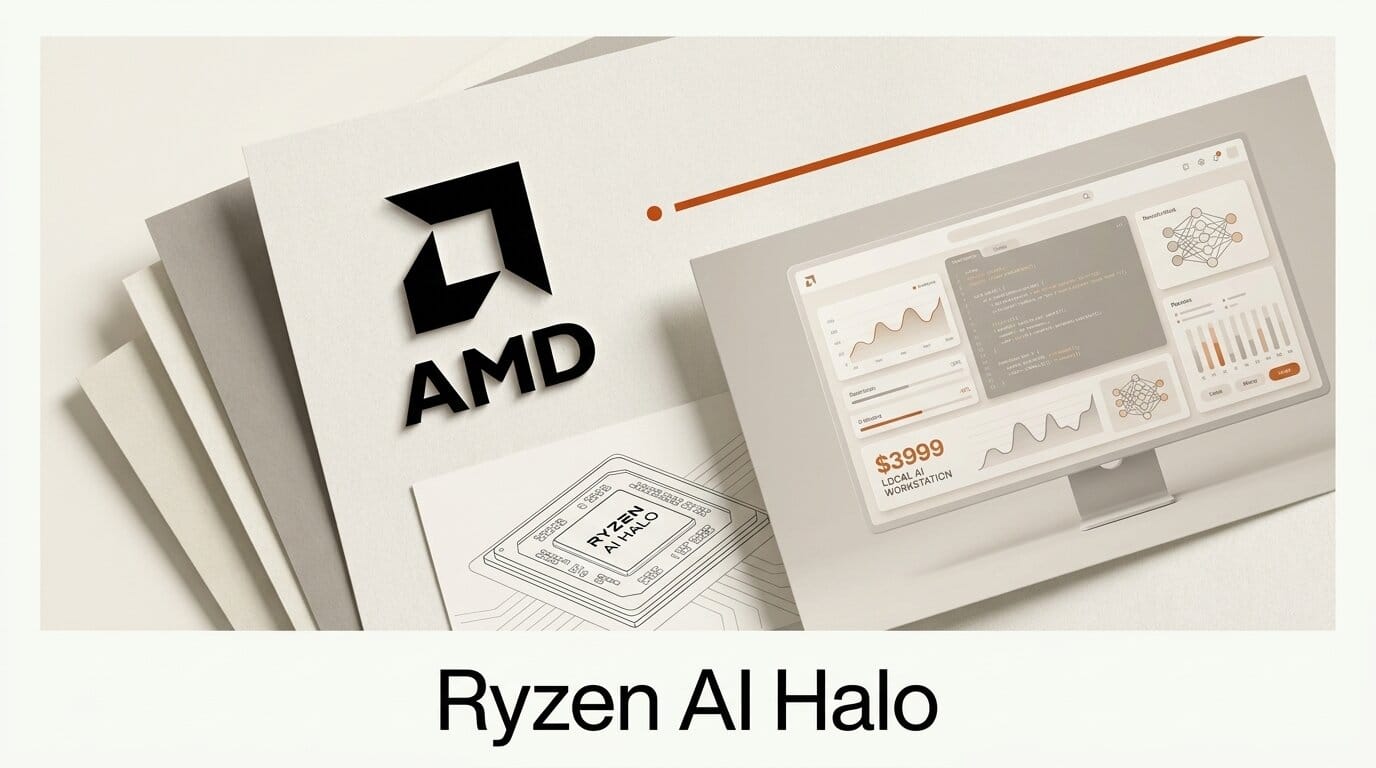
AMD put a 128GB local AI workstation on retail shelves on July 6, 2026. The Ryzen AI Halo Developer Platform is a shoebox-sized desktop built around the Ryzen AI Max+ 395 processor, and it landed at Micro Center for $3,999 with local pickup opening July 10. The pitch is blunt: run large language models, image generators, and video pipelines entirely on your own hardware, with 128GB of unified memory and enough headroom to load models up to 200 billion parameters. As HotHardware reported, the kit ships fully assembled, which is why AMD calls it "batteries included." For creators who have been priced out of, or rate-limited by, cloud AI, this is the most affordable turnkey box yet for keeping the whole workflow on the desk.
What AMD actually shipped
The Ryzen AI Halo is not a new chip. It is a productized, ready-to-run desktop built on the Strix Halo silicon AMD has been shipping in laptops and mini PCs all year. The difference is packaging and intent: this is sold as a developer and creator appliance, complete with an operating system, cooling, and a 240W power brick, in a chassis with a 15cm square footprint that stands under 5cm tall and weighs 1.2kg. AMD announced Micro Center as its first global launch partner, offering two identical-hardware variants that differ only in whether they ship with Windows 11 Pro or Linux preinstalled.
The core is the Ryzen AI Max+ 395, a single chip pairing 16 Zen 5 CPU cores (32 threads, up to 5.1 GHz boost) with a 40 compute unit Radeon 8060S GPU on RDNA 3.5, plus a dedicated XDNA NPU rated at 50 TOPS. The headline number, though, is memory: 128GB of unified LPDDR5X-8000 shared across CPU, GPU, and NPU at roughly 256 GB/s. Because the memory is unified, a model does not have to fit inside a small pool of dedicated VRAM. That is the wall this box is built to knock down.
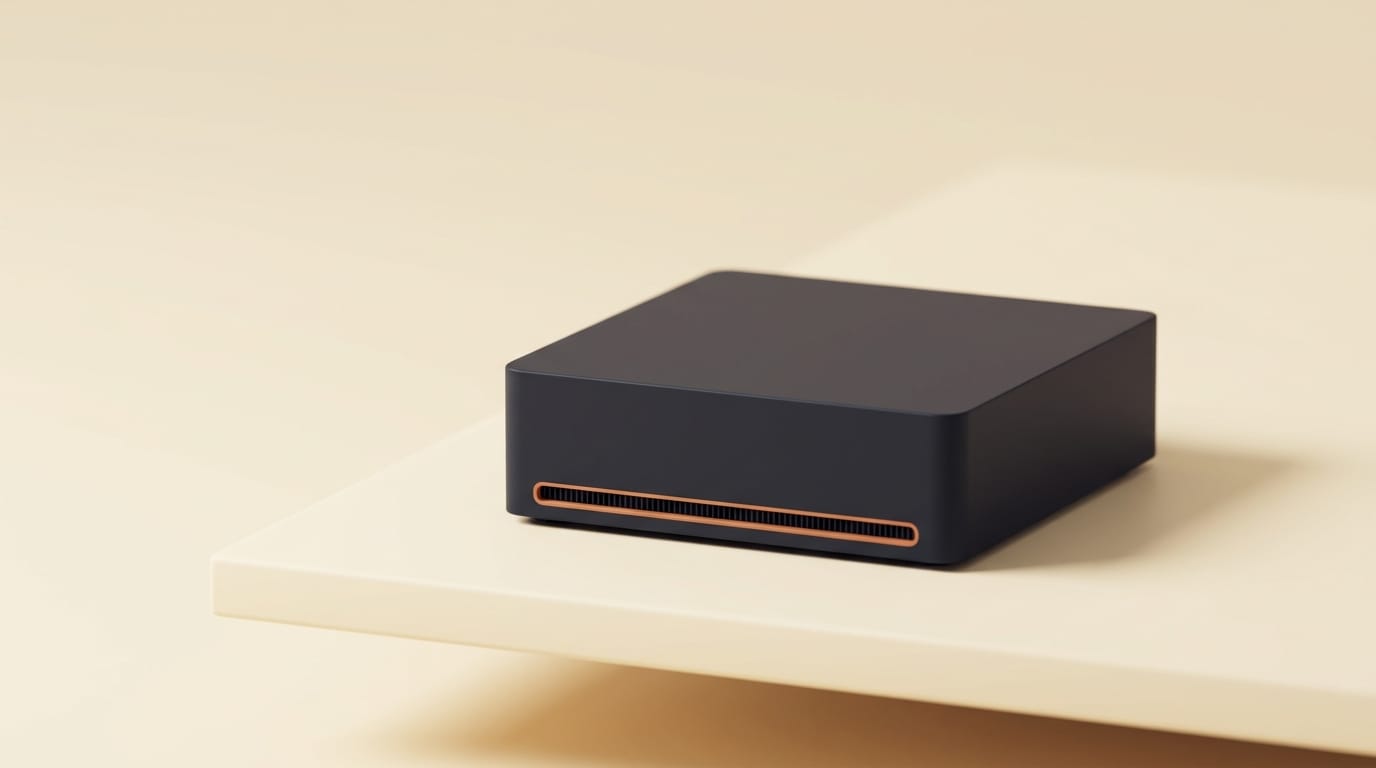
Ryzen AI Halo vs Nvidia DGX Spark
The obvious comparison is Nvidia's DGX Spark, the GB10 Grace Blackwell desktop that defined this "personal AI supercomputer" category. Nvidia raised the DGX Spark to a $4,699 MSRP in February 2026, so AMD undercuts it by $700 while matching the 128GB unified memory that makes local model loading practical. The tradeoffs are real on both sides, as Tom's Hardware laid out in its launch coverage.
| Spec | AMD Ryzen AI Halo | Nvidia DGX Spark |
|---|---|---|
| Price | $3,999 | $4,699 |
| Processor | Ryzen AI Max+ 395, 16 Zen 5 cores | GB10 Grace Blackwell |
| GPU | Radeon 8060S, 40 CUs (RDNA 3.5) | Blackwell class GPU |
| NPU peak | 50 TOPS (XDNA NPU) | Up to 1,000 TOPS (FP4, sparse) |
| Unified memory | 128GB LPDDR5X-8000 | 128GB LPDDR5X |
| Memory bandwidth | ~256 GB/s | ~273 GB/s |
| Networking | Standard desktop I/O | 200GbE ConnectX NIC |
| OS | Windows 11 Pro or Linux | DGX OS (Linux, ARM) |
| Software stack | x86, ROCm | ARM, CUDA |
Do not read too much into the TOPS gap. Nvidia's 1,000 figure is a peak FP4 sparse number that flatters marketing slides; for the token-generation work most creators care about, throughput is gated by memory bandwidth, and there the two boxes sit within striking distance (256 versus 273 GB/s). Tom's Hardware's DGX Spark review found the GB10 faster in raw compute, but the practical daily difference on a memory-bound 30B model is narrower than the spec sheet suggests. What actually separates them is ecosystem: Nvidia gives you the industry-standard CUDA stack on ARM, while AMD gives you native Windows, x86 compatibility, and a machine that doubles as a capable gaming and content workstation. The DGX Spark also carries a 200GbE networking card that the Halo omits, which matters for clustering but not for a solo creator.
What this enables for creators
The reason to care is not benchmarks, it is what the 128GB unified pool unlocks. On a typical 16 to 24GB consumer GPU, you constantly juggle which model fits: a large image model or a language model, rarely both, and forget about a 70B parameter LLM. With 128GB shared memory you can hold a large local LLM resident while a diffusion or video model runs alongside it, chaining a script-writing agent into an image generator into a video pass without unloading and reloading weights between every step.
Concretely, that means running a 70B class chat model for ideation, a local image pipeline in ComfyUI, and a local video model on the same box, offline, with no per-image cloud fee and no content policy filter deciding what you can render. For anyone who has hit a monthly credit ceiling mid-project or waited in a queue during peak hours, the appeal is a fixed hardware cost instead of a metered one. It also keeps client work and unreleased assets on your own drive, which is a genuine requirement for a lot of commercial creative work.

How to get started
If you pick up a Halo, a sensible first-week setup looks like this:
- Choose your OS variant deliberately. The Windows 11 Pro unit is the friendlier path for creative apps and gaming; the Linux unit is better if your pipeline lives in containers and command-line tooling.
- Install a local model runner. Start with an Ollama or LM Studio style front end for language models so you can pull and swap weights without hand-managing files.
- Load a model sized to the memory, not the GPU. Because memory is unified, try a quantized 70B LLM first and watch real token throughput before deciding whether to go larger.
- Add a diffusion stack. Bring up ComfyUI for image and video generation, then confirm the GPU and language model can run concurrently without exhausting the pool.
- Benchmark your own workload. Time an actual project task, not a synthetic test, so you know where this box sits against your current cloud spend.
If you are still deciding between owning hardware and renting compute, our local AI vs cloud AI decision guide walks through the break-even math, and our guide to running a local AI coding agent on one GPU is a lighter starting point if the Halo is more machine than you need today.
Who should buy it, and who should wait
The Halo makes sense for creators and developers who run local models often enough that cloud bills sting, who value privacy or offline capability, and who want one box that handles AI, content creation, and gaming. ServeTheHome's hands-on review frames it as AMD going directly for the local-AI developer, and that is the right buyer. If your work is occasional, a $1,999 bare Strix Halo mini PC or a good discrete GPU may serve you better, and if you are deep in the CUDA ecosystem or need the 200GbE networking, the DGX Spark still justifies its premium.

Frequently asked questions
How much does the AMD Ryzen AI Halo cost?
The Developer Platform is $3,999.99 at Micro Center, available in Windows 11 Pro and Linux variants with identical hardware. That is $700 less than Nvidia's $4,699 DGX Spark.
What size AI models can it run locally?
AMD rates it for models up to 200 billion parameters thanks to 128GB of unified LPDDR5X memory. In practice, quantized 70B class language models run comfortably, and you can keep an image or video model resident alongside them.
Is it faster than the Nvidia DGX Spark?
Not in raw compute. The DGX Spark's GB10 posts higher peak numbers, but for memory-bandwidth-bound LLM inference the two are close (256 versus 273 GB/s). The Halo wins on price, x86 and Windows compatibility, and doubling as a gaming and content workstation.
Does it run Windows or Linux?
Both are offered. Micro Center sells one variant with Windows 11 Pro preinstalled and another with Linux. The hardware is the same, so you choose based on your toolchain.
Can it replace my cloud AI subscription?
For steady local workloads, yes. You trade a recurring metered bill for a fixed hardware cost, gain offline and private operation, and avoid rate limits. Cloud still wins for occasional bursts or for the very largest frontier models that exceed 128GB.
When can I buy one?
Micro Center opened preorders on July 6, 2026, with local pickup ready by July 10, 2026.