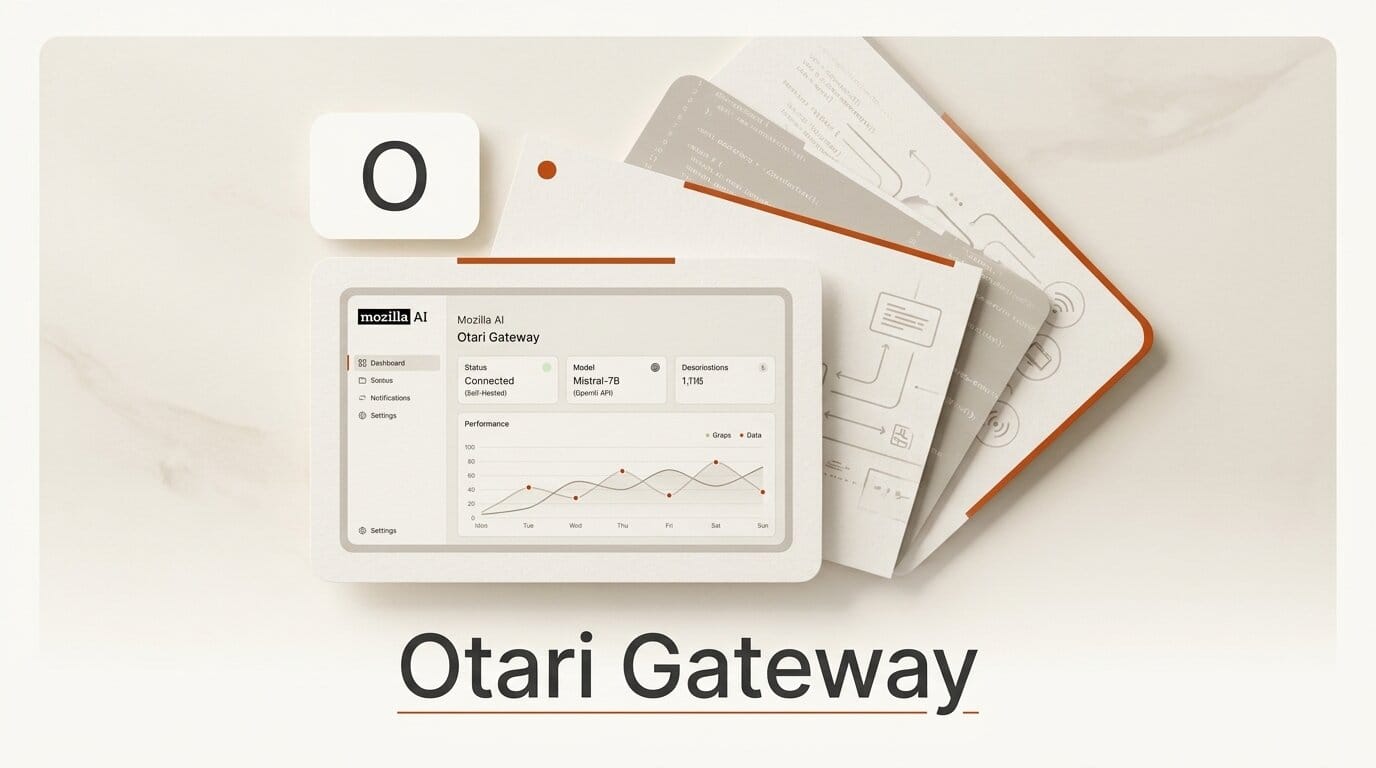
Mozilla AI has released Otari, an open-source, self-hosted LLM gateway that puts a single OpenAI-compatible endpoint in front of more than 40 model providers. Version 0.2.0 landed on July 3, 2026, adding named provider instances, hybrid streaming improvements, and sandboxed code-execution integration.
What You Can Do With It
Point your app at one endpoint and call OpenAI, Anthropic, Mistral, or Gemini without rewriting client code. Because Otari speaks the OpenAI API, most existing SDKs and tools work by swapping the base URL. You issue virtual API keys to each project or teammate, set a hard budget per key, and Otari enforces the cap before a request ever reaches a provider. Deploy it with Docker and PostgreSQL, or use the managed option at otari.ai if you would rather not run the infrastructure yourself.
Why It Matters for Creators
Creators building apps, agents, or content pipelines increasingly juggle several models at once: one for drafting, one for images, one for cheap bulk work. Wiring each provider separately means scattered keys, no shared spend limit, and painful vendor lock-in. A gateway you own keeps credentials and usage data on your own server, which matters when a client's content or your own prompts are sensitive. Mozilla AI positions Otari as infrastructure you control rather than a hosted middleman that sees every request.
Key Details
Compatibility: OpenAI-compatible endpoint, 40+ providers behind one URL.
Governance: Virtual keys, per-user and per-key budgets enforced before requests run, and a queryable usage log.
Stack: Docker deployment, PostgreSQL backing, Python 3.13 or newer. The v0.2.0 release adds Postman collection generation from the OpenAPI spec and better streaming error handling.
License: Open source, first tagged as v0.1.0 on June 25 and updated to v0.2.0 on July 3.
What to Do Next
If you run more than one model in production, clone the repo, start the container, and route one app through a virtual key with a small daily budget to watch the spend tracking in action. For teams already comparing routing layers, Otari sits alongside options we covered in Weave's LLM routing and cross-tool model routing, with the difference that it is fully self-hosted.