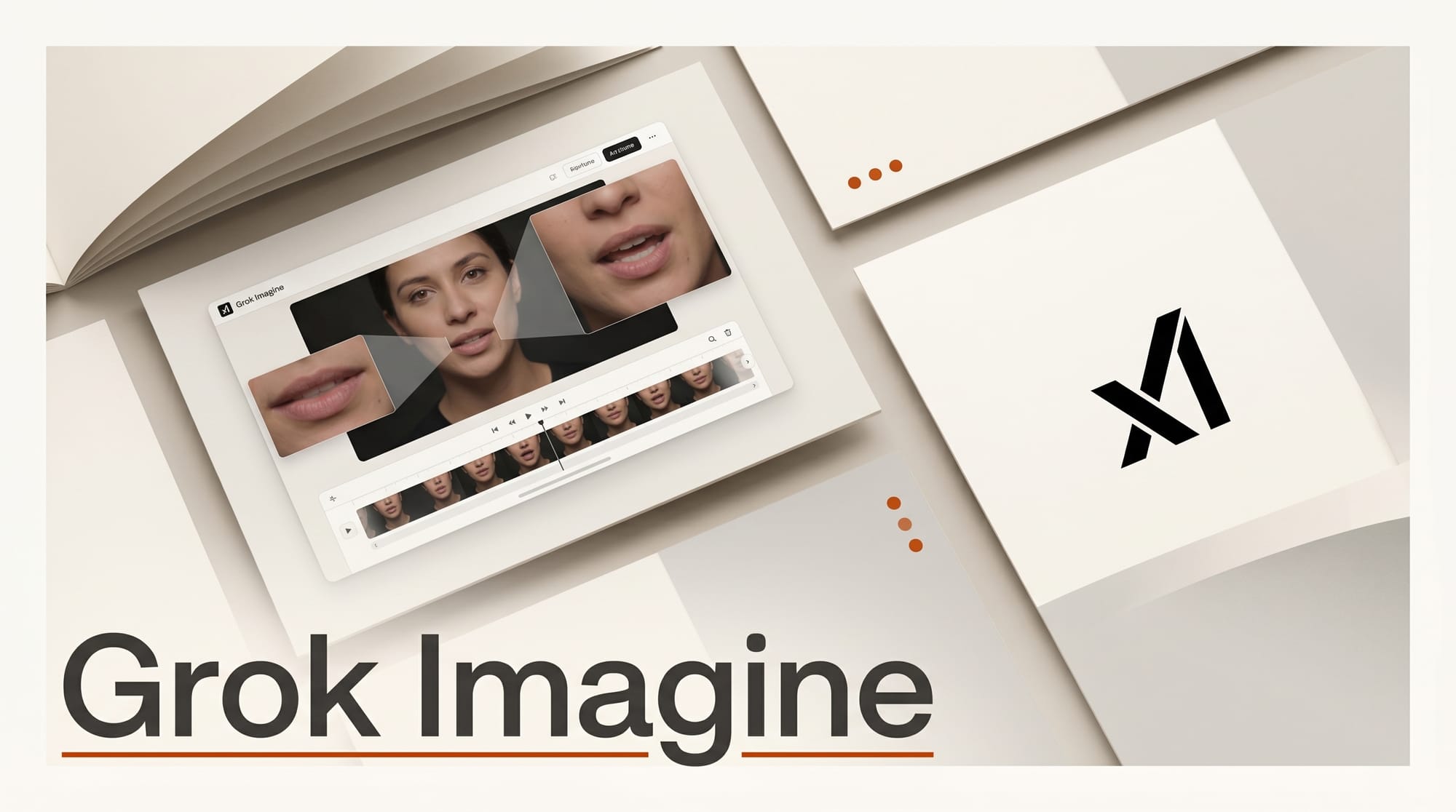
xAI upgraded Grok Imagine on April 25, 2026, delivering dramatically improved lip sync and sharper audio quality on all image-to-video generations -- a capability the model has struggled with since its February launch.
For the broader landscape, see our complete guide to AI video generation in 2026.
What Happened
Elon Musk announced the update on X with a demo video showing an animated character delivering a tongue twister with precise mouth-to-dialogue synchronization. The official Grok account described the change as: "Grok Imagine now has dramatically improved lip sync and sharper audio quality on all image-to-video generations." The upgrade applies across all use cases -- image-to-video, text-to-video, and video editing -- rather than being limited to specific modes.
The update builds on the Aurora autoregressive engine that powers Grok Imagine, which was trained on 110,000 NVIDIA GB200 GPUs. The April 25 release focuses specifically on synchronization quality rather than new feature additions.
Why It Matters
Lip sync has been one of the hardest problems in AI video generation. Most models treat audio and visuals as separate outputs and then attempt to align them in post-processing, which produces the disconnected mouth movements that make AI video feel uncanny. Grok Imagine generates audio natively alongside video, which gives it a structural advantage -- but earlier versions still showed sync drift under complex speech. This update closes that gap significantly.
For creators making talking-head content, character videos, or lip-synced music clips, the quality bar just moved. The model already offered 10-second videos at 720p with native audio, multiple aspect ratios (16:9, 9:16, 4:3, and more), and generation times of roughly 17 seconds -- competitive with alternatives like Seedance 2.0 and Luma's filmmaking tools. Better lip sync makes those specs more useful in practice.
Key Details
- Announced: April 25, 2026 via Elon Musk on X
- What changed: Mouth movements precisely track spoken dialogue; audio cleaner with sharper synchronization
- Video specs: Up to 10 seconds, 480p or 720p at 24 fps, multiple aspect ratios
- Audio: Native generation (not post-synced) with ambient sound and music integration
- Access: X Premium and SuperGrok subscribers via fal.ai or directly in Grok conversations
- Pricing on fal.ai: $0.05/second at 480p, $0.07/second at 720p (approximately $0.70 for a 10-second 720p clip)
- API access: Available via Replicate and fal.ai for developers
What to Do Next
If you are already using Grok Imagine, the improved lip sync is live -- no settings change needed. The best test case is any prompt that requires synchronized speech: news anchors, tutorial narrations, character dialogue, or lip-synced musical performances. Use 9:16 vertical for Reels and TikTok, 16:9 horizontal for YouTube.
For developers, the fal.ai and Replicate endpoints expose the same upgraded model. The fal.ai Grok Imagine page documents all five endpoints: text-to-image, image editing, text-to-video, image-to-video, and video editing.
xAI has indicated that Imagine 2.0 with further upgrades is in development. The April 25 release appears to be an incremental improvement rather than a full version bump -- a pattern consistent with how the Aurora engine has been iterated since the February 1.0 launch.