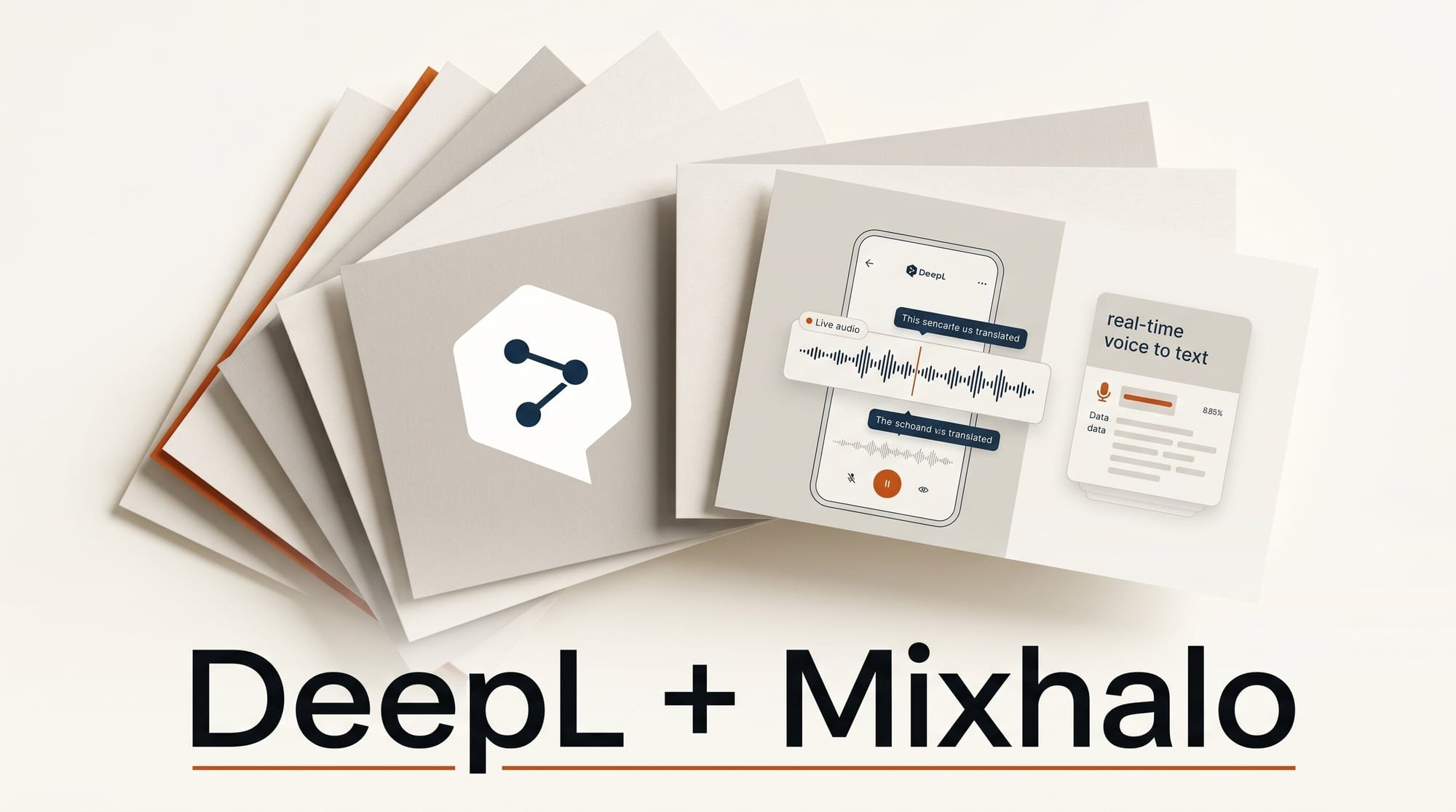
DeepL has acquired Mixhalo, the real-time audio platform built for concerts, conferences, and sports venues, in a deal announced on June 17, 2026. The move pushes DeepL beyond text and into live spoken communication, signaling that real-time AI voice translation is moving from demo to production infrastructure that creators can actually build on.
What Happened
DeepL, best known for high-quality machine translation, bought Mixhalo, a company founded in 2016 by Incubus guitarist Mike Einziger, violinist Ann Marie Simpson-Einziger, and CEO Vik Singh. Mixhalo started by streaming crystal-clear concert audio directly to fans' phones and expanded into low-latency audio for sports and live events. Mixhalo was already a DeepL customer, and the acquisition folds that live-event audio pipeline into DeepL's translation stack. It builds directly on the voice-to-voice translation DeepL launched earlier in 2026.
Why It Matters
Live translation has always been the hardest version of the problem: it has to be fast, accurate, and delivered to many devices at once. Pairing DeepL's translation models with Mixhalo's low-latency audio delivery targets exactly that gap. For creators, this is the same shift happening across the audio space, where real-time translation is reaching dozens of languages. DeepL's own Voice product is the consumer-facing side of this; the acquisition is the live-event side.
Key Details
Deal terms were not disclosed. Mixhalo had raised more than $39 million from investors including Fortress Investment, Founders Fund, and Cowboy Ventures. DeepL says it is opening a San Francisco office to grow its U.S. operations on the back of the deal, and plans to demonstrate voice-to-voice and voice-to-text translation in real conference and event settings. DeepL's voice translation already covers 40-plus languages, competing with players like Wordly AI and Palabra.
What This Enables for Creators
If you produce multilingual content, this is the tooling layer maturing under you. Real-time voice translation that runs at event scale means live streams, webinars, virtual summits, and podcasts can ship multilingual audio without a room full of human interpreters. The same pipeline that translates a keynote for an in-room audience can caption or dub a creator's livestream for a global one. The practical takeaway: voice-to-voice translation is now reliable enough to design into a workflow, not just bolt on afterward.
What to Do Next
Map where language is currently capping your reach. If your stream, course, or podcast has international viewers, test a real-time translation pass on one episode before committing. Developers building multilingual live experiences can wire transcription and translation directly through the DeepL Voice API, which opens a WebSocket connection to transcribe and translate audio as it streams. Start with one language pair, measure latency and accuracy on your actual content, then expand from there.