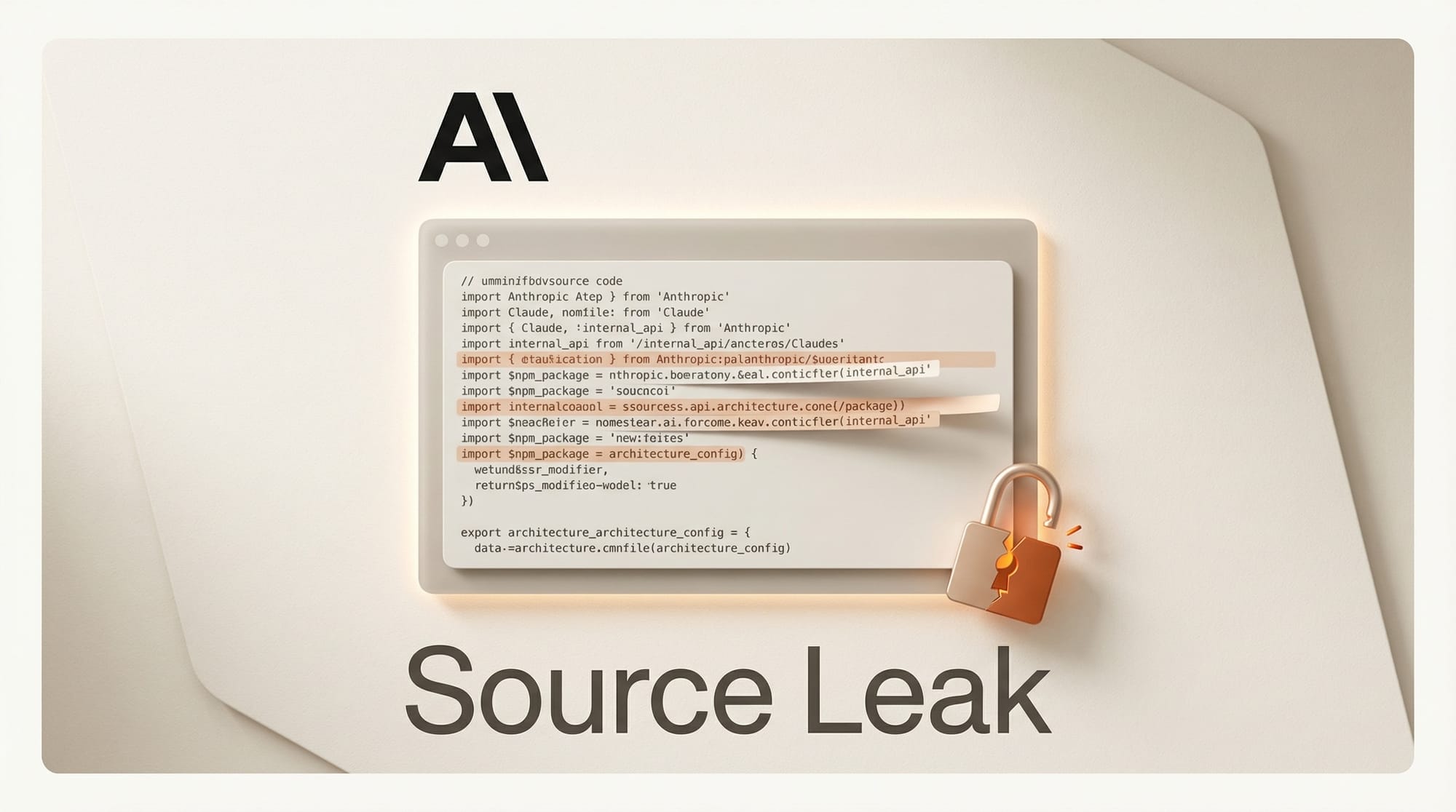
Anthropic accidentally exposed the full source code of Claude Code on March 31, leaking roughly 1,900 files and over 500,000 lines of TypeScript through an npm packaging error. This marks the company's second major security lapse in under a week, following the Claude Mythos model leak on March 26.
For the broader landscape, see our complete guide to AI coding tools in 2026.
What Happened
A debugging file known as a source map was accidentally bundled into a routine npm update for Claude Code. That source map pointed to a zip archive on Anthropic's cloud storage containing the complete TypeScript source code for the product. Developer Alex Kim documented the discovery, revealing the full internal architecture before Anthropic pulled the files.
The exposed codebase contained 44 feature flags, many tied to unreleased capabilities. Among them: a persistent background assistant mode, a session review system, a deep-planning mode, and an internal pet feature codenamed "BUDDY AI." The code also revealed a 3-layer memory system, a subagent fork-join architecture for parallel task execution, and internal codenames including "Capybara," which was also referenced in the Mythos leak days earlier.
Anthropic confirmed the incident in a statement: "Some internal source code... No sensitive customer data or credentials were involved." Fortune, Axios, CNBC, The Register, and VentureBeat all covered the story.
Why It Matters for Creators
Two leaks in one week raises questions about Anthropic's internal security practices at a time when the company is positioning Claude as enterprise-ready infrastructure. For creators who build workflows on Claude Code, the leaked feature flags offer an unusually clear look at where the product is headed. Persistent background agents, deeper planning capabilities, and structured memory systems all point toward Claude becoming a more autonomous creative collaborator rather than a simple prompt-response tool.
The exposed subagent architecture is particularly interesting. It shows Claude Code is designed to split complex tasks across multiple parallel agents, then merge their outputs. For anyone using Claude for multi-step creative projects like video production pipelines, batch image generation, or long-form writing, this architecture suggests future versions will handle those workflows with far less manual coordination.
No customer data was compromised in this incident. The leak was limited to internal product code and feature plans.
What to Do Next
If you use Claude Code, no action is required on your end. Anthropic has confirmed no credentials or customer data were exposed. Keep an eye on Anthropic's official announcements for updates on the leaked features, particularly the persistent assistant and deep-planning modes, which could significantly change how creators work with Claude once they ship.