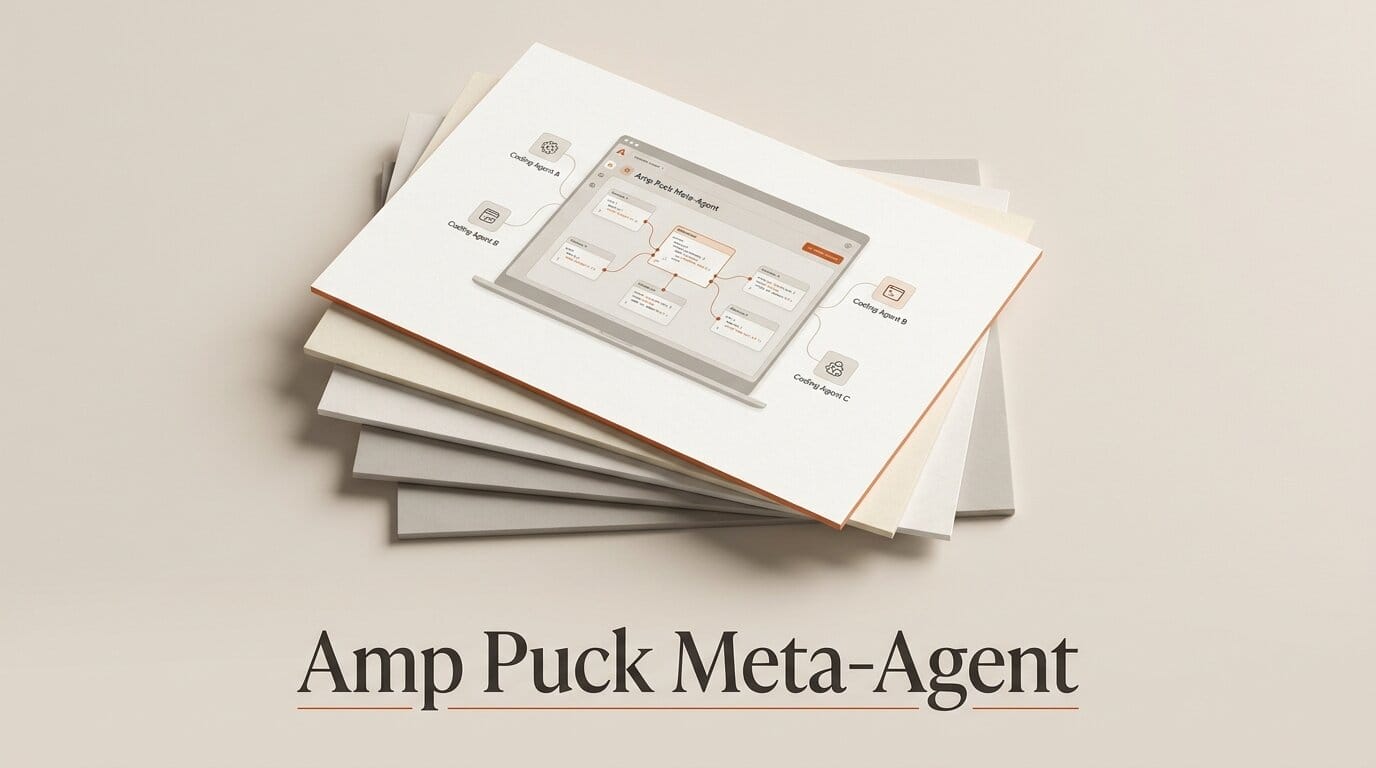
Amp, the agentic coding tool from Sourcegraph, launched a new assistant called Puck on July 20, 2026. Amp describes it as a quick assistant and a home base for launching and coordinating other agents, essentially a meta-agent that lives inside your coding harness.
What Happened
Amp introduced Puck as an assistant available from anywhere on ampcode.com. Rather than writing code itself, Puck spawns and manages the coding agents that do the work. You can ask it to launch an agent to fix a bug, investigate a CI failure, find a past conversation thread, archive completed threads, or spin up a new project with a development environment ready to go. Amp calls it an experiment.
Why It Matters
Most agent tools give you one agent per conversation. Puck adds a coordinator layer on top, so a single request can fan out into several agents working in parallel and report back. That is the same direction the whole category is moving: from a single assistant to an orchestrator that runs a fleet. We covered a related approach in Hang4r, which runs Claude Code, Codex, and Cursor in parallel. Amp's take, built by Sourcegraph, folds that coordination directly into the product instead of a separate wrapper.
Key Details
Puck runs inside Amp, which already works on the web, in the terminal, and on the phone, with agents that can run locally or on remote machines that keep working when your laptop is closed. Puck acts as the front door to all of that: describe the outcome you want, and it decides which agents to spawn and how to batch them. For example, you can ask it to spawn agents to test several scripts at once and compile their feedback into one summary. The full command set is documented in the Amp Owner's Manual. Amp has not published separate pricing for Puck.
What to Do Next
If you already use Amp, open Puck from the top of the interface and try handing it a multi-step chore, such as investigating a failing test across several files, and watch how it delegates. If you are new to agentic coding, start with a single scoped task before letting a meta-agent coordinate several at once. Treat Puck as a dispatcher: the clearer your described outcome, the better it plans the work.