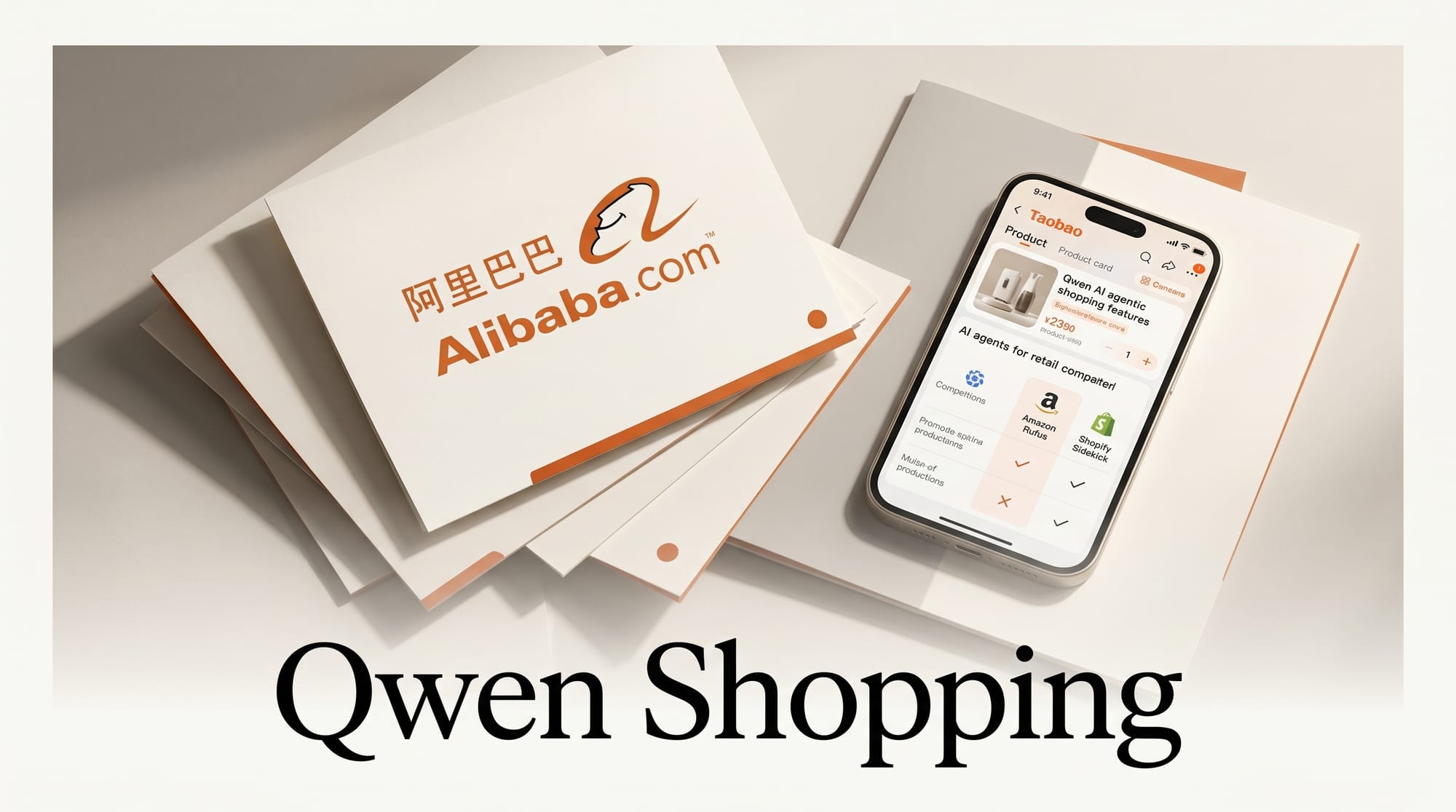
Alibaba shipped the first end-to-end agentic shopping stack on a 300-million-MAU consumer platform. On May 10, the company integrated Qwen agents natively into Taobao so a shopper can search by voice, see virtual try-ons, compare sellers, and check out through Alipay without leaving the chat. The closest Western analogs cover slices of that workflow but none of them close it. Amazon Rufus answers product questions but cannot transact in chat. Shopify Sidekick lives in the merchant admin, not the buyer flow. Etsy's new ChatGPT app and gift-mode beta handle discovery on a single category. This piece compares the four stacks across the parts that actually matter for creators and sellers planning to ship product into agent-driven storefronts in the next two quarters.
Quick Picks
Pick Alibaba Qwen+Taobao if your audience is in China or your supply chain ships via Tmall Global. It is the only stack that closes search, try-on, and checkout in one chat session at consumer scale.
Pick Amazon Rufus if your products sell on Amazon US. It is the only Western consumer agent at scale (tens of millions of conversations, all US shoppers), even if checkout still routes through the standard buy box.
Pick Shopify Sidekick if you sell direct-to-consumer on your own store. Sidekick does not talk to your buyers, but it builds the back-office that an external agent will eventually call.
Pick Etsy AI if your work is gift-driven and discoverable through conversation. Etsy bet on ChatGPT app distribution rather than building a first-party agent.
Background
Agentic commerce moved from demo to production in the last six weeks. Alibaba's May 10 launch wires Qwen-powered agents into Taobao, Tmall, and Alipay surfaces that already serve 300 million monthly active users, with a catalog of more than 4 billion items and Alipay handling final payment confirmation. CEO Eddie Wu framed the integration as part of a $53 billion AI commitment that runs through training, inference, and consumer products. VP Wu Jia described the strategic shift as moving "from intelligence to agency," and the company logged 140 million first-time AI shopping interactions during Chinese New Year 2026 alone.
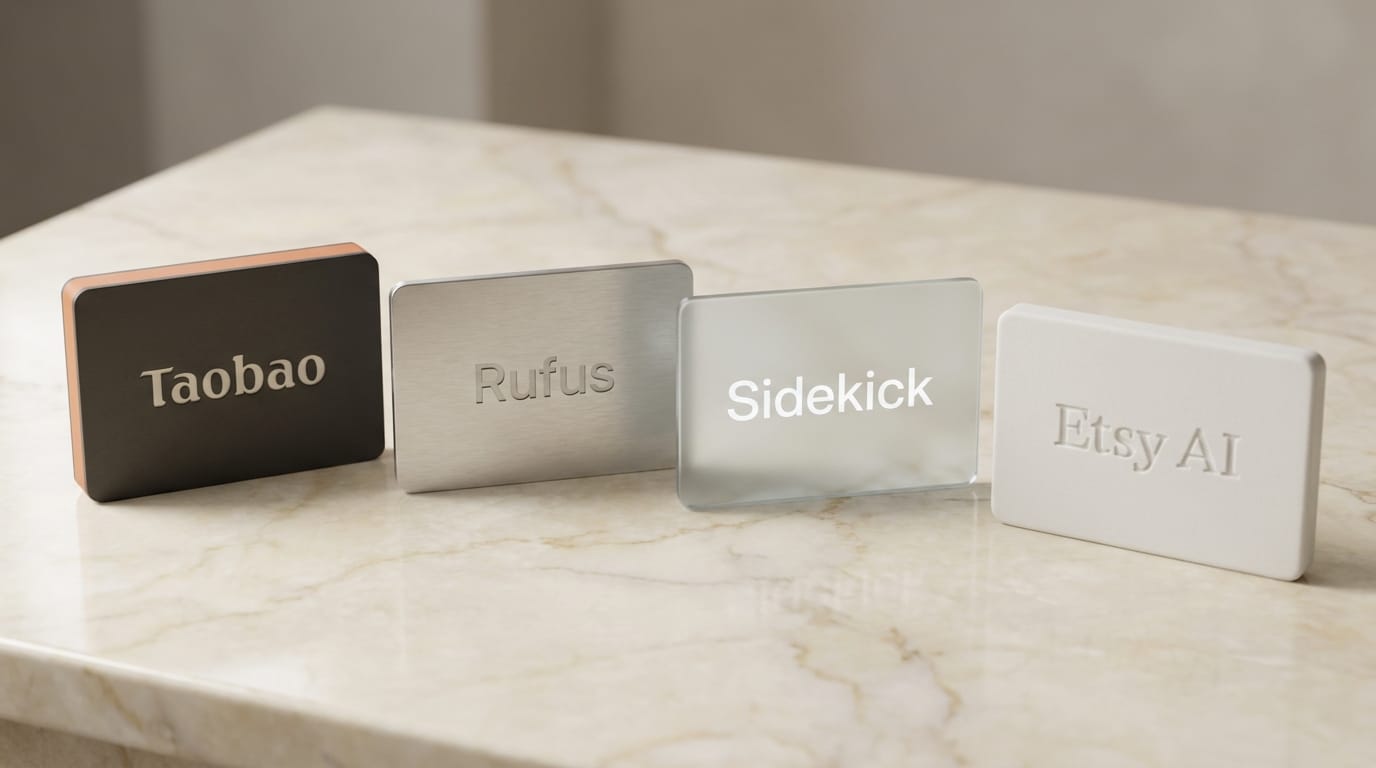
The Western side is fragmented. Amazon Rufus rolled out to all US customers on app and desktop and now fields tens of millions of questions about specs, reviews, comparisons, and order tracking. It sits next to the buy box rather than replacing it. Shopify Sidekick is a merchant-side AI inside the Shopify admin, with multi-step reasoning across analytics, inventory, automation, and even custom app generation through GraphQL. Etsy launched a native ChatGPT app and is testing a gift-mode beta inside its own platform, exporting discovery to OpenAI's surface rather than building its own consumer agent. Meta has so far kept its shopping bets inside Instagram Shop and ad tools rather than shipping a named conversational agent.
Detailed Comparison
| Dimension | Qwen+Taobao | Amazon Rufus | Shopify Sidekick | Etsy AI Search |
|---|---|---|---|---|
| Who it serves | Buyers | Buyers | Merchants | Buyers (via ChatGPT) |
| Catalog | 4B+ items | Amazon catalog | Per-store | 100M+ Etsy listings |
| Reach | 300M MAU | All US Amazon | Shopify merchant base | ChatGPT user base |
| Agent search | Yes, voice + text | Yes, text | Not consumer-facing | Yes, conversational |
| Comparison | Yes | Yes | Internal data only | Limited (gift mode) |
| Virtual try-on in chat | Yes | No | No | No |
| In-chat checkout | Yes (Alipay) | No (buy box) | No | No |
| Price tracking | 30-day | Yes | Merchant analytics | No |
| Voice interface | Yes | Limited | Yes (admin) | Through ChatGPT |
| API for creators | Not yet public | No public agent API | GraphQL admin API | Via ChatGPT apps SDK |
Search and discovery
Qwen+Taobao accepts voice search, image search, and conversational text in one surface and returns product cards plus generated comparison summaries. Rufus accepts text only and returns product Q&A grounded in listings, reviews, and community Q&A, with synthesized comparison answers. Sidekick has no consumer search at all. Etsy's gift-mode beta runs conversational discovery across personas (the original Gift Mode sorted users into 200 personas via questions) and the new ChatGPT app exposes Etsy's 100 million listings to OpenAI's user base. The split is structural. Qwen and Rufus index their own catalog and recommend inside it. Etsy is renting OpenAI's interface and conceding the entry point.
Virtual try-on
This is the largest capability gap. Qwen+Taobao surfaces try-on assets inside the conversation, building on Alibaba's open research stack including Tstars-Tryon, the open virtual try-on benchmark Alibaba released in April. Rufus does not render product imagery beyond what is already on the listing. Sidekick can generate marketing images for merchants, including free built-in image generation through Shopify Magic, but it is not in front of buyers. Etsy has not shipped a try-on layer. For apparel, footwear, jewelry, and home decor creators, the try-on gap on the Western platforms is where Qwen has the clearest near-term lead. The underlying technology is not exotic anymore. The Apr 5 Creative AI News piece covered the fashion-retail try-on wave at depth; the question is which storefronts integrate it natively.
Checkout-in-chat
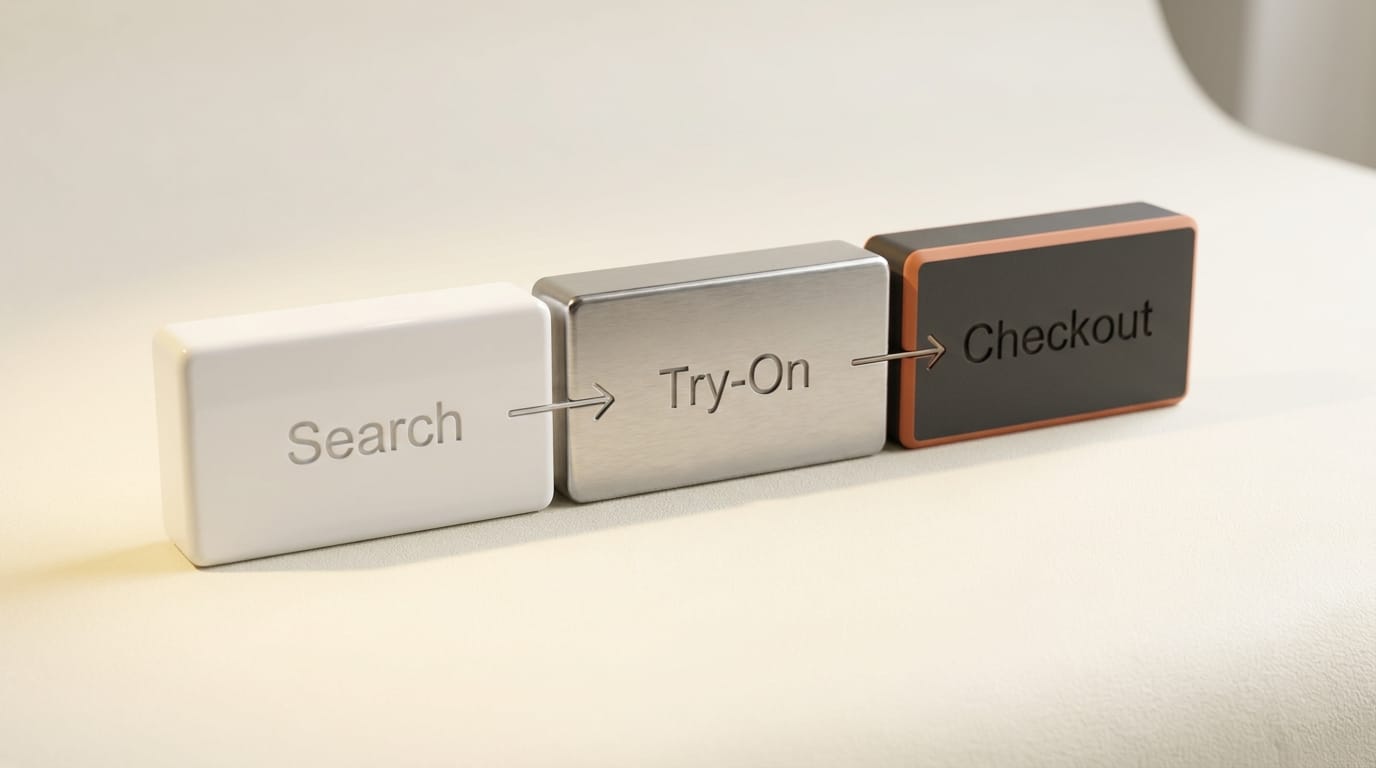
Only Qwen+Taobao closes the loop. The shopper confirms a final tap and Alipay handles the payment without leaving the agent. Rufus hands the buyer to the standard Amazon buy box. Sidekick never handles a buyer transaction. Etsy's ChatGPT app currently surfaces listings; the actual purchase still routes through Etsy's site flow. Closing checkout in chat is the single decision that turns a search agent into an agentic commerce stack, and it is the one decision Western platforms have so far avoided because it reroutes payment economics and disclosure rules. Alibaba sidesteps that problem because it owns the payment rail.
Merchant-side automation
Sidekick's lead is on the back office. Shopify Magic and Sidekick together let merchants describe complex automations in plain language and have Sidekick build the full Shopify Flow, generate product descriptions and images, and even author custom admin apps using GraphQL. Sidekick Pulse runs proactively, surfacing recommendations from store data before the merchant asks. Alibaba has its own merchant-side tools through 1688 and Taobao seller workbench but has not yet shipped a public sidekick-equivalent. Rufus has no merchant surface. Etsy ships seller-side AI features (image generation, listing copy) but no integrated agent.
Scale and distribution
Reach is where the stacks diverge most. Taobao plus Tmall plus Alipay is 300 million MAU with a 4-billion-item catalog. Amazon US shoppers number well over 150 million in any 30-day window. Etsy serves around 90 million active buyers globally with 100 million listings, but distribution now flows through ChatGPT's roughly 800 million weekly users. Shopify does not have a single consumer footprint to compare; it powers millions of independent stores. For a creator deciding where to invest agent-readiness work, this matters more than feature parity. Whichever stack the buyer is already on is where the products need to be machine-readable first.
When Each One Wins
Qwen+Taobao wins if a creator's customers are in China or use Alipay. It also wins on long-tail capability: a single chat can run from "find me a black dress for a wedding under 800 yuan" to a virtual try-on to a completed purchase, with comparison data inline. Western creators selling into China via Tmall Global should treat May 10 as the trigger for prepping listings: agent-readable attributes, virtual try-on assets, and Alipay-compatible payment flow.
Amazon Rufus wins on default distribution for US sellers. If a shopper is asking pre-purchase questions about a product, Rufus is already synthesizing the answer from the listing, reviews, and Q&A. The leverage point is making sure the listing actually contains the spec data Rufus needs. Comparison answers also pull from reviews, so review velocity now feeds agent visibility directly.
Shopify Sidekick wins for DTC operators. It does not bring buyers in chat, but it gets the storefront agent-ready faster than the alternatives: structured product data, generated marketing assets, automated flows, and a GraphQL surface that external agents can call once Shopify or OpenAI publishes a buyer-facing layer. The Apr 25 deep dive on Qwen-Image-2.0-Pro is the closest analog on the asset-generation side, but Sidekick wraps the workflow with admin actions.
Etsy AI wins for gift and craft commerce, where conversational discovery beats keyword search. The bet is that ChatGPT's user base does discovery there first, and Etsy gets pulled in through the ChatGPT app surface. The catch is that Etsy is renting that distribution from OpenAI.
Pricing and ROI
None of the four agents charge buyers. The cost lives on the seller and creator side, and it is paid in agent-readiness work rather than license fees. For Qwen+Taobao the cost is virtual try-on asset production (one BFL FLUX or Photoshop generative-fill pass per SKU), structured product attributes in Taobao's seller console, and Alipay payment integration if missing. For Rufus it is review velocity, listing completeness, and Q&A response on Amazon. For Sidekick it is Shopify subscription plus the time to actually use the agent's automation: Shopify includes Sidekick free with Magic on paid plans. For Etsy it is gift-mode metadata, listing imagery, and the ChatGPT app integration. The ROI signal to watch over Q2-Q3 2026 is share of agent-driven sessions per platform, not the price tag of the agent itself.
Impact on Creators
Three near-term actions follow from the May 10 launch. First, audit listings for agent-readability. Whichever platform a creator sells on, the agent reads structured fields first and unstructured content second; thin or templated descriptions get under-recommended in synthesized answers. Second, prepare virtual try-on assets if the category supports it. Apparel, footwear, jewelry, eyewear, and home decor creators should treat Taobao's bar as the floor and assume Rufus or Shopify will close the gap within two quarters. Third, watch the API timeline. Alibaba has not yet published a public Qwen+Taobao agent API for non-Chinese platforms; Shopify already exposes GraphQL and is the most likely Western surface to ship a buyer-facing agent SDK in 2026.
For creators serving Western audiences with workflow content, agentic commerce is the next major topic that maps onto every category they already cover. Apparel becomes a try-on tutorial. Industrial design becomes a structured-data tutorial. AI tooling becomes agent-readiness consulting. The market still has very little long-form coverage of how to prep for buyer agents; that gap closes in Q2 and the creators who fill it first own the audience.
Key Takeaways
Qwen+Taobao is the first end-to-end agentic commerce stack at consumer scale: search, try-on, comparison, and checkout in one chat at 300 million MAU. None of the Western platforms close the loop yet. Rufus owns pre-purchase research on Amazon but stops at the buy box. Sidekick owns merchant automation but does not talk to buyers. Etsy is renting ChatGPT's surface for gift discovery rather than building its own agent. For creators, the agent-readiness work to do this quarter is concrete: structured product attributes, virtual try-on assets, review velocity, and a 2026 plan for whichever Western platform closes the checkout-in-chat gap next.
What to Watch
The two signals that determine 2026 winners are checkout-in-chat (does Rufus, Sidekick, or an OpenAI partner ship native payment) and virtual try-on (does any Western platform integrate it into the agent surface rather than the listing page). Alibaba's $53 billion AI commitment and Eddie Wu's framing of agentic as a strategic pillar suggest Qwen+Taobao will keep extending its lead through 2026, including likely cross-border tools for Tmall Global sellers. Watch also for whether OpenAI's Etsy app pattern repeats with larger marketplaces: Walmart, Best Buy, and Target are obvious candidates, and any of them shipping a ChatGPT app would shift the Western agent surface from Rufus toward OpenAI.
Frequently Asked Questions
Is Qwen+Taobao available outside China?
The consumer agent runs inside the Taobao and Tmall apps, which are China-first. Cross-border sellers reach the same buyers through Tmall Global, but the Qwen agent is not exposed as a public API for Western creators yet. Watch for an Alibaba Cloud announcement on agent API access through Q2.
Does Amazon Rufus actually take an order?
No. Rufus answers questions and surfaces product links, then the buyer completes the purchase through the standard Amazon buy box. Rufus does not handle payment in chat.
Should DTC stores switch from Shopify to a Chinese marketplace?
No. Shopify Sidekick and Qwen+Taobao solve different problems. Sidekick runs the back office for an independent store. Qwen+Taobao gives a creator access to 300 million Chinese MAU but requires Tmall Global registration, local fulfillment, and Alipay integration. The decision is about audience location, not feature parity.
What is the most important agent-readiness change to make this quarter?
Structured product attributes. Every agent surface reads structured fields before unstructured text, and most creator listings are thin on attributes. Filling out size, material, compatibility, dimensions, and use-case fields is the single highest-ROI change for visibility inside Rufus, Qwen, and any future Sidekick buyer surface.
Where can I read more about the AI virtual try-on stack?
Two prior Creative AI News pieces cover the upstream technology: Alibaba's Tstars-Tryon benchmark for the model side and the fashion-retail try-on roundup for the commercial deployment side.