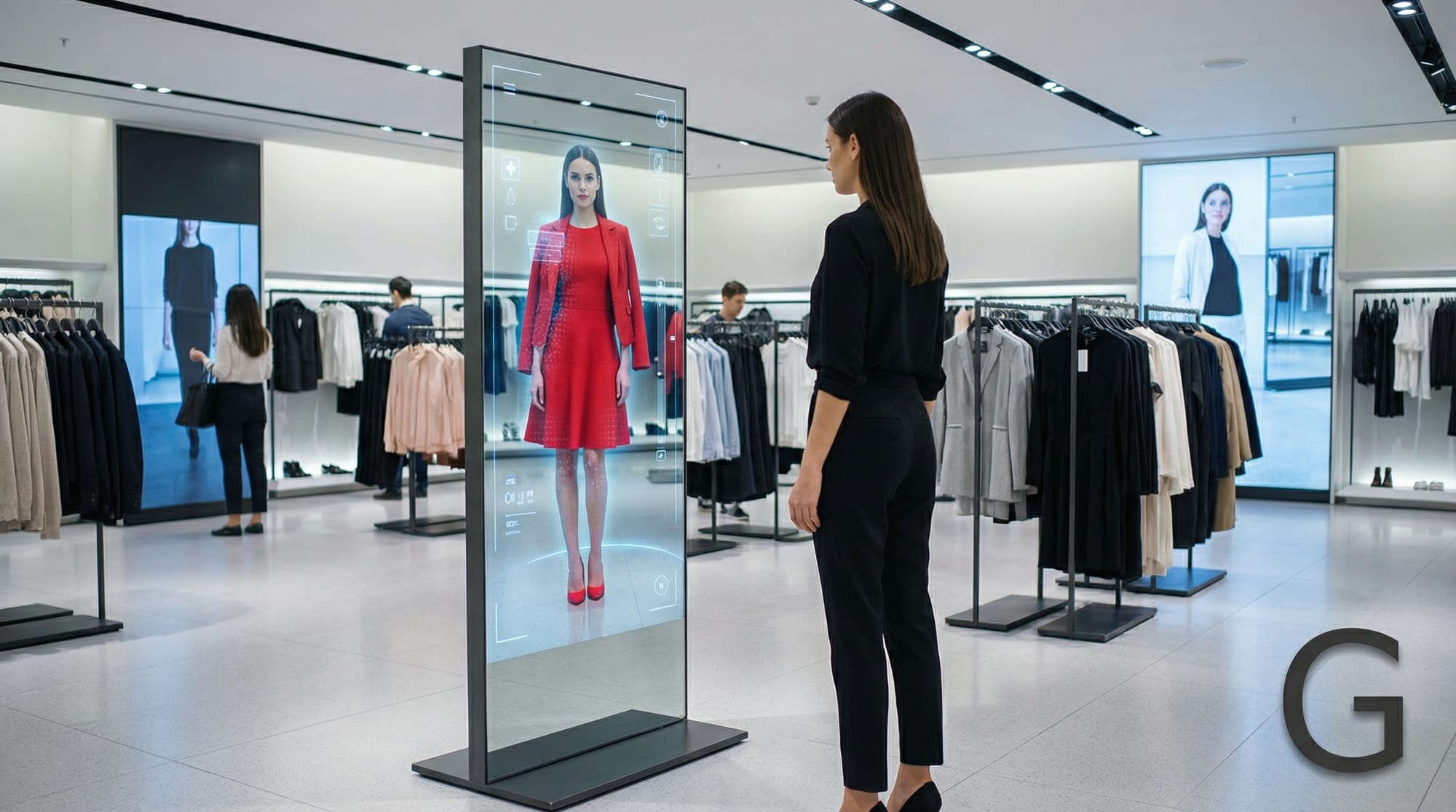
A new wave of AI startups is attacking fashion e-commerce's most expensive problem: product returns. Startups like Catches and Genlook are using generative AI and physics simulation to let shoppers virtually try on clothing before buying, and major retailers are paying attention, CNBC reported on April 5.
What Happened
Return rates exceed 50% in some fashion e-commerce categories, a margin drain that the industry calls its "silent killer." Two startups are leading the AI response with fundamentally different approaches.
Catches launched its RealFit technology on luxury brand AMIRI's website on March 16, 2026, after two years of development. The system uses custom-trained diffusion models and NVIDIA's Newton Physics Engine to create a "digital twin" from customer measurements and a photo, achieving millimeter-level fit accuracy. The technology is built on NVIDIA CUDA, Omniverse, Nemotron, and Cosmos foundation models, with a team that includes former Disney and Pixar simulation specialists.
Genlook takes a more accessible approach through Shopify's app ecosystem. Its AI widget lets customers upload a photo and see garments visualized on their body. Pricing starts free (10 try-ons per month) and scales to $99 per month for 1,000 try-ons, making it accessible to independent fashion brands.
Why It Matters
Virtual try-on represents one of the most commercially direct applications of generative AI in creative industries. Unlike text or image generation tools that augment creative workflows, these systems sit directly in the purchase funnel where they can be measured against hard revenue metrics.
Catches projects a 10% increase in conversions and 20 to 30x return on investment for brand partners. If those numbers hold across broader adoption, virtual try-on could become the first generative AI application where ROI is unambiguous and immediate.
For creators and designers, this signals a shift in how fashion product imagery will be produced. If AI can generate photorealistic try-on experiences from a single photo, the role of traditional product photography and fit modeling evolves significantly.
Key Details
- Catches funding: $10 million raised, backed by LVMH's Antoine Arnault, supermodel Natalia Vodianova, Apollo.io founder Roy Chung, and former Tommy Hilfiger CEO Gary Sheinbaum
- Catches tech stack: NVIDIA CUDA, Omniverse, Newton Physics Engine, Nemotron, and Cosmos foundation models
- Genlook: 5.0-star rating on Shopify (16 reviews), supports 14+ languages, plans from free to $99/month
- Google: Also entering the space with a Virtual Try-On API on Vertex AI, available in product search results from April 30
- Amazon and Adobe have also built virtual try-on features in various forms
What to Do Next
Fashion creators and e-commerce designers should test both approaches. Catches targets luxury and mid-tier brands with physics-accurate fitting, while Genlook offers a low-commitment entry point through Shopify. If you run a fashion brand on Shopify, Genlook's free tier lets you evaluate the technology with zero upfront cost. For larger operations, Catches' NVIDIA-powered pipeline represents the current high-water mark for virtual fitting accuracy.