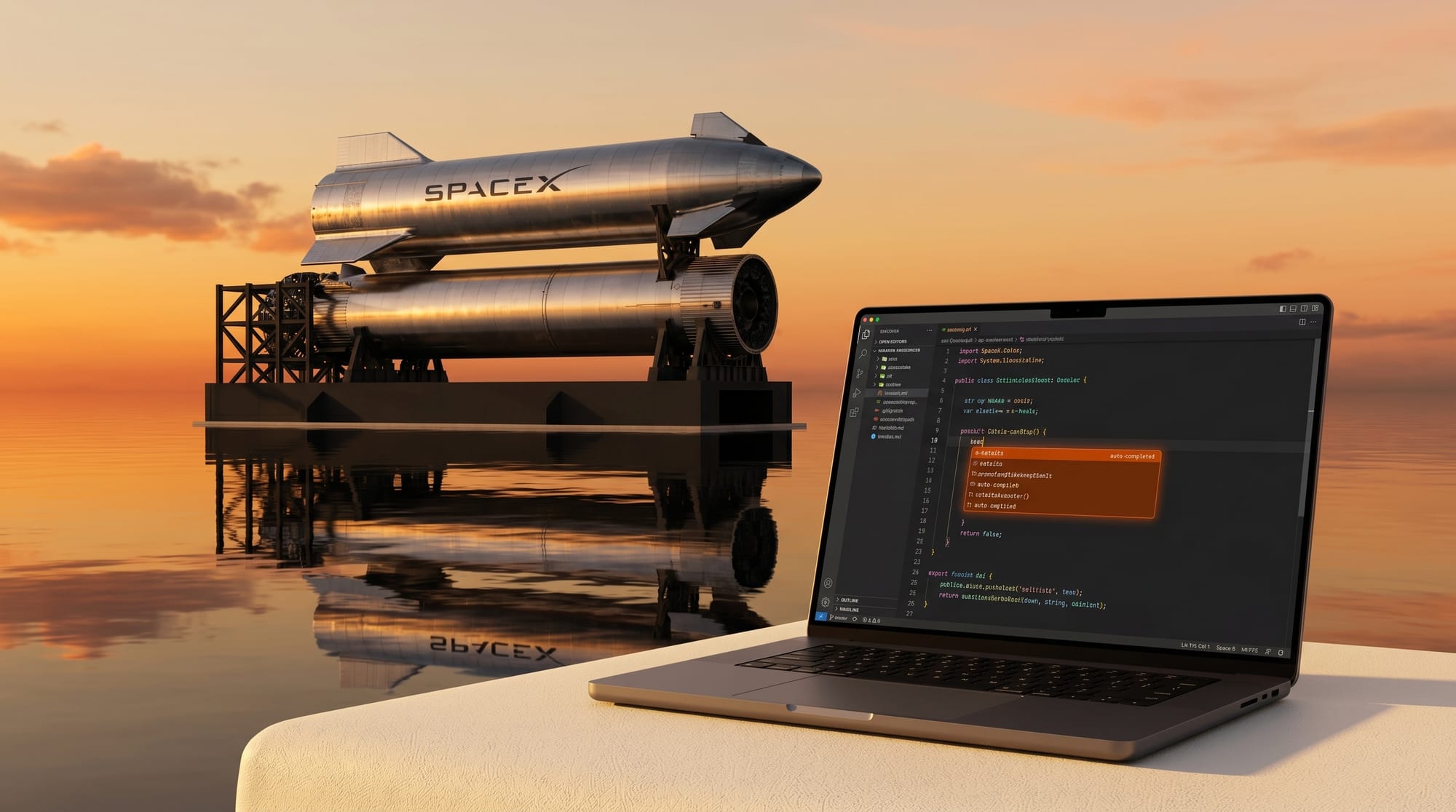
SpaceX and Cursor announced a model training partnership on April 21, 2026 that comes with a remarkable structure: SpaceX is paying Cursor $10 billion now for joint AI coding work and holds an option to acquire the AI coding startup outright for $60 billion later this year. The deal gives Cursor access to xAI's Colossus supercomputer, which SpaceX says has compute equivalent to roughly one million Nvidia H100 chips.
For the broader landscape, see our complete guide to AI coding tools in 2026.
What Happened
Cursor, the AI coding editor founded in 2022 as Anysphere, said in its announcement that the partnership will let it "dramatically scale up the intelligence of our models for coding and beyond." SpaceX, which acquired xAI earlier this year and now operates both X and Colossus, gets first-call access to Cursor's coding stack and the right to buy the company outright before SpaceX's expected summer IPO. TechCrunch reported the structure as a partnership now and an acquisition option later.
The framing is unusual. Most M&A deals close on a fixed date with a fixed price. This one pays $10 billion for current work, then gives SpaceX a separate $60 billion call option that expires later in 2026. Cursor was previously eyeing a $50 billion private valuation, so the option price represents a 20% premium on what the market was already pricing in.
Why It Matters
For working creators and developers using Cursor day-to-day, the immediate impact is more compute behind the model that ships in your editor. Cursor said its Composer 1.5 model scaled reinforcement learning by over 20x and Composer 2 added continued pretraining to reach frontier performance. Each compute jump translated directly into capability gains, and Colossus is a step-change beyond what Cursor previously had access to.
The strategic read is that AI coding is now a compute-bound game. With SpaceX absorbing both xAI and (potentially) Cursor, Elon Musk is assembling a vertically integrated stack: foundation models (xAI), coding agents (Cursor), and infrastructure (Colossus, Starlink). That puts pressure on standalone coding tools like Windsurf and GitHub Copilot, which now compete with a Cursor that can train on a private million-H100 cluster.
Key Details
- Partnership payment: $10 billion from SpaceX to Cursor for joint training work
- Acquisition option: $60 billion call option for SpaceX to buy Cursor outright, expires later in 2026
- Compute: Cursor gains access to xAI's Colossus, equivalent to ~1 million Nvidia H100s
- Model lineage: Composer 2 is Cursor's current frontier coding model; next-gen training begins on Colossus
- Cursor previous valuation: Was eyeing a $50 billion private round before the deal
- Confirmation: Reported by CNBC and Engadget; Cursor confirmed the partnership in its own blog post
What to Do Next
If you're a Cursor user, expect Composer 3 (or whatever ships next) to be substantially more capable, with the cost curve potentially moving in your favor as compute economics improve. If you're evaluating coding tools right now, factor in that Cursor may end up inside the SpaceX/xAI orbit by year-end, which carries the same governance and political-risk questions that come with any Musk-controlled product.
For competing tools, the implication is sharper: independent AI coding startups now compete with a Cursor that has near-unlimited training compute. Cognition's SWE-1.6 took the opposite bet (free, fast, leaner models). The next 6 months will tell us which strategy wins the developer mindshare battle.