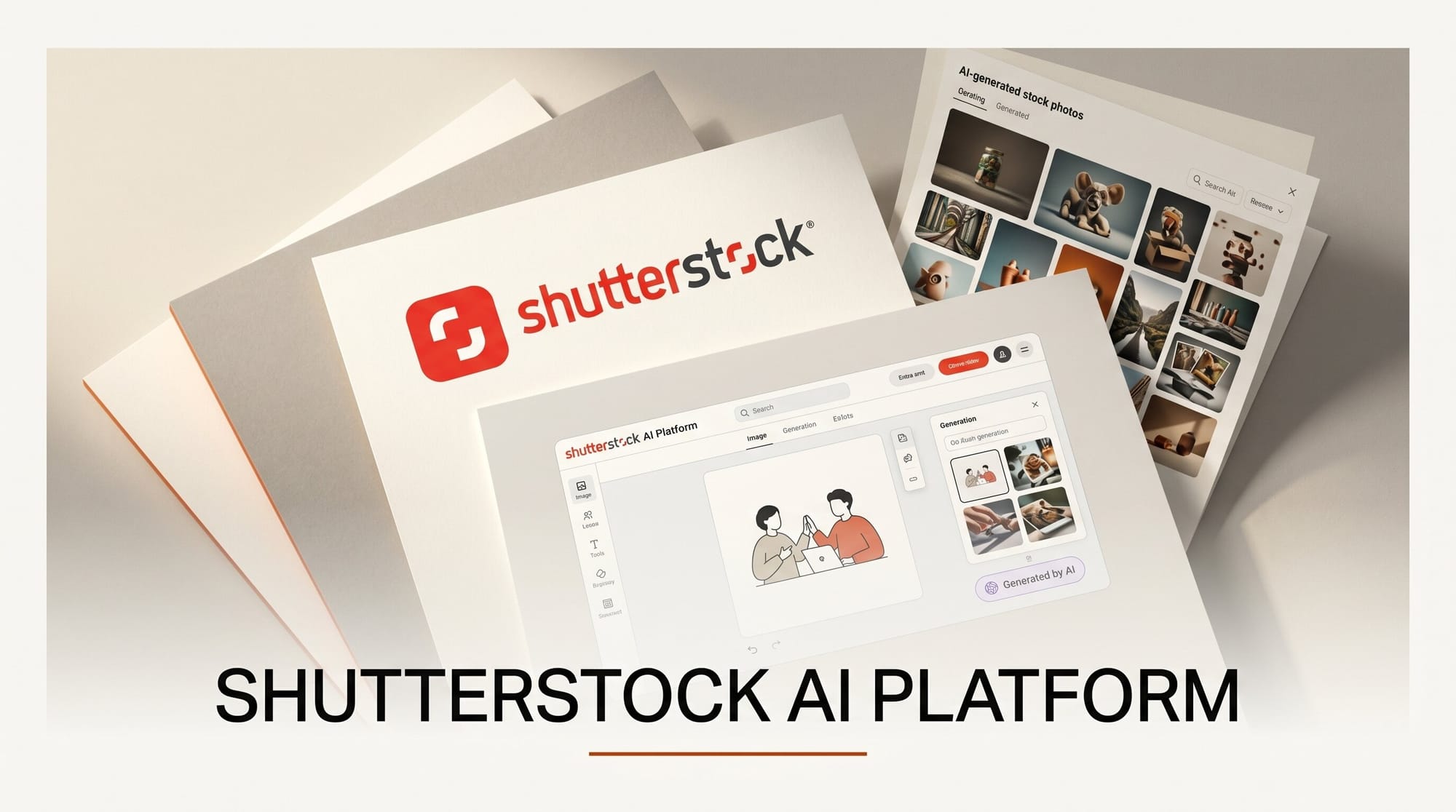
Shutterstock on June 11, 2026 turned its stock content library into a human-led, AI-powered creative platform. Instead of only licensing finished assets, the platform now lets creators generate, edit, and customize content in the same workflow, and it carries commercial licensing through to the AI-assisted output.
What Happened
The revamped platform folds generative tools directly into Shutterstock's catalog. It adds inline AI editing, AI image and video generation, conversational search, and a proprietary Model Match system, plus content reference and first frame reference controls that let you build new assets from existing ones while keeping a consistent look.
The part that sets it apart: content edited or generated through the platform still ships with commercial-ready licensing, indemnification, and human review, according to the launch announcement. Contributors keep earning royalties when their work is adapted with AI tools and licensed. Shutterstock also surfaces its assets inside a dedicated app in ChatGPT, part of the same push that has OpenAI rebuilding ChatGPT into an app platform.
Try It: Build From Licensed Assets, Not a Blank Prompt
Open the Shutterstock platform and start from a real licensed image instead of an empty text box. Use first frame reference to lock a visual style, then generate variations with inline AI editing. Because the output carries indemnified commercial licensing, you can move it straight into client work without the rights uncertainty that trails most raw text-to-image generations.
Why It Matters for Creators
The biggest friction with generative AI in paid work is rights: who owns the output, and is it safe to ship to a client? By attaching indemnification and human review to AI-assisted assets, Shutterstock is selling legal certainty as a feature, not just pixels. For agencies and freelancers billing clients, that assurance can matter more than squeezing out the last few percent of raw model quality.
Key Details
Launch date: June 11, 2026.
Core tools: inline AI editing, image and video generation, Model Match, conversational search, content reference, first frame reference.
Licensing: commercial-ready with indemnification and human review on AI output.
Contributors: continue earning royalties when their work is AI-edited and licensed.
Integration: Shutterstock app inside ChatGPT for AI-native workflows.
What to Do Next
If you already license stock, test whether the indemnified AI editing replaces a step in your current pipeline before renewing a separate generation tool. If you contribute to Shutterstock, review how the royalty terms apply when your work is used as an AI reference so you know what your library is now worth.