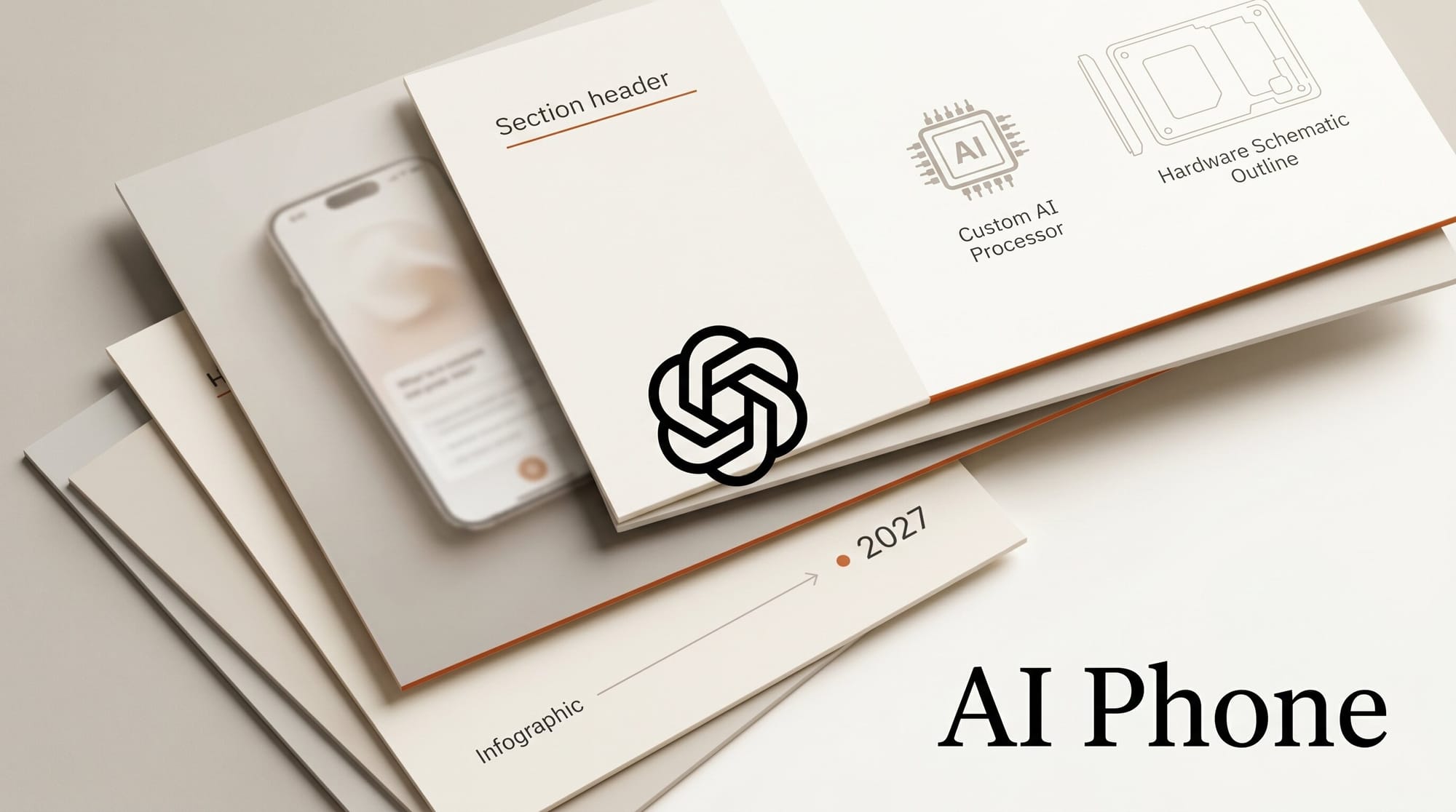
OpenAI is building an AI-native phone targeting a first-half 2027 launch, according to a MacRumors roundup of supply chain analysis by analyst Ming-Chi Kuo. The device is designed to replace traditional app navigation with a continuous, context-aware interface that tracks location, activity, communication, and creative context at all times.
What Happened
Supply chain analysis by Kuo points to a MediaTek Dimensity 9600 processor built on TSMC's N2P node, the same chip class powering top-tier Android flagship devices this year. Luxshare Precision Industry, which manufactures Apple AirPods and high-end electronics, has secured the production contract. The phone includes two dedicated AI processors running simultaneously: one for vision, one for language.
OpenAI assembled its hardware team by hiring more than 40 former Apple employees, including designers Evans Hankey, Tang Tan, and Scott Cannon. This team is separate from OpenAI's collaboration with Jony Ive's io Products on a non-phone AI companion device. The phone project has been fast-tracked from 2028 to first-half 2027, and projected shipments across 2027-2028 are approximately 30 million units.
Why It Matters for Creators
Current smartphones treat AI as an app: open it, prompt it, close it, switch back to your actual work. OpenAI's reported design direction is different: continuous environmental awareness means the AI already knows your workflow state when you need it. For creators moving between on-site capture, mobile editing, and client delivery, that removes the overhead of re-establishing context every time you switch tasks.
The dual AI processor architecture (vision and language running in parallel) is the hardware foundation for real-time on-device creative tools. Processing that currently requires a cloud round-trip could move to the device itself, which matters when you are working without reliable internet access.
Key Details
- Target launch: First half of 2027
- Processor: MediaTek Dimensity 9600 (TSMC N2P node)
- Manufacturer: Luxshare Precision Industry
- AI processors: Two dedicated chips (vision and language running simultaneously)
- Design team: 40+ former Apple employees including Evans Hankey, Tang Tan, Scott Cannon
- Projected shipments: Approximately 30 million units across 2027-2028
- Interface: Continuous context-aware, replacing traditional app navigation
What to Do Next
OpenAI has not made an official announcement. The timeline, chip, and design details come from supply chain analysis and analyst reports. All specifics are subject to change. The 40-plus Apple design hire count is verifiable and signals an active project with significant resources behind it.
For creators evaluating tool investments over the next two years, AI-native hardware from a major lab changes what mobile creative work can mean by 2027. Follow OpenAI's official hardware announcements and watch for how the camera and on-device AI capabilities are positioned for creative workflows when the official product reveal arrives.