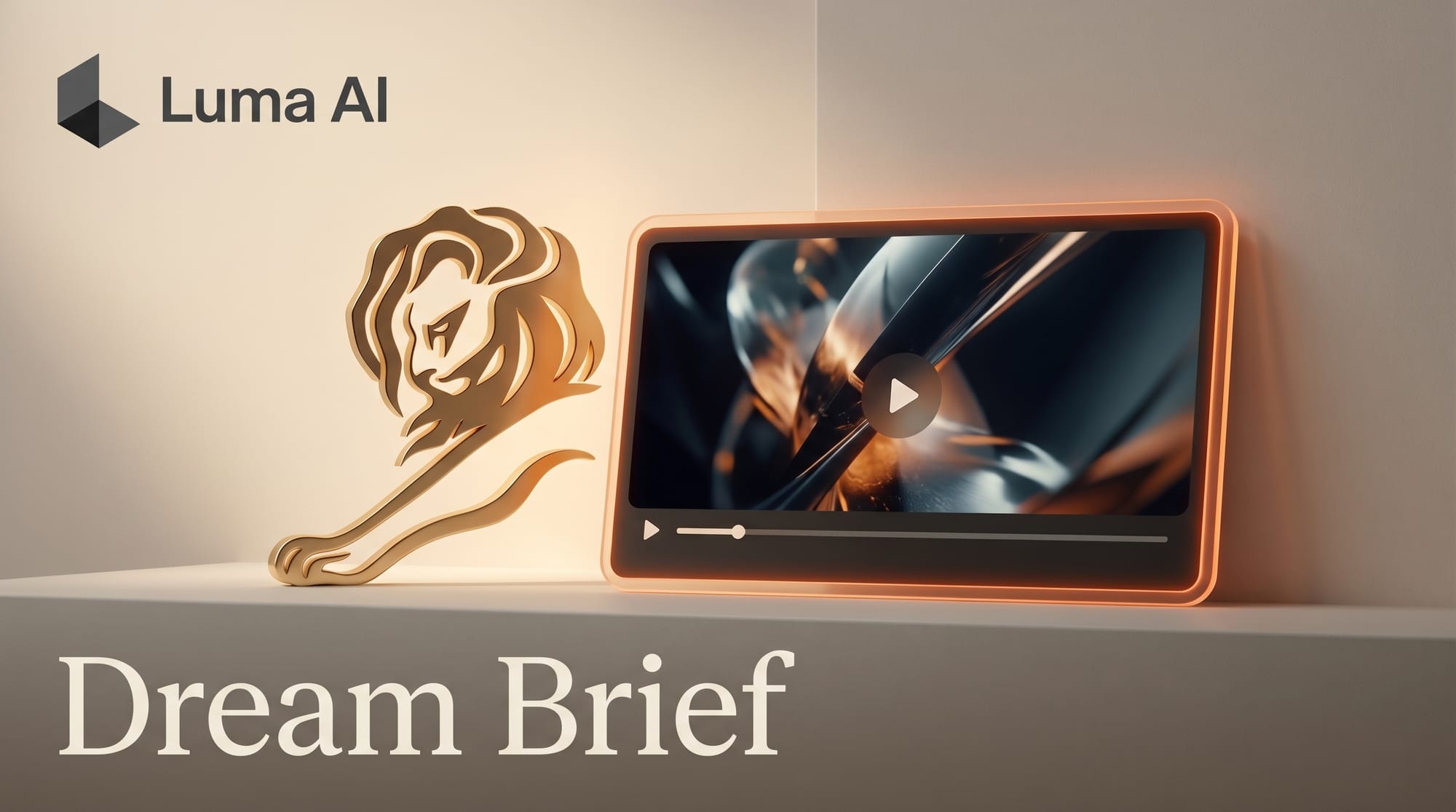
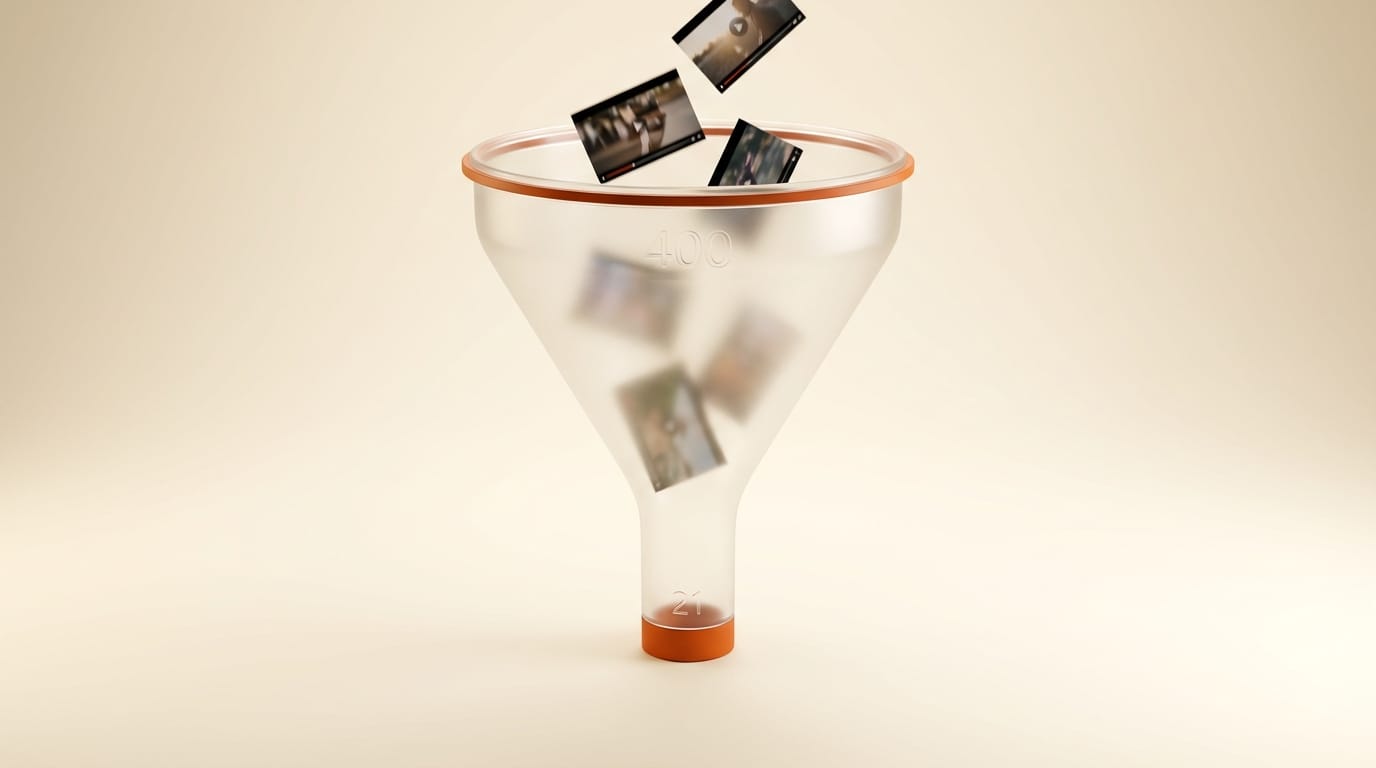
Luma AI submitted 21 AI-generated advertisements as finalists to Cannes Lions 2026 on April 9, backed by a $1 million prize if any submission wins a Gold Lion. The finalists emerged from nearly 400 entries submitted in under eight weeks through the Dream Brief competition, with creators logging over 10,000 hours on the platform. The submissions compete in the new AI Craft subcategory introduced this year, a category that exists because of the DM9 scandal that rocked the 2025 festival. For the advertising industry, this is the first transparent, large-scale test of whether AI-generated creative can win on merit at the highest level.
For the broader landscape, see our complete guide to AI video generation in 2026.
Background
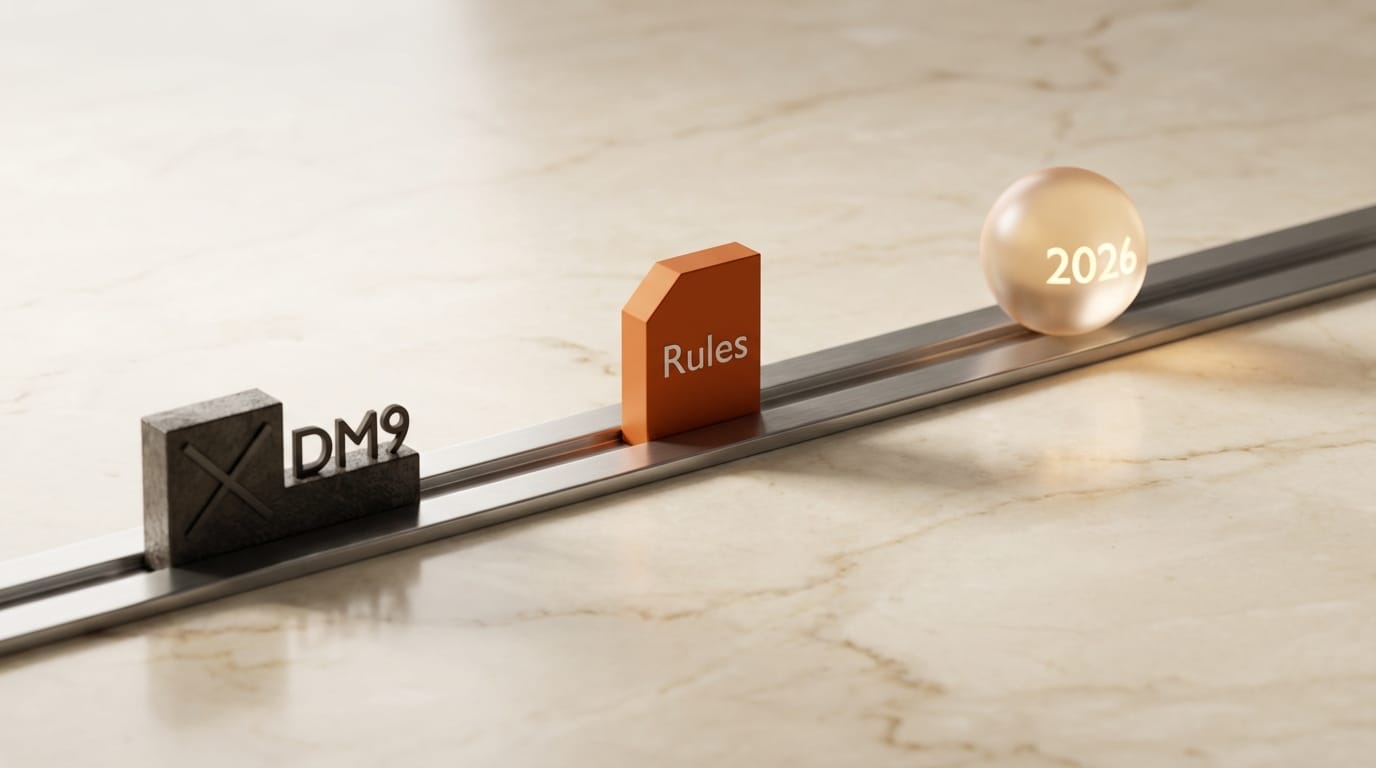
The context for Luma's Dream Brief is inseparable from what happened at Cannes Lions 2025. Brazilian agency DM9 had 12 awards revoked, including a Creative Data Lions Grand Prix, after it was discovered their entries used AI-generated and AI-manipulated footage to simulate real-world news coverage and campaign results. The scandal involved fake CNN Brasil coverage and fabricated metrics. It was the largest award revocation in Cannes Lions history.
The festival's response was sweeping: mandatory AI usage disclosure, content detection tools, a review panel of AI and ethics experts, and the introduction of AI Craft subcategories across five Lions categories. The message was clear: AI in advertising is welcome, but only when transparent.
Luma's Dream Brief takes the opposite approach to DM9's deception. The competition explicitly requires that at least 70% of each submission must be generated using Luma's platform. Every finalist is openly and predominantly AI-generated. There is no pretense of traditional production. The question is not whether AI was used but whether AI-generated creative can compete on storytelling and craft.
Deep Analysis
The Dream Brief Model: Competition as Product Validation
The Dream Brief competition structure is worth examining as a business strategy, not just a creative exercise. Luma launched the competition on February 2, 2026, with a $1 million prize for any finalist that wins a Gold Lion. The company covers all Cannes submission fees and paid media for finalists. An 18-person jury, including Susan Hoffman of Wieden+Kennedy, Bill Oakley of The Simpsons, and Katie Gurgainus from Nike, selected 21 finalists from 400 submissions representing 58 countries and 100+ agencies.
This is not a technology demo. It is a market validation exercise disguised as a competition. If a Luma-generated ad wins Gold at Cannes, it becomes the defining proof point for AI in commercial advertising. The $1 million prize is marketing spend, not prize money. The 10,000 hours logged by participants represent product engagement that no demo or free trial could achieve. And the finalist reel becomes sales collateral for every brand considering AI-generated creative.
The 400 entries from 58 countries in under eight weeks also demonstrate demand that Luma can point to in enterprise sales conversations. The advertising industry is not waiting to see if AI works; 86% of ad buyers are already using or planning to implement generative AI for video ads, according to IAB data.
Director-AI Collaboration: The Emerging Production Template
The most instructive finalist is "Adrenaline Junkies," a collaboration between legendary directors Hal Curtis and Chuck McBride, AI studio OneDay, and production company Arts and Sciences. The spot features 85 dynamic shots built around a 1990s-era extreme sports concept that traditional production would have made prohibitively expensive to execute.
Curtis's assessment is measured: "AI is useful in pre-visualizing an idea and having creative flexibility. But the need for an idea, for story, for experience to curate and guide remains." This is not a director being replaced by AI. It is a director using AI to execute concepts that the economics of traditional production had made impossible.
The collaboration model, where experienced directors provide creative direction and AI platforms handle execution, could become the standard arrangement in commercial production. It preserves the creative judgment that clients pay for while dramatically reducing the production budget required to achieve ambitious visual concepts. For a spot with 85 complex shots, the alternative would have been a multi-day shoot with a crew of dozens and a six-figure budget minimum.
Other finalists demonstrate different collaboration patterns. Some entries were produced entirely inside Luma, including audio, sound effects, and editing, with no external tools. This end-to-end capability matters for small agencies and independent creators who lack the infrastructure for full-service production.
After DM9: Transparency as Competitive Advantage
The timing of the Dream Brief relative to the DM9 scandal is strategically deliberate. DM9 tried to pass AI-generated content as real footage and got caught. Luma's entire premise is that AI-generated content should compete openly on its own merits.
Cannes Lions' new AI Craft subcategory was created specifically to accommodate this distinction. The category celebrates the "sweet spot" where human imagination and AI tools come together, with full transparency about AI involvement. Luma's submissions are the first major test of whether this new framework works.
The transparency approach serves a dual purpose. For the advertising industry, it establishes that AI-generated creative can be presented honestly without losing competitive standing. For Luma specifically, it positions the company as the responsible choice for brands that want AI capabilities without the reputational risk of being caught using AI deceptively. In a post-DM9 environment, that positioning has real commercial value.
The jury's evaluation criteria reinforce this framing. CCO Jason Kreher of DE-YAN explicitly noted that judging prioritized storytelling over visual spectacle, rejecting what he called "VFX porn." The standard is not whether the AI can produce impressive visuals but whether the creative team can tell a compelling story using AI tools.
The $1M Signal: Economics of AI Advertising
The $1 million prize is not just a marketing tactic. It represents Luma's bet on the size of the addressable market. If AI-generated creative can win at Cannes, the market for AI-powered advertising production becomes defensible. Luma is spending seven figures to establish that proof point because the downstream revenue opportunity justifies it.
The advertising industry's own data supports the thesis. According to Ad Age's coverage, IAB research shows 86% of ad buyers are already using or planning to implement generative AI for video ad creation. AI-generated creative is projected to represent 40% of all ads by the end of 2026. These are not aspirational numbers; they reflect current procurement behavior.
The perception gap remains the primary obstacle. Studies have found that AI-generated ads perform comparably in click-through rates as long as they do not appear obviously AI-generated. The Cannes test matters because a Gold Lion would signal to brand decision-makers that AI creative is not just performant but prestigious. That distinction matters in an industry where awards drive agency selection and budget allocation.

Impact on Creators
For video creators working in commercial production, the Dream Brief results offer a preview of how the industry is restructuring. The director-AI collaboration model does not eliminate creative roles; it changes what those roles involve. Directors become creative directors of AI systems rather than coordinators of physical production crews. The skill set shifts from managing logistics to managing prompts, iterations, and creative judgment at scale.
For independent creators and small agencies, the end-to-end production capability demonstrated by several finalists is the more immediate signal. Spots that would have required a crew, a studio, and post-production can now be produced by a single creator using a single platform. The competitive barrier to producing broadcast-quality advertising drops from "access to production infrastructure" to "quality of creative concept."
The Cannes Lions results in June will determine how quickly this shift accelerates. A Gold Lion for an AI-generated ad would not just validate Luma's technology; it would validate the entire category of AI-generated commercial creative. Brands and agencies watching from the sidelines would have their justification to move budgets.
Key Takeaways
- 21 AI-generated ads compete at Cannes Lions 2026 in the new AI Craft category, backed by a $1M prize from Luma AI
- Nearly 400 entries from 58 countries in under 8 weeks, with 10,000+ hours logged on the platform
- The director-AI collaboration model preserves creative judgment while dramatically reducing production budgets
- Post-DM9 transparency is now the competitive standard; AI creative must compete openly on storytelling merit
- 86% of ad buyers are already implementing AI for video creation; AI ads projected to reach 40% of all creative by year end
What to Watch
Cannes Lions runs June 22-26, 2026. That is the definitive date. A Gold Lion for any of the 21 finalists would be the single strongest validation of AI-generated commercial creative to date. Watch for the jury commentary, which will reveal whether the advertising establishment evaluates AI creative on the same criteria as traditional work or creates a separate, lower standard.
Watch also for brand response. If major brands begin commissioning AI-generated campaigns directly rather than through traditional production, the market structure shifts faster than industry projections suggest. The Dream Brief already demonstrated the talent pipeline: 400 creators willing to invest serious time producing AI-generated commercial work.
The finalist showcase is worth reviewing regardless of the Cannes outcome. It represents the current ceiling of AI-generated advertising quality and the range of creative approaches that the technology enables.
This analysis was produced by Creative AI News.
Subscribe for free to get the weekly digest every Tuesday.