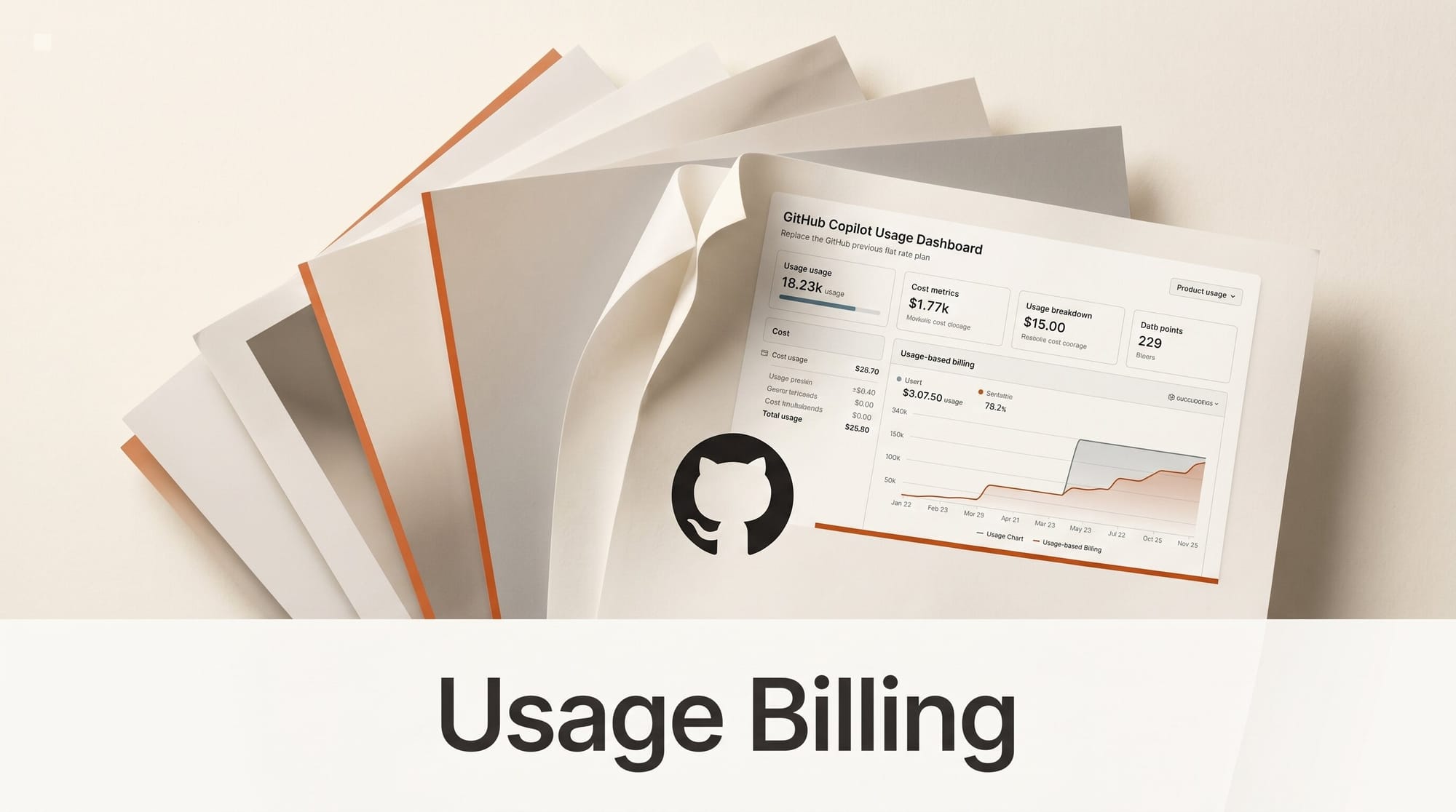
GitHub Copilot transitioned to usage-based billing on June 1, 2026, replacing flat-rate premium request limits with a token meter that charges against monthly AI Credits. The change applies to every Copilot plan, including Pro, Pro+, Business, and Enterprise. GitHub announced the shift on April 27, and the new meter went live today after a six-week migration window.
How to track your AI Credit burn rate this week
The first action for any Copilot user is opening the Billing Overview page in GitHub settings and setting a spending budget before usage spikes. Open the Copilot documentation and locate the "Manage and track spending" section. Enable the budget alert at 50%, 75%, and 100% of your included credits so the meter does not surprise you mid-sprint. The dashboard breaks down consumption per model, so you can see whether your Claude Sonnet 4.5 calls or your GPT-5 calls are driving the bill.
One AI Credit equals one US cent, and tokens are billed at the same API rates Anthropic, OpenAI, and Google publish for each underlying model. Switching from a frontier model to a cheaper one inside Copilot Chat extends your monthly allowance with a single dropdown change.
Why it matters for developers
The shift moves Copilot from a predictable subscription to a metered tool more like a cloud database than a SaaS editor. Heavy users of agentic workflows, multi-turn chat, and long-context refactors will hit their credit ceilings faster than light autocomplete users. TechCrunch reported that some developers expect 10x to 50x cost increases on agent-heavy workflows, particularly those using Copilot Workspace for long planning tasks.
Key details
Copilot Pro stays at $10 per month with $10 in monthly AI Credits. Pro+ stays at $39 with $39 in credits. Business is $19 per user with $19 in credits, and Enterprise is $39 per user with $39 in credits. Business and Enterprise plans receive promotional bonus credits of $30 and $70 respectively for the June-August transition window. Code completions and Next Edit suggestions stay free across all tiers and never consume credits, which protects the core inline-suggestion workflow most developers rely on. Annual subscribers keep their old premium-request pricing until renewal. The community discussion thread has 1,400+ comments documenting edge cases.
What to do next
Run a one-week audit of your current Copilot Chat and Agent usage in the new dashboard, then decide whether to downgrade to a cheaper model, stay on the included credits, or budget for overage. If you also use alternate proxy setups like Claude Code with Kimi, compare per-task cost before locking in a higher Copilot tier.