George Hotz, founder of comma.ai and one of the most outspoken critics of mainstream AI development, published a short but pointed argument on May 24: AI coding agents cannot actually program. They produce output that looks like progress, but the quality is fundamentally broken in ways that get harder to detect as volume increases.
What Happened
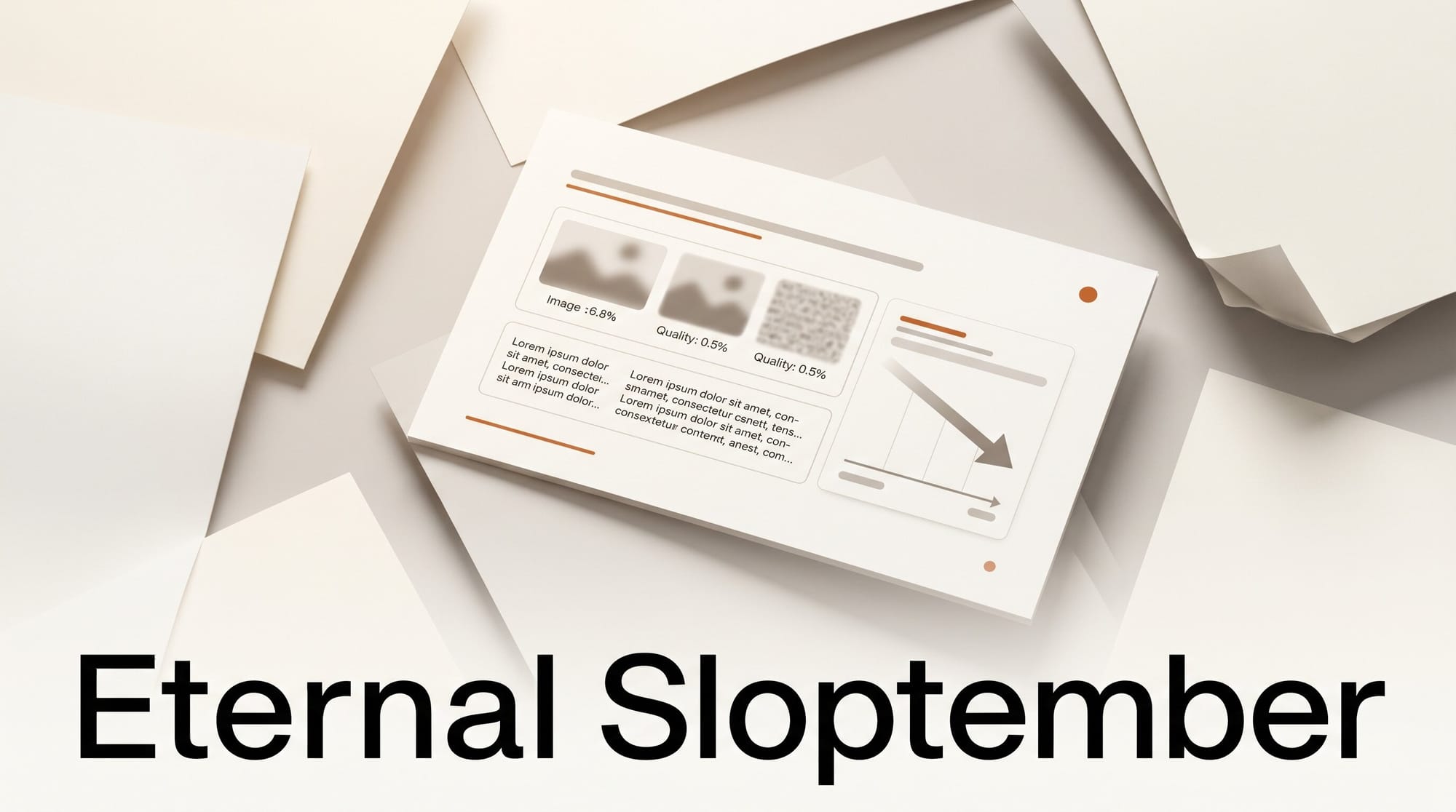
Hotz published "The Eternal Sloptember" on his personal blog, referencing the 1993 "Eternal September," the moment AOL flooded Usenet with new users who did not know the norms and permanently degraded community quality. His argument: AI agents are doing the same thing to software, except at industrial scale and without any endpoint.
The core claim is that AI agents are "a highly sophisticated statistical model designed to mimic the distribution of programming." They frontload impressive-looking progress, then stall on the refinement and polish that separates working software from shippable software. What you get is a slot machine: pull the lever, hope it finishes clean. Often it does not.
Why It Matters for Creators
The argument extends beyond code. Creators using AI tools for images, audio, video, and writing face the same dynamic: AI outputs are dazzling on first pass, then degrade into repetition and subtle errors when you push toward polish. The tools being built in this environment (from tinygrad ML compilers to custom ComfyUI pipelines) are all operating in this context.
Hotz sharpens the organizational risk: when lower-performing employees can generate massive volumes of output using AI agents, the result is not higher quality. It is higher volume of broken work that looks credible until someone actually runs it. For creative teams, this shifts more weight onto the review layer than most workflows currently have.
Key Details
Hotz, who built comma.ai before his current focus on open-source ML infrastructure, frames the era bluntly: "Agents will end up producing more code, more apps, and more features than ever before. It is a golden era for buckets and buckets of slop." He adds that the defining question of this period is "who manages to avoid harming themselves in their AI psychosis."
The critique lands differently depending on use case. For disposable prototypes and first drafts, the slot machine is useful: you expect to discard most of the output anyway. The trap is treating the frontloaded progress as finished work and shipping it.
What to Do Next
Hotz does not prescribe solutions, but the implication for creators is practical: treat agent output as a strong first draft that requires a verification pass, not a finished deliverable. The leverage AI provides on generation is real. The slot machine behavior on polish is also real. Design your workflow around both halves of that equation, and you capture the upside without absorbing the slop.