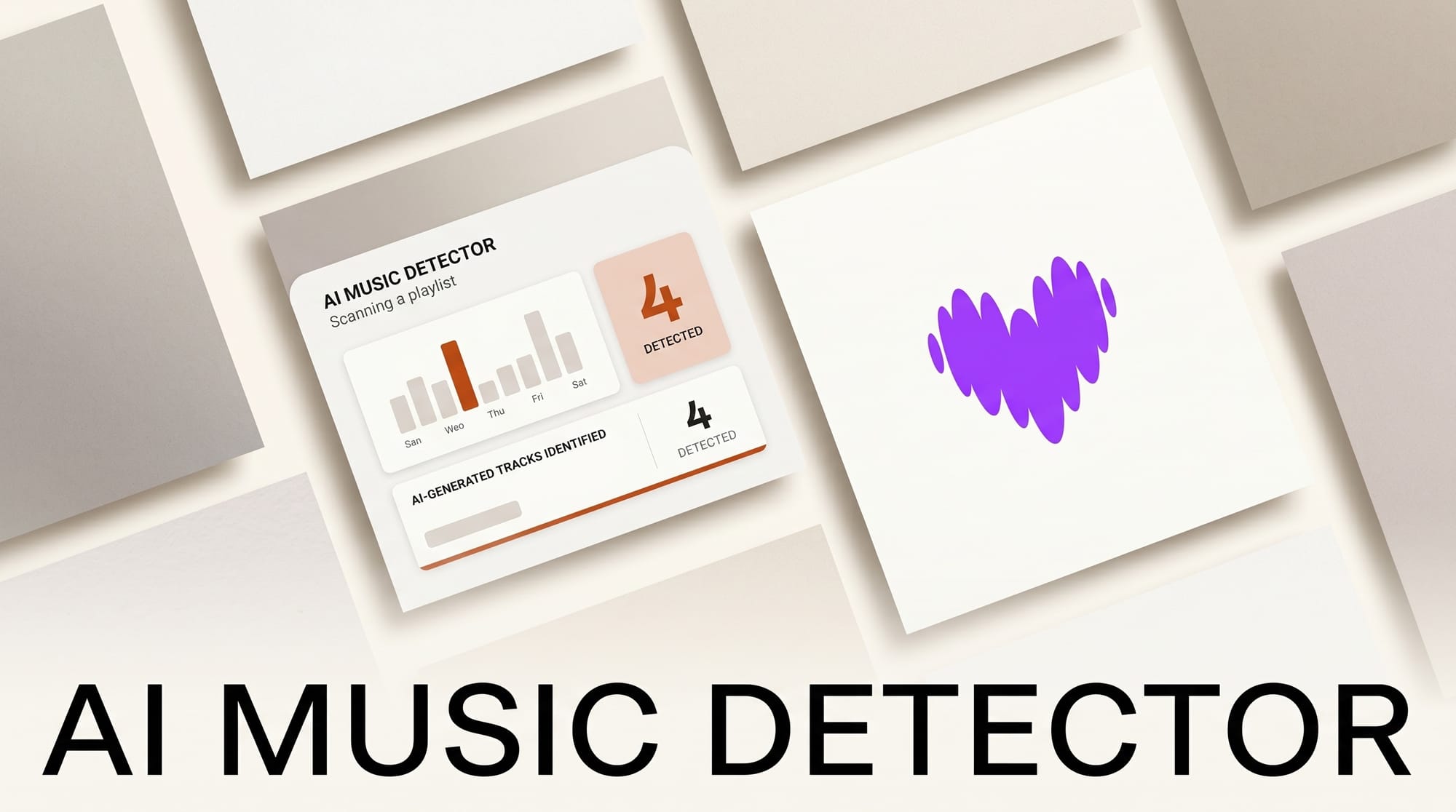
Deezer has launched a free AI music detector that scans playlists on any major streaming service and flags tracks it believes were generated by AI. The tool works across roughly 20 platforms, including Spotify, Apple Music, SoundCloud, and YouTube Music, and supports 27 languages. For musicians and curators, it is the first easy way to check whether the playlists they build or appear on are quietly filling up with synthetic tracks.
What Happened
On June 11, 2026, Deezer opened a public web tool that lets anyone audit a playlist for AI-generated music, even on competing services. According to Deezer's press release, you visit the detector site, pick your streaming service, grant read access to your playlists, and the tool returns a breakdown of which tracks it scores as synthetic. Results can be shared, and the scan runs without a Deezer subscription.
Why It Matters
AI music is no longer a fringe concern. As Music Ally reported, Deezer says nearly half of users migrating from another platform already have AI tracks sitting in their playlists, usually without knowing it. For independent artists, that matters: synthetic uploads compete for the same playlist slots, royalties, and listener attention. A detector that works across platforms gives creators a way to see the problem on the services where their audience actually listens, not just on Deezer.
Key Details
The launch lands on top of striking internal numbers. Per TechCrunch, about 44% of daily uploads to Deezer are now AI-generated, roughly 75,000 tracks a day, though AI music still accounts for only 1% to 3% of total streams. Deezer says it flags around 85% of AI-stream activity as fraudulent and demonetizes it, and unlike rivals that only tag AI tracks, it removes them from recommendations and editorial playlists. CEO Alexis Lanternier framed the tool as a transparency move, letting listeners check any platform rather than trusting each service's own labels.
What to Do Next
If you release or curate music, run your own playlists through the detector and note how many tracks come back flagged. Use it to audit collaborative or algorithmic playlists you have been added to, where synthetic tracks are most likely to slip in. Treat the scores as a signal, not a verdict, since detectors still struggle with human-AI hybrid productions. For a deeper look at where detection breaks down, see our coverage of why AI music detectors fail on hybrid tracks, and our look at local AI music generation with The Muser for context on the tools driving this wave of synthetic tracks.