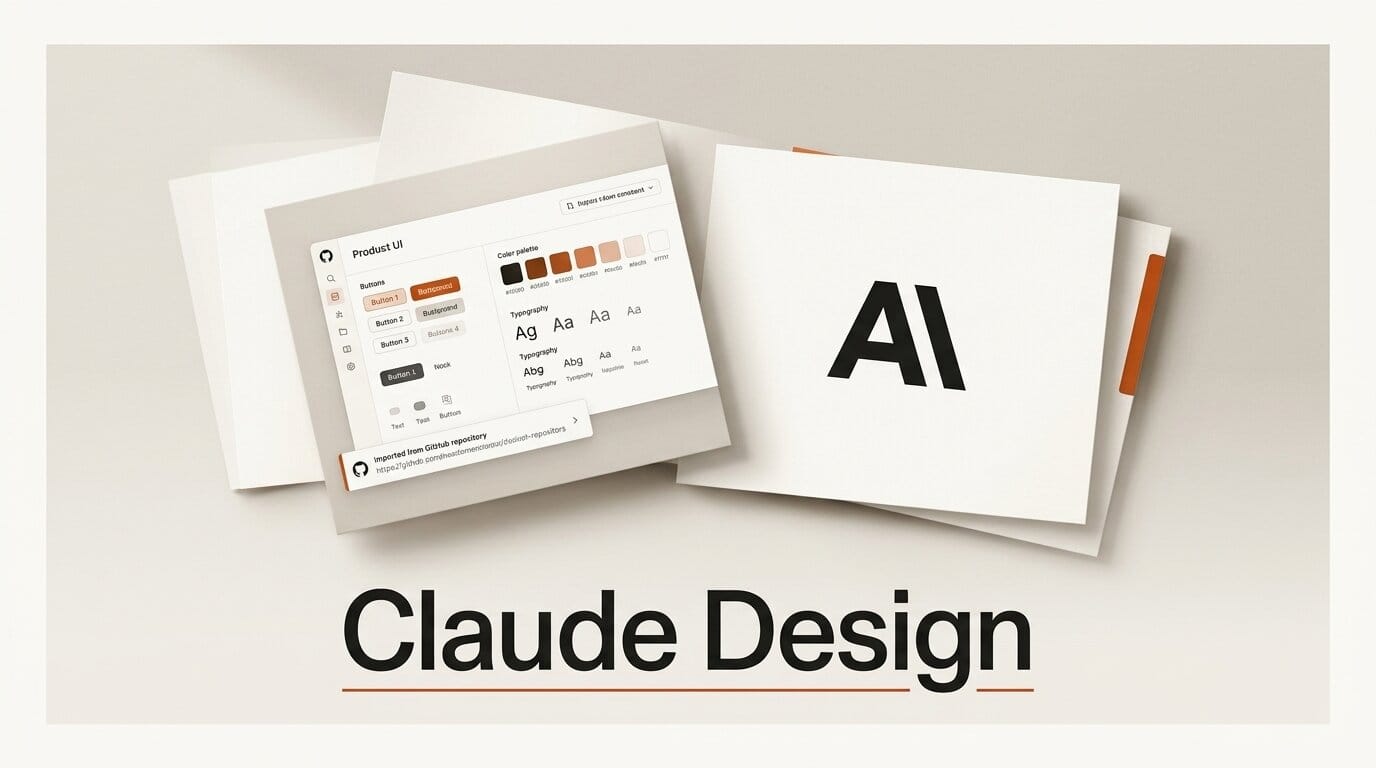
Anthropic shipped a major Claude Design update on June 17, 2026, two months after the tool launched in preview. The new version imports a team's existing design system from GitHub and raw files, lets you edit on a visual canvas, and hands a finished layout directly to Claude Code to turn into production HTML. It is Anthropic's clearest move yet to sit between designers and developers in the same workflow.
What This Enables
The practical unlock is round-tripping between design and code without rebuilding from scratch. Point Claude Design at your repo, and it reads your real components, spacing, and color tokens, then generates new screens that already match your product instead of generic mockups. When a layout is ready, it packages a handoff bundle for Claude Code, or you can start a design straight from the editor with the new /design command. For a small team, that collapses the usual designer-to-developer handoff into one continuous loop.
Why It Matters for Creators
Most AI design tools generate pretty screens that a developer then has to interpret and rebuild. By reading the codebase first and outputting to Claude Code, Claude Design aims at the expensive gap where design intent gets lost in translation. The update also adds fine-grained control over element positioning, an admin role so organizations can approve and lock edits, and unified usage limits shared across Claude Design, Claude Code, and standard chat, which addresses the token-burning complaint from the preview. Anthropic says more than one million people used Claude Design in its first week, so this is a fast-moving product rather than a side experiment.
Key Details
What is new: design system imports from GitHub and raw files, a WYSIWYG visual canvas, direct handoff to Claude Code, a /design command, admin approve-and-lock controls, and unified usage limits.
Availability: Claude Pro, Max, Team, and Enterprise plans, with web access at claude.ai/design and a sidebar shortcut in the desktop app.
Reception: over one million users in the first week, per Anthropic, as reported by Engadget.
What to Do Next
If you already pay for Claude, open claude.ai/design, import your design system from your main repo, and regenerate one existing screen to see how closely the output matches your components. Designers who want a canvas-first alternative can compare it against Framer 3's AI agents and design canvas before committing a real project to either.