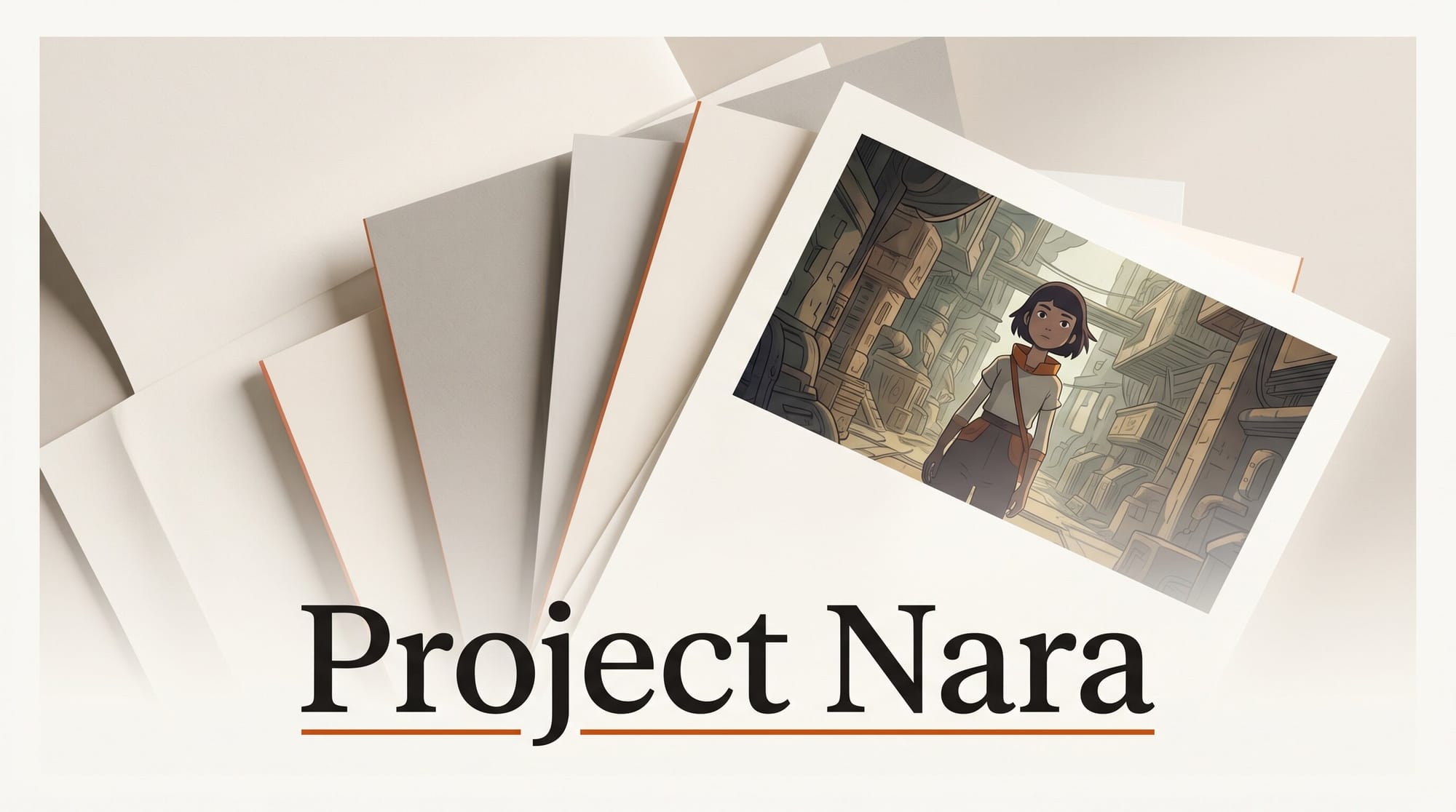
Amazon MGM Studios and AWS unveiled Project Nara and the GenAI Creators' Fund on May 27 at the AI on the Lot event in Culver Studios, simultaneously ordering three AI-produced animated series for Prime Video. The combined move signals that AI animation has shifted from studio experiment to underwritten production category, with a guaranteed distribution slot attached. For independent animators and short-form video creators, this is the first studio-grade pipeline with a model-agnostic router, IP provenance tracking, and direct hooks into Maya, Blender, Nuke, Unreal Engine, and Adobe Suite.
Background
Project Nara is not a public product. It is an in-house production platform Amazon MGM built on AWS to power its own studio teams and the small set of independent creators it brings into the GenAI Creators' Fund. The platform combines third-party video generation models with Amazon MGM's proprietary model portfolio, layered on top of production-aware AI agents that carry creative context across shots and a camera-to-cloud bridge for on-set data.
The three greenlit series anchoring the initial fund slate are Cupcake & Friends from BuzzFeed Studios, Love, Diana Music Hunters from Albie Hecht at pocket.watch, and Punky Duck from Jorge R. Gutierrez, the Book of Life director. Each lands on Prime Video with full development funding plus access to the Nara pipeline. Deadline's writeup frames the slate as the first wave, with subsequent fund rounds expected to expand the creator pool while keeping Nara itself studio-exclusive.
Why It Matters
The signal to working creators is clear: a major studio is now buying AI-native animation as a category, not testing whether it can ship a single short. Streamers underwriting a primary production format with both pipeline access and a Prime Video slot changes the economics of pitching AI animation. Previously, creators had to assemble character-consistent video with stitched-together tools, then convince platforms to host the output. Now the platform, the pipeline, and the budget arrive in the same package, with IP provenance handled by the studio's legal layer.
The architectural choice also matters. Most public video generators are model-specific. Nara's model-agnostic router, which selects the best model per shot, mirrors the pattern emerging in coding assistants and image generators where the orchestration layer matters more than any single model. Creators who design workflows around routing and continuity, rather than a single tool's quirks, will read this announcement as validation. Our 2026 video generator benchmarks already showed no single model winning across motion, style, and consistency tasks, which is why a routing layer is what studios actually need.
Key Details
The three series and what they signal about greenlight criteria
The slate is deliberately spread across audiences and creator profiles. Cupcake & Friends comes from BuzzFeed Studios, which carries a digital-native distribution muscle and a children-and-family content history. Love, Diana Music Hunters extends the existing pocket.watch Love, Diana brand, one of the most-watched kids properties on YouTube, into AI-native series form. Punky Duck reads as Amazon's auteur play, attaching Gutierrez's character-driven storytelling to the AI pipeline.
The selection pattern matters because it tells creators what studios will fund next: brands with proven audiences, executives with track records, and projects where AI handles the production lift without the story depending on AI as a gimmick. Pitches built around AI as the spectacle, rather than AI as the production tool, are unlikely to clear the next round.
Project Nara's architecture: model-agnostic routing and IP provenance
Nara's core technical bet is that no single video model will dominate across all shot types, so the platform routes per shot to whichever model performs best for motion, style match, or character consistency. The router sits in front of both third-party models and Amazon MGM's proprietary model portfolio. Layered on top are production-aware agents that maintain character consistency, motion continuity, and cross-shot tracking, the same problems that have made multi-shot AI video hard to ship outside short cinematic teasers. The pattern echoes what tools like Runway Characters attempt at the single-tool level, but generalized across model providers.
IP provenance tracking addresses the recurring studio-legal objection. Every generation logs which model produced which output, with full chain-of-custody for any output entering the production timeline. The Hollywood Reporter notes this provenance layer is what made the greenlight possible at all, since studios cannot ship animated series to a major streamer without defensible IP rights on every frame. The same provenance feed feeds back into the camera-to-cloud bridge for on-set data, closing the loop between live-action capture and AI-generated content.
Integration with Maya, Blender, Nuke, Unreal, and Adobe
Nara is built to slot into existing pipelines rather than replace them. The platform exposes hooks into Maya for character rigging and layout, Blender for open-source asset creation, Nuke for compositing, Unreal Engine for real-time previs and final rendering, and Adobe Suite for editorial and audio finishing. This is the part that matters most for independent animators considering whether to apply to a future fund round.
The integration model means a creator does not have to rebuild a workflow around Nara. Existing Maya rigs, Blender scenes, Nuke scripts, Unreal projects, and Adobe Premiere timelines remain intact. Nara contributes AI-generated shots, character variants, and continuity passes into those tools. For studios that already have established pipeline infrastructure, this is the only acceptable integration shape. A platform that demands a workflow rewrite never ships inside a studio because the rewrite cost exceeds the AI savings on every project.
The GenAI Creators' Fund as a funding lane
The fund is structured to combine three things creators historically had to assemble separately: development money, a distribution slot on Prime Video, and access to a production pipeline that already meets studio legal and technical bars. Each greenlit project receives all three simultaneously. The AWS engineering blog is the venue to watch for the technical breakdown of how Nara's router and provenance layer work, which will inform what pitches the fund expects.
The pitch posture for creators is now different. Instead of leading with a finished proof-of-concept short, creators pitching the fund need to demonstrate they can sustain a series-length production with character consistency, IP-clean inputs, and a workflow that meshes with Nara's hooks into Maya, Blender, Nuke, Unreal, and Adobe. The first three creators selected fit that profile. Anyone hoping to make the next round will need to as well.
What to Do Next
If you build animation or short-form video, three concrete actions follow from this announcement. First, study the public framing the first three projects used in their press materials and trade-press interviews, because those are the templates studio development executives will pattern-match against. Cupcake & Friends, Love Diana Music Hunters, and Punky Duck each have a brand or auteur anchor and a clear audience target, not a tool-led pitch.

Second, run your existing pipeline through a mental Nara filter. If a Nara-style platform handed you a model-agnostic router and a provenance layer, would your workflow plug in cleanly through Maya, Blender, Nuke, Unreal, or Adobe? If your work happens entirely in a single web app, the integration story is weaker and you will lose to creators with established DCC pipelines.
Third, follow the AWS engineering blog and Amazon MGM's announcement channels for the technical primer on Nara's model-routing layer. Once that publishes, the gap between what the fund expects and what an applicant can demonstrate will close.
Key Takeaways
Project Nara establishes the architectural template for studio-grade AI animation pipelines: a model-agnostic router, IP provenance tracking, production-aware agents for continuity, and integration hooks rather than tool replacement. The GenAI Creators' Fund pairs that pipeline with development money and a Prime Video slot, which is the combination creators have been waiting for. The three greenlit series form the pattern the next round will be measured against, and the pattern favors brand anchors and auteur signals over AI-led pitches.
What to Watch
The AWS engineering blog post that details Nara's routing layer will be the first concrete technical signal about how the platform makes model-selection decisions, because the fund's evaluation criteria will track that architecture. The second is the next fund round's creator selections, which will confirm or contradict the auteur-and-brand pattern set by the first three. The third is whether competing streamers respond with their own creators' funds tied to in-house pipelines, since the model-agnostic-router-plus-provenance pattern is now publicly demonstrated and can be copied within a quarter.
FAQ
What is Project Nara?
Project Nara is an in-house AI production platform Amazon MGM built on AWS. It combines a model-agnostic router that picks the best video model per shot, production-aware agents for character and motion continuity, IP provenance tracking for legal defensibility, and integration hooks into Maya, Blender, Nuke, Unreal Engine, and Adobe Suite. It is not a public product and is exclusive to Amazon MGM and GenAI Creators' Fund recipients.
Which series did Amazon MGM greenlight for Prime Video?
Three AI-produced animated series: Cupcake & Friends from BuzzFeed Studios, Love, Diana Music Hunters from Albie Hecht at pocket.watch, and Punky Duck from Jorge R. Gutierrez, the Book of Life director. All three were announced May 27 at the AI on the Lot event and will distribute on Prime Video.
Can independent creators access Project Nara?
Only through the GenAI Creators' Fund. Nara is not licensed as a public tool, and Amazon MGM has not announced a self-serve tier. Creators access the platform when their projects are selected for fund development and a Prime Video slot is attached. The first three series form the initial slate; future fund rounds are expected but unscheduled as of May 27.
What does model-agnostic routing mean in practice?
Nara picks the best generation model for each individual shot rather than locking creators into one model. A character close-up might route to a model optimized for facial consistency, an action shot to one tuned for motion, a stylized background to a third. The router sits in front of both third-party models and Amazon MGM's proprietary portfolio, and the production-aware agents stitch the outputs into a continuous timeline.
How does Project Nara compare to public tools like Runway or Sora?
Public tools target individual creators with a single model and a single web interface. Nara targets studio-scale production with multi-model routing, provenance logging, and integration into established DCC pipelines like Maya, Blender, Nuke, Unreal, and Adobe. The closest public-tool analogy is the orchestration layer that creators currently assemble manually across multiple tools; Nara productizes that layer at studio scale and adds the legal infrastructure that public tools do not provide.