Running a 14-billion parameter video generation model takes serious hardware. Wan2.1-14B, one of the best open-source video generation models available, demands substantial GPU memory and compute time per video. New research from a team spanning multiple Chinese universities shows you can cut that compute cost roughly in half without meaningfully degrading quality.
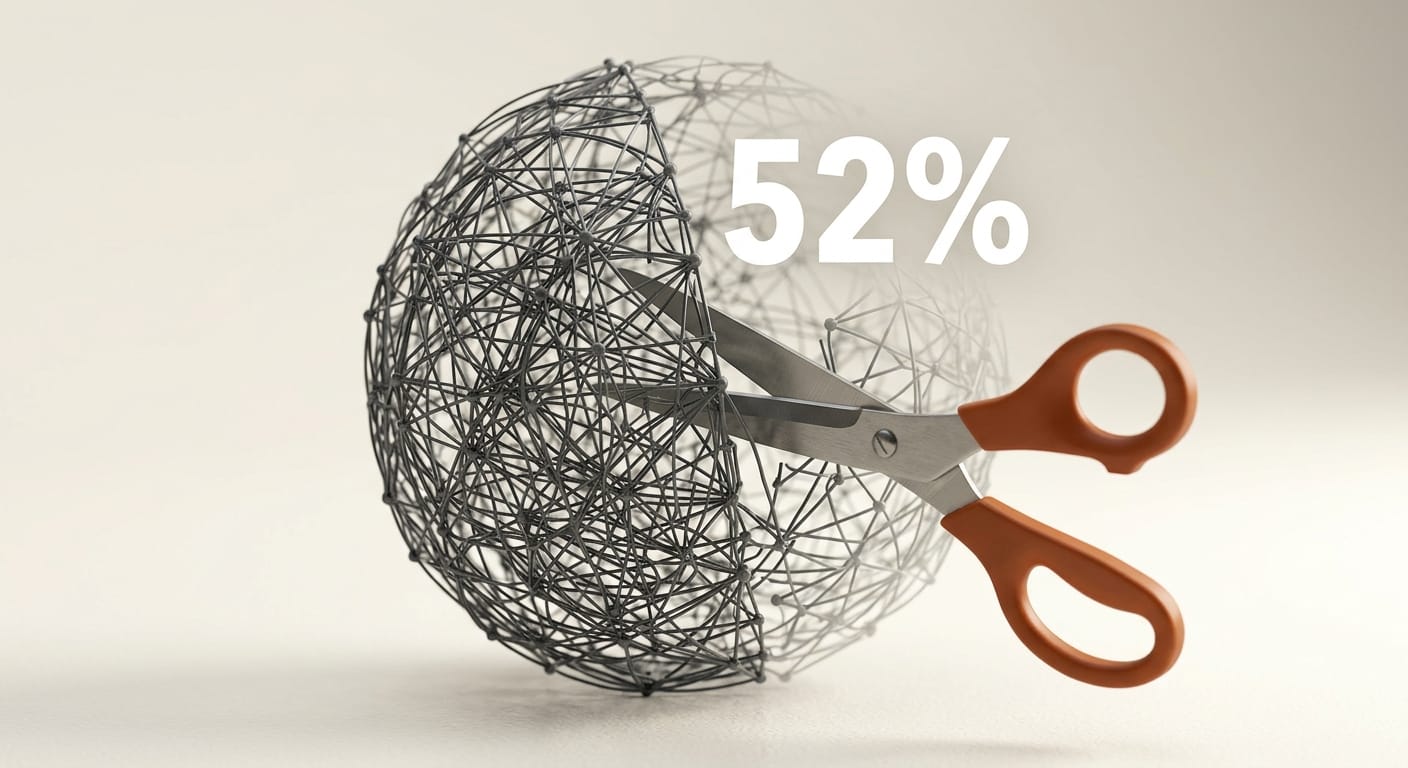
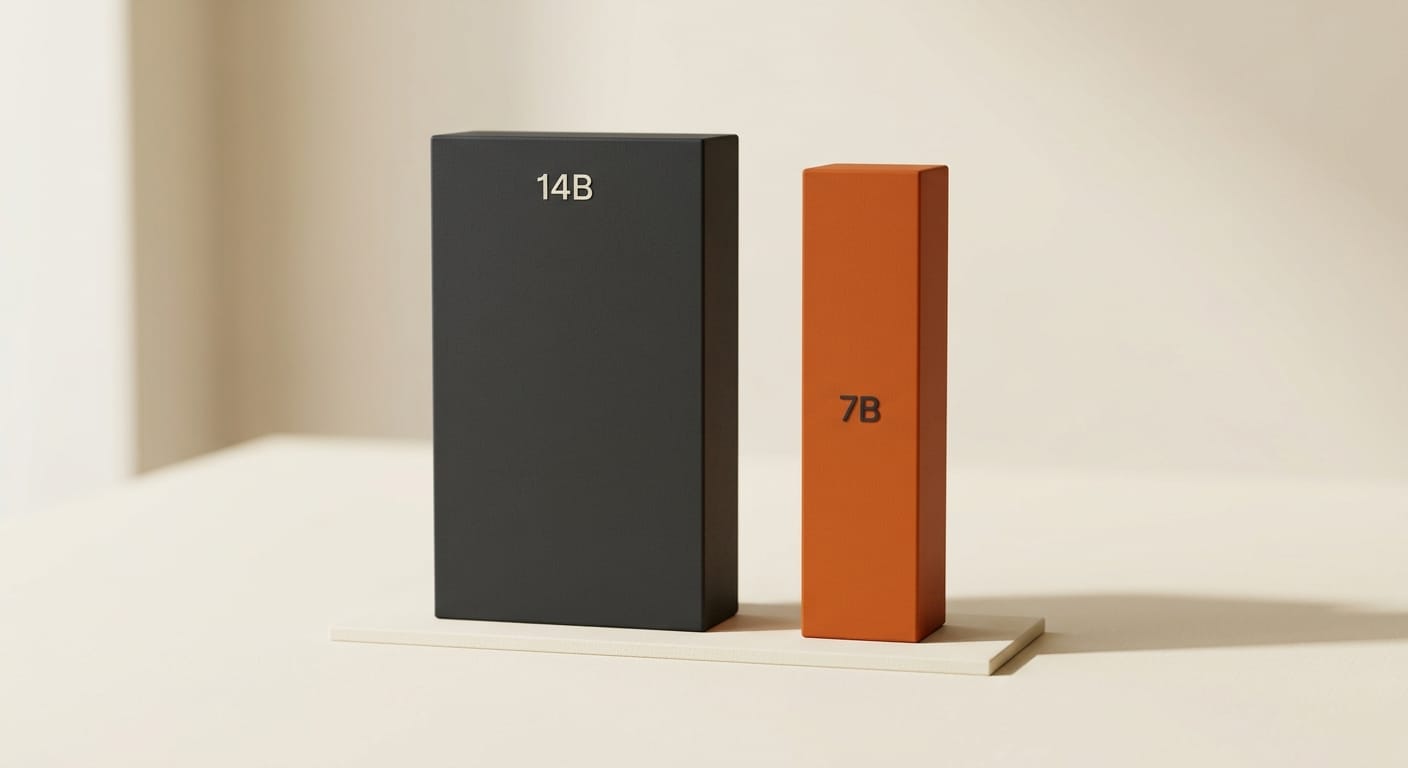
PARE (Pruning and Adaptive Routing for Efficient Video Generation), published on arXiv on May 26, 2026, achieves a 52% reduction in parameters and approximately 2x speedup per inference step on Wan2.1-14B for both text-to-video and image-to-video tasks, while scoring 77.10 on VBench (versus 77.70 for the unpruned teacher model).
What Happened
Researchers from Fudan University, ByteDance, and collaborating institutions published PARE, a compression framework specifically designed for Video Diffusion Transformers. Unlike approaches that prune models uniformly, PARE applies two distinct techniques that reflect how video transformers actually work.
The key insight: attention heads in video transformers specialize. Some focus on spatial relationships within a single frame, others focus on temporal consistency across frames. Treating them the same during pruning would destroy motion coherence. PARE identifies these roles and protects temporal heads with a 1.5x importance multiplier, ensuring motion-critical components survive compression.
Testing was done on Wan2.1-14B, the current state-of-the-art open-source video generation model, on both text-to-video and image-to-video tasks.
Why It Matters for Creators
The cost and hardware barrier for running high-quality video generation models locally remains a real obstacle. Wan2.1-14B requires a high-end GPU with substantial VRAM. PARE-compressed variants of the model could run on mid-range consumer hardware while delivering comparable visual quality.
This matters particularly for creators who:
- Run video generation workflows locally via ComfyUI and cannot afford the compute cost of full 14B models
- Use cloud inference services where cost is metered per GPU-second
- Need faster iteration cycles for prompt experimentation, where 2x speedup means twice the creative attempts in the same session
- Want to run fine-tuned video models without paying the full 14B inference cost
Combined with step distillation, the total speedup reaches approximately 50x compared to a standard 50-step Wan2.1 run. That turns a minutes-long generation into a seconds-long one.
How PARE Works
PARE applies two types of compression:
| Technique | What it does | Effect |
|---|---|---|
| Spatial-temporal width pruning | Removes attention heads and feed-forward neurons, with extra protection for motion-critical temporal heads | Fewer parameters per layer |
| Content-adaptive block routing | A lightweight router skips entire transformer blocks based on denoising step and visual content | Less compute per sample |
The router is particularly clever: during high-noise denoising steps (where the model is recovering coarse structure), more blocks run. During low-noise steps (detail refinement), fewer blocks execute. This matches computation to where it is actually needed in the diffusion process.
Training uses a three-stage pipeline: width distillation first, then joint width-routing optimization, then step distillation. Each stage is targeted, so quality does not degrade progressively across stages.
Performance Comparison
| Method | VBench T2V Score | Parameter Reduction | Speedup |
|---|---|---|---|
| Wan2.1-14B (teacher) | 77.70 | 0% | 1x |
| NeoDragon (compression baseline) | 69.84 | ~50% | ~1.5x |
| F3-Pruning (compression baseline) | 74.68 | ~50% | ~1.5x |
| PARE (this paper) | 77.10 | 52% | ~2x per step |
On image-to-video tasks, PARE scores 76.24 versus the teacher at 77.92, outperforming compression baselines by 2 to 8 points. Quality is preserved across all six VBench dimensions: aesthetic quality, imaging quality, motion smoothness, dynamic degree, background consistency, and subject consistency.
Creator Outcome: What This Enables
PARE is a research paper with no public model release yet. But the direction it points is clear:
- Affordable local video generation: A 52% parameter reduction means potentially running Wan2.1-quality video on hardware that currently cannot handle it
- Faster iteration in ComfyUI: 2x per-step speedup translates directly to shorter waiting times between generations when experimenting with prompts or motion parameters
- Lower cloud inference costs: Services like fal.ai and similar platforms bill by compute; a compressed model runs cheaper
- Fine-tuning compatibility: The authors designed PARE to work alongside step distillation methods, meaning you could apply both compression and domain fine-tuning to the same model
Creators already using open-source video generation tools or experimenting with efficient video models should watch for PARE-compressed Wan2.1 checkpoints to appear in community repositories over the coming months.
What to Try Next
The PARE code is not yet publicly released. Here is how to track it and prepare:
- Watch the PARE arXiv page for a code release link
- Follow the Wan2.1 GitHub repository at github.com/Wan-Video/Wan2.1 for community-compressed checkpoints
- Set up a ComfyUI workflow with the current Wan2.1 nodes so you are ready to swap in a compressed model when it drops
- Check the VBench repository for evaluation benchmarks if you want to compare models yourself
For those interested in the broader video generation landscape, see our coverage of LoRA fine-tuning for video models, which pairs naturally with efficient inference techniques like PARE.
Frequently Asked Questions
Does PARE work with other video generation models besides Wan2.1?
The paper only reports results on Wan2.1-14B. The techniques (spatial-temporal aware pruning and adaptive routing) are designed for Video Diffusion Transformers broadly, so adaptation to other models like HunyuanVideo or CogVideoX is theoretically possible but not yet demonstrated.
How does the VBench score of 77.10 compare to real-world perceived quality?
VBench measures six dimensions including motion smoothness, aesthetic quality, and subject consistency. A drop from 77.70 to 77.10 is roughly 0.8% on the composite score. In practice, this gap is difficult to perceive in casual viewing, especially on motion-heavy content.
Can I apply PARE to a fine-tuned Wan2.1 model?
The paper does not specifically address fine-tuned models, but the compression pipeline is applied during a training phase, not as a post-hoc filter. You would need to run the PARE training stages on your fine-tuned model, which requires the training code and matching training data.
What is step distillation and how does it combine with PARE?
Step distillation trains the model to produce high-quality output in far fewer sampling steps (e.g., 4 steps instead of 50). PARE reduces compute per step. Together they stack: fewer steps, and each step is faster. The ~50x total speedup in the paper comes from combining both.
Will PARE-compressed Wan2.1 run on a 16GB GPU?
The paper does not report specific VRAM requirements for the compressed model. With 52% fewer parameters, memory reduction is expected but not guaranteed to halve VRAM usage since activations and other buffers also consume memory. Community testing will establish the actual VRAM floor once the model is released.