Nvidia is debuting its first ARM-based laptop chip at Computex 2026, starting June 1 with Jensen Huang's keynote. The N1X chip features a 20-core ARM processor paired with a Blackwell-architecture GPU and the full CUDA software stack. Dell, Lenovo, Microsoft Surface, Asus, and MSI are all building devices around it.
For AI creative workflows that depend on CUDA, this is the first time those workloads become possible on an ARM Windows laptop.
What Happened
Nvidia, Microsoft, and Arm coordinated teaser announcements on May 30 stating "A new era of PC," with the full reveal set for Computex 2026 in Taipei, June 2 to 5. Jensen Huang's keynote runs June 1 at 11 PM ET. Dell is launching a new XPS device on May 31, ahead of the Computex keynote.
According to reporting from Cryptobriefing and Windows Central, the N1X chip features a 20-core ARM CPU paired with a Blackwell-architecture integrated GPU. The Blackwell architecture is the same generation as Nvidia's RTX 50-series desktop and laptop GPUs, and it brings CUDA support to the ARM form factor for the first time in a consumer laptop.
The original 2025 launch was delayed due to software readiness, platform compatibility work, and unified memory architecture challenges. The 2026 debut at Computex represents the resolved version of that effort.
Why It Matters for Creators
CUDA is the foundational runtime for most AI creative tools. ComfyUI, Stable Diffusion, and the inference runtimes that power local video generation all require CUDA for hardware acceleration. Qualcomm's Snapdragon X chips, which currently dominate the Windows ARM laptop market, do not support CUDA. This means any creator who has purchased an ARM Windows laptop for portability has been locked out of running the local AI generation tools that the rest of the creative community uses.
The Nvidia N1X changes that. A Blackwell-architecture GPU with CUDA support in a thin ARM laptop means the same tools that run on a desktop RTX 50-series card can run on a portable device. The performance ceiling will be lower, but the compatibility barrier disappears.
This also affects cloud-based workflows. Local inference on CUDA hardware reduces API costs for creators who run repetitive generation tasks. Batch image generation, ControlNet inference, and video upscaling are all significantly cheaper when run locally rather than through cloud APIs.
Key Details
Chip specifications
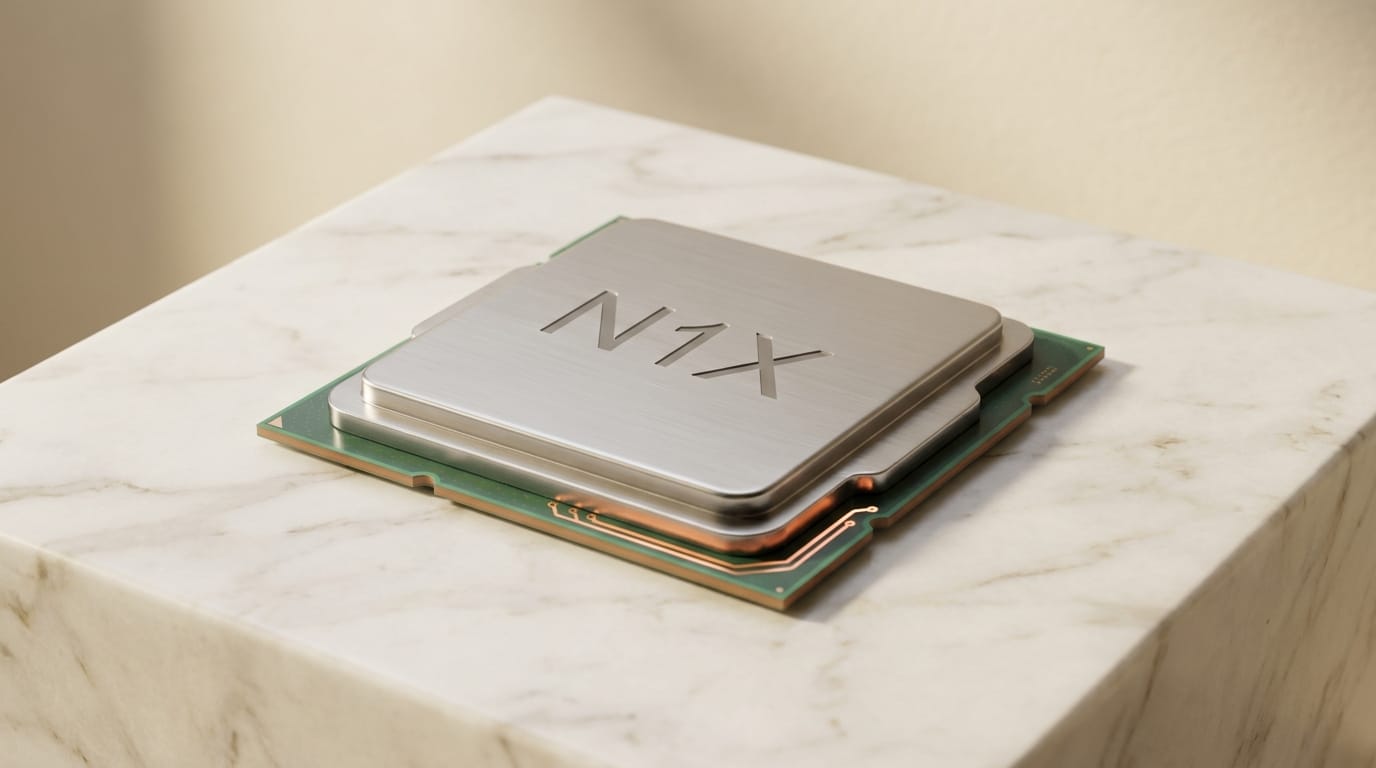
- CPU: 20-core ARM processor
- GPU: Blackwell architecture (integrated)
- Software stack: Full CUDA support
- Platform: Windows on ARM
- Co-development: Reported collaboration with MediaTek on the SoC design
Launch timeline

- May 31, 2026: Dell XPS launch
- June 1, 2026: Jensen Huang keynote at Computex (11 PM ET)
- June 2 to 5, 2026: Computex 2026 in Taipei, full N1X reveal
Manufacturer lineup

Per reporting ahead of the official announcement, the following manufacturers are confirmed or expected to launch N1X devices:
- Dell: XPS and Alienware lineups
- Lenovo: Legion, IdeaPad, and Yoga families
- Microsoft: Surface
- Asus and MSI: additional Windows ARM devices
Market context

The Windows ARM market has been dominated by Qualcomm since the Snapdragon X launch. Qualcomm's chips offer strong CPU performance and battery life but lack CUDA support, limiting them for AI creative workflows. Apple Silicon set the benchmark for ARM laptop AI performance with its Neural Engine and Metal API, but that ecosystem runs macOS exclusively.
The Nvidia N1X gives Windows ARM laptops a path to CUDA compatibility, which is the primary missing piece for creative professionals who need portability without sacrificing access to the full AI toolchain. As noted in a NerdZap analysis, the chip positions Nvidia against both Qualcomm in the Windows ARM segment and Apple in the creative professional laptop space.
What This Enables for AI Creative Workflows
Running ComfyUI on a CUDA-capable ARM laptop means portable access to the same node-based image generation pipeline that desktop creators use. ComfyUI's native multi-GPU support is built around CUDA work units, and while a laptop GPU will have lower VRAM than a desktop RTX 5090, the workflow compatibility is complete.
For video generation, models like Wan2.1 and smaller diffusion-based video generators that run on lower VRAM can operate locally on N1X hardware. This removes the per-generation cloud cost for creators doing iteration work.
Nvidia's own software ecosystem carries over. Nvidia's vision grounding tools and the broader NVIGI runtime that supports multilingual NPC systems are built to run on CUDA hardware. N1X laptops would be the first portable Windows devices where that software stack works natively.
What Remains Unknown
Pricing, specific VRAM configuration, and battery life under AI load have not been disclosed ahead of the Computex announcement. The GPU tier relative to dedicated Nvidia laptop GPUs (RTX 5070 class was mentioned in early reports, but this is unconfirmed) will determine how demanding a generation task the integrated GPU can handle before hitting memory limits.
Qualcomm's response is also not yet public. A CUDA-capable competitor entering the Windows ARM space could accelerate Qualcomm's own AI software compatibility roadmap, which would benefit creators on either platform.
What to Do Next
The full N1X spec sheet and first-party pricing will be available after Jensen Huang's Computex keynote on June 1 at 11 PM ET. Nvidia's official announcement will be posted at nvidia.com. The Computex schedule is available at computex.biz.
If you are evaluating a new AI creative workstation, the N1X changes the calculus on ARM laptop options. Before this chip, the practical recommendation was to stick with x86 laptops for CUDA compatibility or switch to Apple Silicon and accept the macOS ecosystem. After N1X, Windows ARM laptops with CUDA support enter the consideration set.
For local workflow setup, the Nvidia PiD decoder and other Nvidia-specific optimizations for diffusion pipelines will be directly applicable on N1X hardware once device availability is confirmed.
Frequently Asked Questions
Does the Nvidia N1X laptop chip support CUDA?
Yes. The N1X uses Blackwell GPU architecture with the full CUDA software stack. This is the first ARM-based laptop chip from Nvidia with CUDA support, enabling AI creative tools like ComfyUI and Stable Diffusion to run natively on Windows ARM laptops.
Which laptop brands are using the Nvidia N1X?
Dell, Lenovo, Microsoft Surface, Asus, and MSI are all reported to be building N1X devices. The Dell XPS launch is set for May 31, ahead of the official Computex reveal on June 1.
How does the N1X compare to Qualcomm Snapdragon X for AI work?
Snapdragon X chips do not support CUDA, which blocks most AI creative tools from running natively. The N1X's Blackwell GPU with CUDA changes this. Performance comparisons will only be available after launch benchmarks are published.
Can the N1X run ComfyUI or Stable Diffusion locally?
Yes, once devices are available. CUDA support means the same ComfyUI workflows that run on desktop RTX cards can run on N1X laptops. VRAM limits will constrain which models fit in memory, but the compatibility barrier is removed.
When will N1X laptops be available to purchase?
Dell's XPS launch is May 31. The broader availability timeline for Lenovo, Asus, and MSI devices will be announced at Computex June 2 to 5. Pricing has not been disclosed ahead of the official announcement.