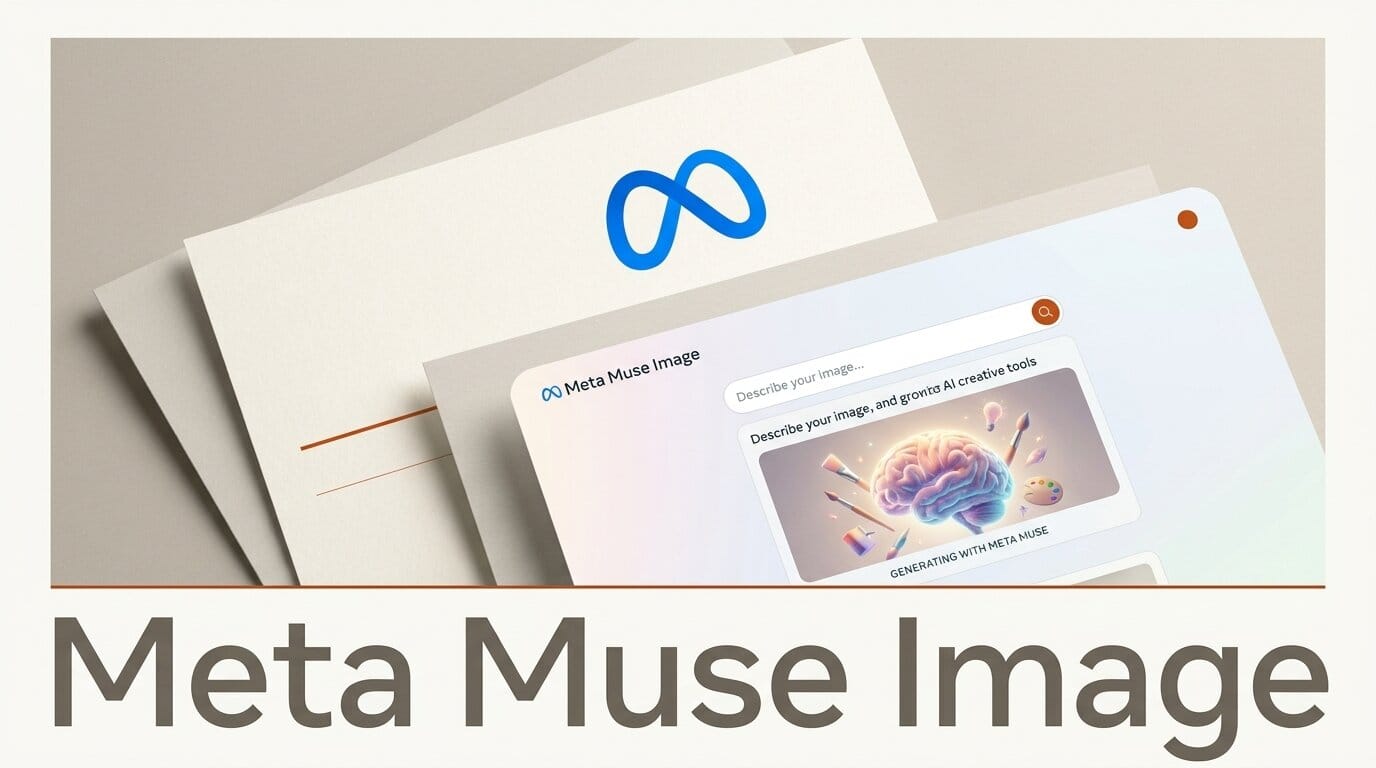
Meta has shipped Muse Image, its first in-house AI image generation model, and it is live today inside Meta AI for free. Built by Meta Superintelligence Labs under chief AI officer Alexandr Wang, the model turns text prompts into finished visuals, edits existing photos, and can drop your friends into a scene by pulling from their public Instagram posts. For creators, this is the moment Meta stops routing image requests to partner models and starts competing directly with Google, Adobe, and Midjourney on generation quality.
The launch matters because Meta owns the distribution surfaces where billions of images already move: Instagram Stories, WhatsApp chats, and Facebook feeds. A free, natively integrated image model changes how quickly a creator can go from idea to a posted asset, and it puts a new option on the table for anyone building ad creative or social content at volume.

What Happened
On July 7, 2026, Meta introduced Muse Image as the second major product from its Superintelligence Labs division, following the Muse Spark language model that debuted in April. Muse Image generates images from text, alters existing pictures, and renders text inside images cleanly, the failure mode that has dogged earlier image models.
The model is available now in the Meta AI app and on the web, in WhatsApp direct messages, and across Instagram Stories, where Meta says more than 30 new AI-powered effects ship alongside it. Access is free for consumers, with higher-volume generation gated behind Meta's paid subscription plans. Broader rollout to Facebook and Messenger is described as coming soon, and the initial release is limited to a subset of countries.
As The Next Web reported, every image Muse Image produces carries an invisible watermark, and users can opt out of having their content reused to train future models through account settings. Advertisers get their own version of the model inside Meta's Advantage+ creative suite in the coming weeks.
How Muse Image Actually Works
The headline technical detail is that Muse Image does not generate blindly. It pairs with Muse Spark, Meta's reasoning model, to plan an image before drawing it. According to Meta, the system plans layout, looks up real-time web context, and blends multiple visual references in a single pass. That reasoning-first approach mirrors where the whole category is heading, and it is the same bet behind Google's latest image stack.
Three features stand out for creators. First, @mention personalization: type an Instagram handle in the Meta AI app and Muse Image pulls that public profile into your composition, which is a sharper version of the identity-aware generation we covered when Gemini added personalized image generation. Second, sketch-based editing: draw or annotate directly on a generated image to steer the next revision instead of rewriting the prompt. Third, room redesign that swaps in real products pulled from the web and Facebook Marketplace, turning a generation into a shoppable mockup.
How It Compares to Nano Banana, Firefly, and Midjourney
Muse Image enters a crowded field. Google's Gemini image model line already offers reasoning-driven generation and fast, cheap variants, Adobe Firefly owns the professional editing workflow, and Midjourney still leads on raw aesthetic quality. Meta's wedge is not benchmark supremacy, which it has not published, but distribution and price.
| Model | Maker | Free tier | Native surfaces | Standout strength |
|---|---|---|---|---|
| Muse Image | Meta | Yes | Meta AI, Instagram, WhatsApp | Social personalization + reach |
| Gemini Image / Nano Banana | Yes | Gemini app, Google Pics | Reasoning + low-cost variants | |
| Firefly | Adobe | Limited | Creative Cloud, Firefly web | Pro editing + commercial safety |
| Midjourney | Midjourney | No | Web app, Discord | Aesthetic quality |
The comparison that stings most is with Google. Both companies now ship free, reasoning-based image models to enormous consumer bases, and both fold them into search and social surfaces. We broke down Google's side when Nano Banana 2 Lite and Gemini Omni Flash launched. For a creator, the practical question is no longer which model is marginally better but which one lives where you already work.
What Creators Can Do With It Today
If you post to Instagram or run brand accounts, Muse Image collapses the round trip between a third-party generator and the platform. You can draft a Story background, apply one of the new AI effects, and publish without leaving the app. The @mention feature makes collaboration posts and creator shout-outs faster to mock up, and sketch editing means you can fix a bad hand or reposition an element without re-rolling the entire image.
For anyone making ad creative, the more consequential change is the Advantage+ integration arriving in the coming weeks. Brands will be able to generate campaign visuals inside Meta's ad tools directly, which competes with the standalone creative agents from Adobe Firefly's agentic studio. Start testing prompts now in the Meta AI app so you understand the model's strengths before the ad tooling opens up.
Why It Matters for Creators
Meta building its own image model is a signal, not just a feature. It means the company will stop paying to route generation to outside labs and will optimize the model for its own surfaces, which usually translates to faster shipping of creator features. It also resets the free-tier baseline: with Meta and Google both giving away capable image generation, paid image tools now have to justify their price with quality, control, or commercial licensing rather than access.
The catch for professionals is commercial clarity. Meta has not detailed the commercial usage rights or the training-data provenance the way Adobe has with Firefly, so for client work the safer bet remains a model with explicit indemnification until Meta publishes its terms.
What to Do Next
Open the Meta AI app or website and run a few real prompts against your actual use case: a product shot, a Story background, a text-heavy graphic. Test the @mention and sketch-editing features to see where they save time. If you buy Meta ads, flag the Advantage+ creative update with your team so you are ready when it rolls out. Keep your current pro image tool for client deliverables until the licensing terms are clear.
Frequently asked questions
Is Meta Muse Image free to use?
Yes. Muse Image is free for consumers in the Meta AI app, on the web, in WhatsApp direct messages, and in Instagram Stories. Higher-volume generation is available through Meta's paid subscription plans.
How is Muse Image different from Meta's older image tools?
Muse Image is Meta's first fully in-house image generation model, built by Superintelligence Labs and paired with the Muse Spark reasoning model. It plans an image before rendering rather than relying on partner models.
Can Muse Image put real people in images?
Yes. Using @mention, you can pull a public Instagram profile into a generated image. Every output includes an invisible watermark, and users can opt out of having their content used for training in settings.
How does Muse Image compare to Google's Nano Banana and Gemini image models?
Both are free, reasoning-based models integrated into massive consumer platforms. Google leans on search and Google Pics integration plus low-cost variants, while Meta leans on Instagram, WhatsApp, and social personalization. Neither has published head-to-head benchmarks.
Can advertisers use Muse Image?
Meta says advertisers will get access to Muse Image inside the Advantage+ creative suite in the coming weeks, letting brands generate campaign visuals directly within Meta's ad tools.
Which countries can access Muse Image?
The initial release is limited to a subset of countries, with Meta saying more locations are on the way as it expands the rollout across Facebook and Messenger.