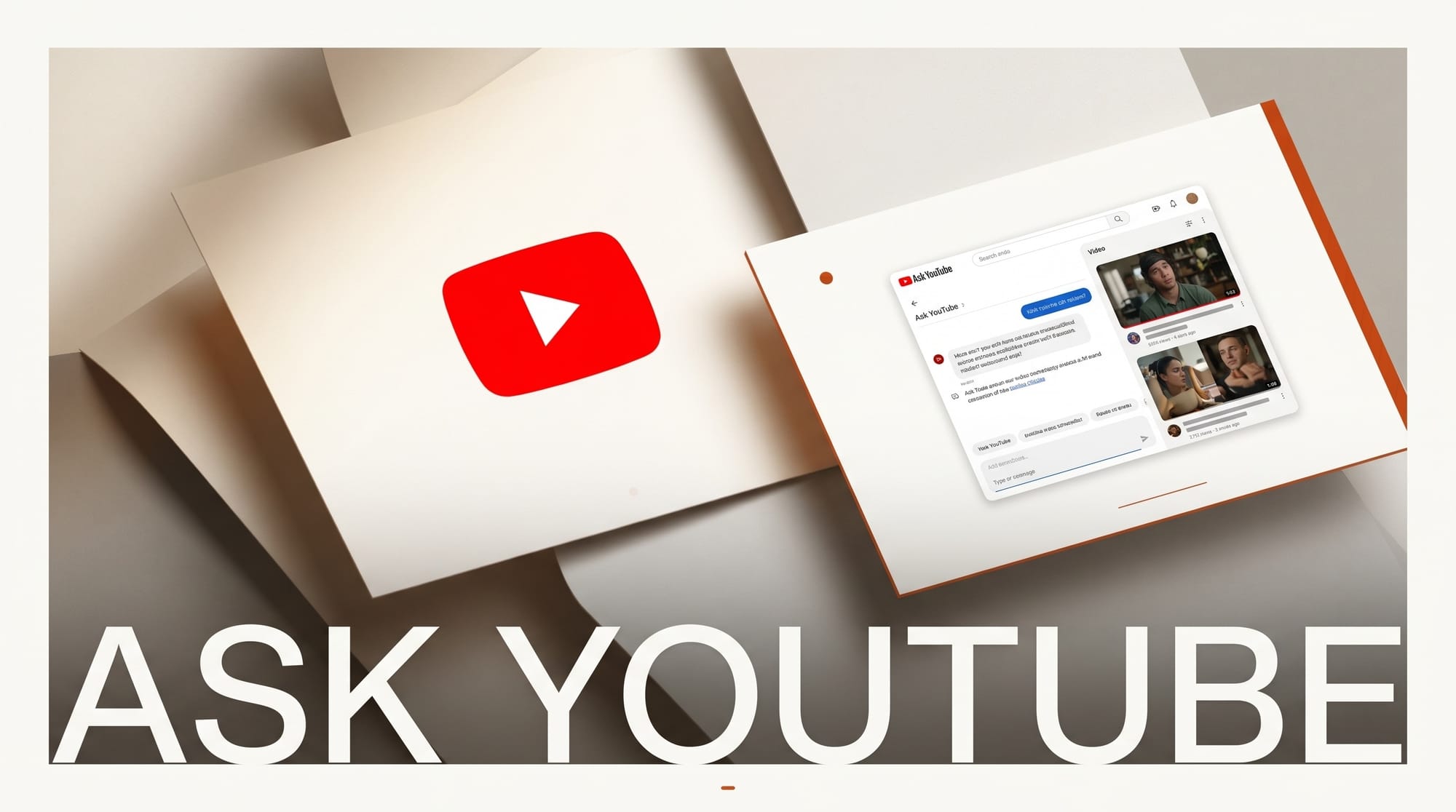
Google launched a beta test of "Ask YouTube" on April 28, 2026, replacing keyword search with conversational queries that return a structured mix of longform videos, Shorts, and AI-generated text summaries. The test is gated to Premium subscribers in the US over 18, runs through June 8, and uses the same AI Mode stack already shipping in Search and Gmail. Coverage from TechCrunch and Search Engine Journal highlights how distinct this shift is from the keyword-driven search YouTube has run for fifteen years. For creators, this is the first time YouTube has signalled that intent resolution will replace keyword matching as the primary discovery layer. The implications for video SEO, citation versus destination, and the $31.5B YouTube ad business are larger than the beta footprint suggests.
Background
Premium users in the US can sign up at youtube.com/new to test the feature. Instead of typing keywords into the search bar, they click an "Ask YouTube" button and choose from suggested prompts framed as questions: "funny baby elephant playing clips," "summary of the rules of volleyball," "short history of the Apollo 11 moon landing." The system returns a structured results page combining full videos, Shorts clips, and a written summary, rather than the standard list of links and thumbnails YouTube has shown for fifteen years.
The feature mirrors Google's "AI Mode" already available in regular Search and Gmail. It is the same model architecture wrapped around a different content corpus. Where Search returns web summaries with cited links, Ask YouTube returns video summaries with cited timestamps. The integration point matters: this is not a separate AI search product. It is a single AI Mode platform unifying Google's properties, with YouTube being the second-largest after Search itself.
This launch comes alongside OpenAI's GPT-5.5 launch and Anthropic's Claude for Creative Work connector suite, in a week where every major AI lab is making moves on creator workflows. Google's bet is different from the labs: own the discovery layer rather than the production tool. If creators cannot be found, the video production tools above them lose value.
Deep Analysis
From keyword matching to intent resolution
For fifteen years, YouTube discovery rewarded creators who optimized titles, descriptions, and tags around keywords. A video titled "How to Use Premiere Pro Color Grading 2026 Tutorial" surfaces in keyword search because every word in that title maps to a query someone might type. The video that ranks is the one with the strongest keyword density times engagement signals.
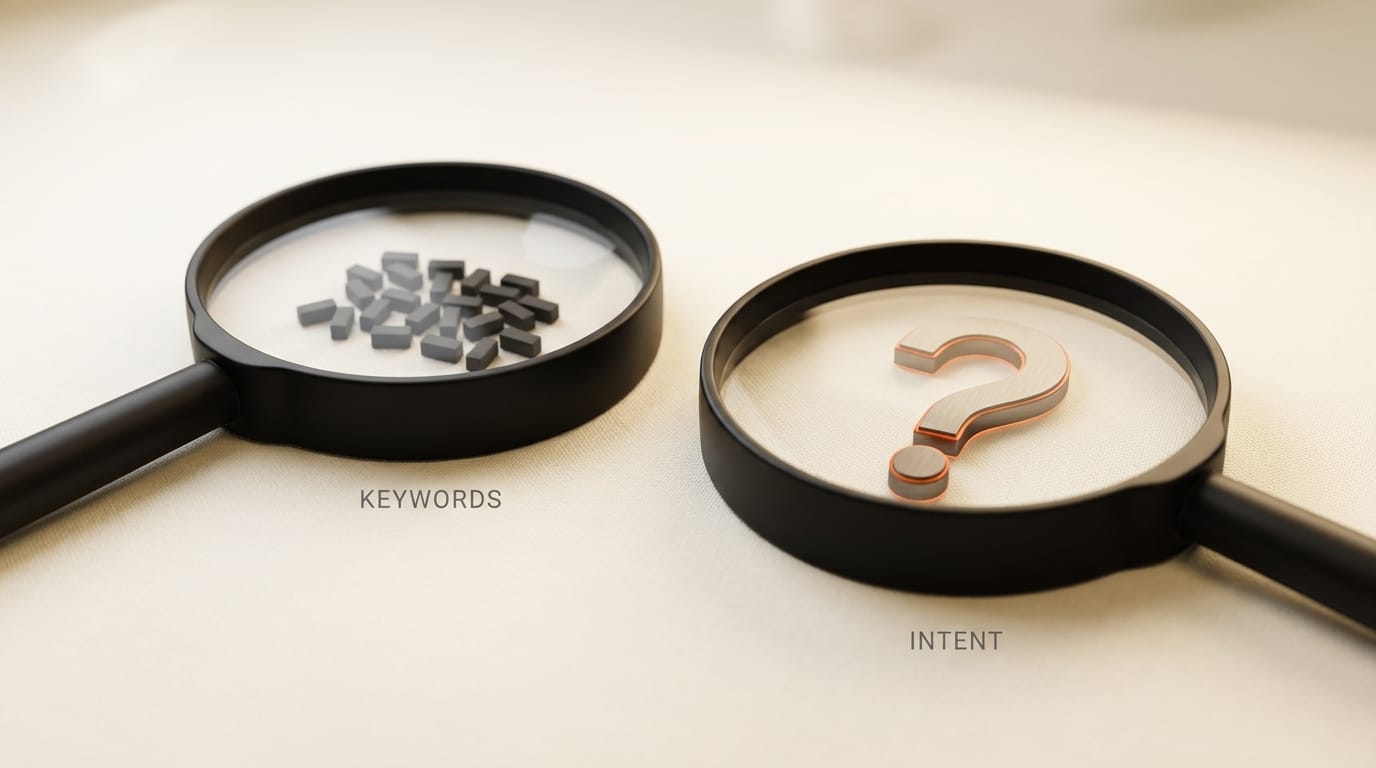
Ask YouTube changes the unit of discovery. The query "what's the fastest way to color-grade in Premiere Pro 2026?" does not surface the keyword-stuffed title. It surfaces the video that the AI judges best answers the intent behind the question. That judgment runs over the full transcript, chapter markers, video description, and engagement signals. Keyword density still helps but is no longer load-bearing. Clear, focused, answer-oriented content does. The creator who structures every video around one specific question wins. The creator who runs a 30-minute "everything I know about color grading" overview loses against the creator who cuts that into eight focused 5-minute videos each answering one question.
The citation versus destination problem
The structural risk for creators is the same risk web publishers have lived with since AI summaries arrived in Google Search: the platform can answer the user's question without the user ever clicking through to the creator's video. Ask YouTube's results page returns a written summary at the top, then videos and Shorts. If the summary answers the query, the user does not press play.
This is the citation-versus-destination problem in its YouTube-shaped form. The creator's video was scraped, ingested, summarized, and credited as a source on the results page. The creator's view count, watch time, and ad inventory do not move. For YouTube's ad business, this is a tension Google has not addressed in launch materials. The 2025 YouTube ad business was $31.5 billion. AI-generated summaries that resolve queries without playback compress the inventory that those ads run against. Either summaries get deliberately throttled to preserve ad inventory, or YouTube's revenue model changes to monetize summaries directly.
For creators, the asymmetry is rough. Long-form educational creators who built audiences on keyword-driven discovery are most exposed: their videos are exactly what summarizes well. Entertainment creators are less exposed: a clip of a baby elephant playing has to be watched to be enjoyed; no summary substitutes. The exposure curve runs through every category and every channel, and creators in the educational tier need to start tracking it now.
The accuracy problem and creator brand risk
Early testing surfaced factual errors in Ask YouTube results, including incorrect information about Valve's Steam Controller. This is not a minor QA issue; it is a creator brand-risk vector that has no parallel in keyword search.
The risk runs as follows. A user asks Ask YouTube about a product or topic. The AI returns a summary citing a creator's video. The summary is wrong. The user reads the summary, attributes the error to the cited creator, and the creator carries reputational damage from a quote they never made. If the creator's video correctly stated the right information but the AI compressed it incorrectly into the summary, the creator has no recourse. There is no edit button on someone else's AI summary. There is no notification when your video is cited. There is no public log of what the AI said.
This is a meaningful vector of brand exposure that creators currently have no tools to monitor or contest. The 2025 to 2026 transition for web publishers ran the same arc: AI summaries first appeared with errors, then publishers organized for either citation accuracy commitments or compensation. YouTube creators are about to walk the same arc, and the ones who organize earlier will have stronger leverage when YouTube has to negotiate terms.
What changes in creator SEO
The optimization playbook has to shift on three axes. First, structure videos around single, specific questions. The chapter marker for a video on "removing background noise in Premiere" should be exactly that question, not "Audio Tips." Specific question wording is what the AI matches against query intent.
Second, write video descriptions for AI ingestion, not just for human readers. Include the question your video answers in the first sentence. Include the steps or numbered points in the first paragraph. Include the answer to the question explicitly, not just by demonstration. The AI summary will pull from the description as readily as from the transcript.
Third, chapter markers become load-bearing metadata. Where keyword-era YouTube SEO treated chapters as a watch-time tool, intent-resolution YouTube treats chapter markers as the primary structured signal of what each segment of a video answers. A 30-minute video chunked into eight chapters each answering a specific question is now structurally better than the same video with three big chapters labeled "Intro," "Part 1," and "Part 2." Re-chaptering existing back catalog is a free move that materially improves AI surface visibility.
Impact on Creators
For Premium-eligible US creators, the immediate action is to sign up at youtube.com/new and run your own existing videos through Ask YouTube. The diagnostic question is whether the AI summary accurately represents what your video says. If the summary is wrong, the action is to improve descriptions and chapter markers so AI ingestion gets the right context. If the summary is right but your video does not surface for the question, the action is to test rewording titles and descriptions to better match conversational query phrasing.
For long-form educational creators, the structural shift requires re-thinking content architecture. A 30-minute "Complete Guide" video splits into eight 5-minute focused videos for AI Mode discovery. The 30-minute version still works for committed audiences, but the AI surfaces the focused cuts. Plan the next quarter's content with both formats in mind. The same logic is reshaping AI advertising and brand discovery, where short-form intent-matched outputs are starting to outperform longer brand films on conversion.
For tutorial creators in software, hardware, and creative tools, the chapter-marker move is the highest-leverage immediate change. Re-chaptering your top 20 videos with question-shaped chapter titles takes one afternoon and changes how those videos surface in conversational search. This is free yield. The same architectural shift is happening on Google Search and emerging AI search surfaces; the playbook overlaps with our coverage of tooling that creators already use in their production pipeline.
For entertainment creators, the exposure is lower but real. Funny clip creators are protected by the watch-to-enjoy nature of their content. Reaction creators are exposed because reaction summaries can substitute for watching. Adjust accordingly.
Key Takeaways
- Discovery is shifting from keywords to intent. The fifteen-year YouTube SEO playbook around keyword density is not dead but is no longer load-bearing.
- The citation-versus-destination problem reaches YouTube. AI summaries can answer queries without playback, compressing creator watch time and ad inventory exposure.
- Accuracy errors are a creator brand risk. Wrong AI summaries citing your video damage your reputation with no current recourse.
- Chapter markers become load-bearing metadata. Question-shaped chapters are the highest-leverage immediate change for the existing back catalog.
- Long-form educational creators are most exposed. Restructure content around focused single-question videos alongside existing comprehensive cuts.
- Action: sign up to the beta if eligible, audit your top videos, and re-chapter for AI ingestion.
What to Watch
Three signals between now and the June 8 beta end date will tell us whether this is a contained experiment or the start of YouTube's AI Mode rollout.
First, ad inventory disclosure. Google has not addressed how AI-generated results affect the YouTube advertising business. If a Q1 2026 earnings comment or a YouTube blog post acknowledges the inventory question, the path forward becomes clearer. If Google stays silent on this through Q2, expect creator advocacy organizations to start applying public pressure.
Second, expansion footprint after June 8. The beta is gated to Premium US users over 18. The expansion question is whether AI Mode goes global, opens to non-Premium users, or quietly extends the test period. Each path implies different things about how confident Google is in the accuracy and ad-revenue tradeoffs. Watch the youtube.com/new page and the YouTube Creator blog in early June.
Third, accuracy correction commitments. Web publishers eventually negotiated citation accuracy commitments from Google for AI Search summaries. If creator advocacy organizations like the Creators Guild or the Internet Creators Guild push for similar commitments by July, and Google responds, that becomes the template for AI-citation creator rights across platforms. If they do not push, the accuracy gap widens for at least one more product cycle.