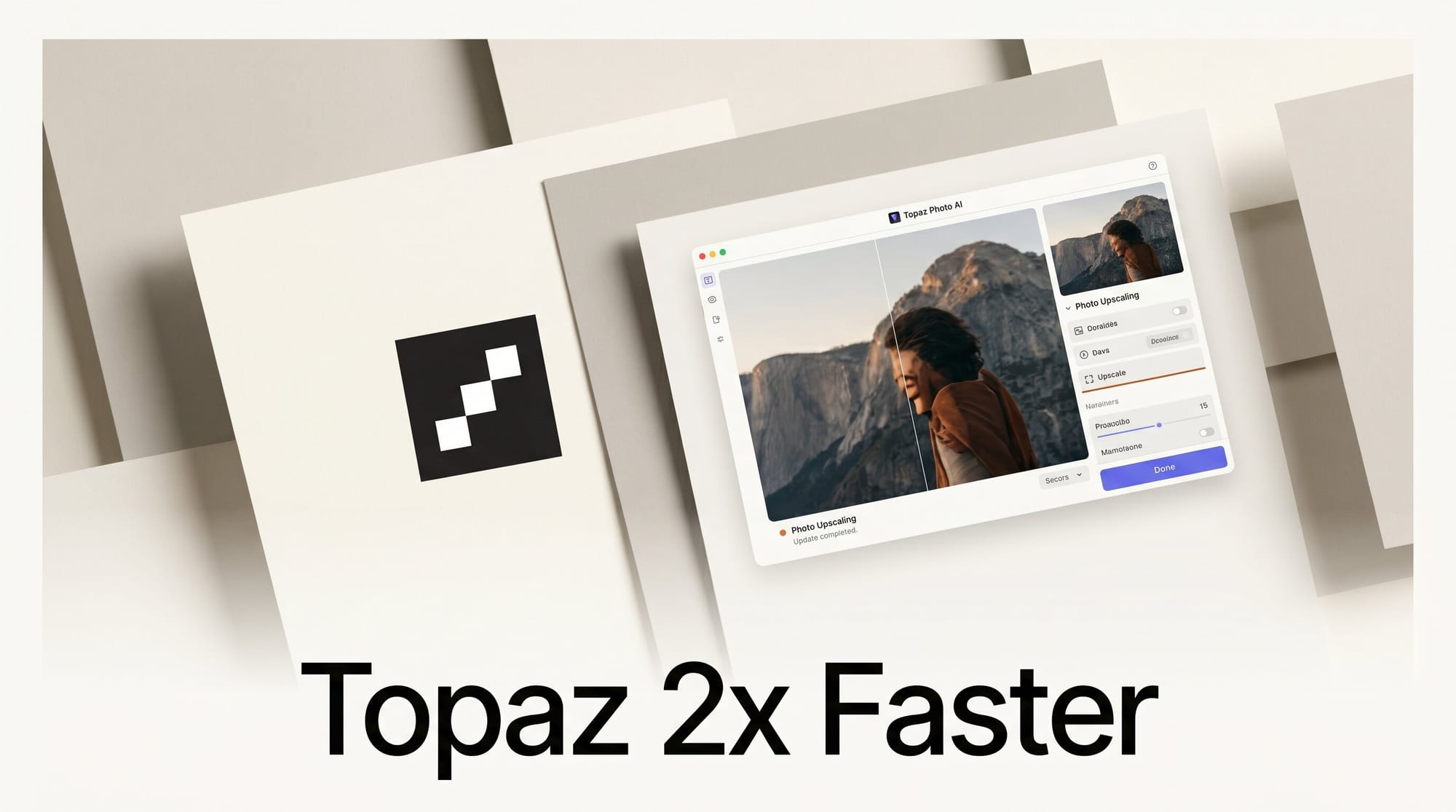
Topaz Labs shipped a Mac-focused speed update on June 12, 2026 that makes upscaling and enhancing images on Apple Silicon 1.7x to 2x faster. The gain comes from NeuroStream 2, Topaz's local acceleration layer, which now runs the GPU and Neural Engine concurrently instead of one after the other.
Try It: Halve Your Render Time on Apple Silicon
Update Topaz Photo to 1.6.1 (or the matching Gigapixel build) on any M1 Mac or newer, then reprocess a batch you already enhanced and compare the clock. The diffusion-based models most creators lean on get the biggest lift: Wonder 2 upscaling runs about 1.74x faster on an M4, Denoise Max clears noise roughly 1.88x faster, and Super Focus 3 sharpening hits 1.90x on an M1. Topaz says a 200MP file now finishes in about half the time, which turns large-batch photo cleanup from a coffee-break job into a near-interactive one.
Why It Matters for Creators
Local AI upscaling has always traded speed for privacy and unlimited runs. By overlapping GPU and Neural Engine work, Topaz closes part of that speed gap without sending your images to a server. For photographers and retouchers clearing hundreds of frames, a 2x throughput jump on hardware you already own is a direct cut to turnaround time and a reason to keep the work on-device. The win is largest on the heaviest diffusion models, which is exactly where local upscaling used to stall and push people toward cloud tools, so the update also changes the math on whether you need a subscription service at all.
Key Details
Speedup: 1.7x to 2x across NeuroServer-based models on Mac.
Hardware: Apple Silicon, M1 and newer.
Affected apps: Topaz Photo and Topaz Gigapixel desktop.
Models accelerated: Wonder 2, Denoise Max, Super Focus 3, Face Recovery 3, detailed in Topaz's Speed Update notes.
What to Do Next
If you bought into Topaz during its April model refresh, this is a free performance upgrade, so update first and rerun your slowest enhancement preset to feel the difference before your next deadline.