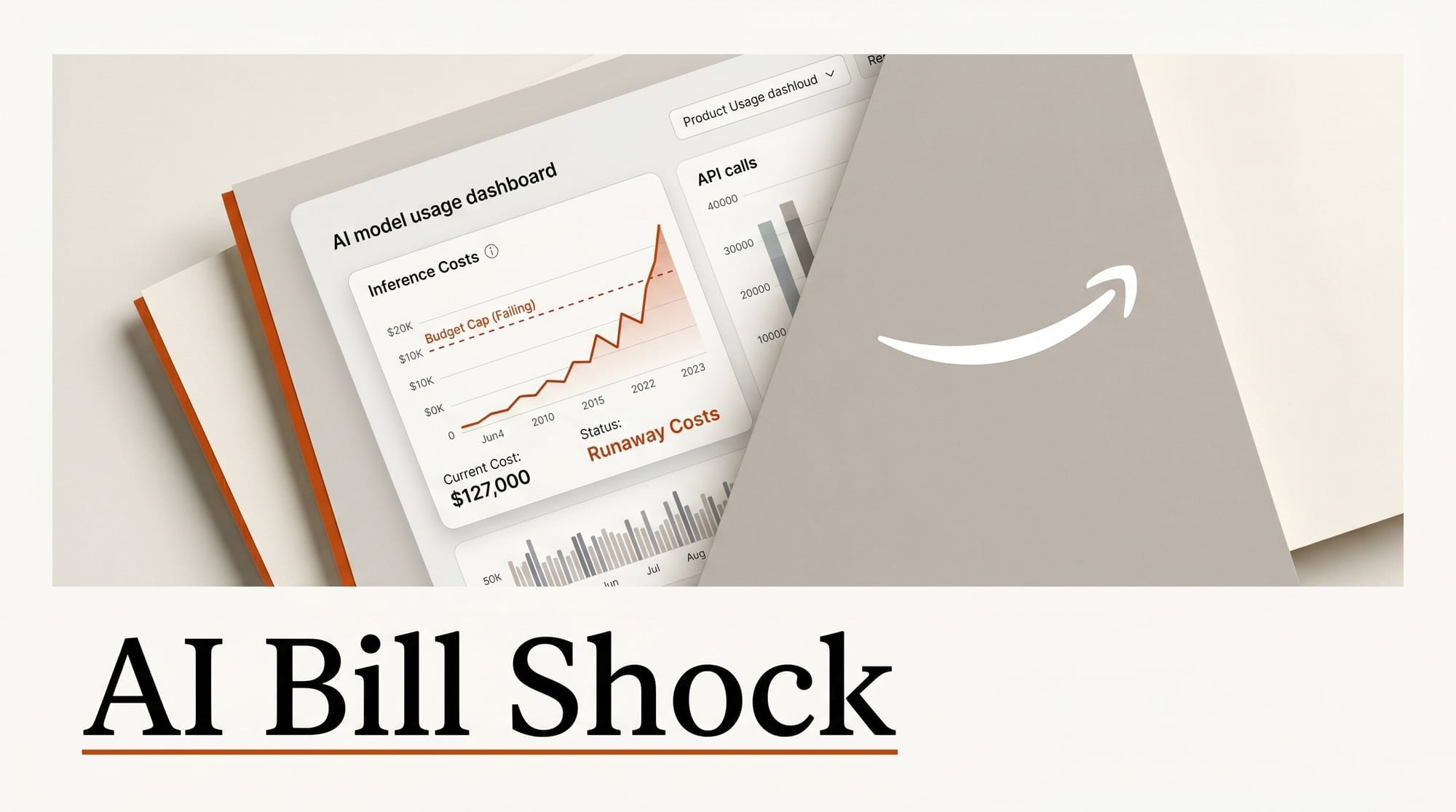
AWS and Google Cloud AI customers are facing surprise bills of up to $127,000 after spending caps failed to stop runaway charges from Gemini, Veo, and Amazon Bedrock, The Register reports.
What Happened
Multiple developers found their Google Cloud and AWS bills far exceeded what their spending limits should have allowed. On Google Cloud, the pattern emerged after a March 2026 automatic tier upgrade silently raised spending caps from $250 to $100,000 without notifying account holders.
One developer discovered a $10,000 bill despite believing his $250 cap was active. Another user was billed $127,000 after his API key was compromised and used to call Veo and Gemini Nano, two of Google Cloud most expensive generative AI models. Multiple other accounts reported $3,000 to $10,000 charges from previously minimal-spend accounts.
On AWS, one developer expected hundreds of dollars in charges on a project using Amazon Bedrock. Instead, he received a bill between $30,000 and $38,000. He had AWS Cost Anomaly Detection active, but it never fired. The reason: Bedrock charges appear through AWS Marketplace billing, which Cost Anomaly Detection does not monitor.
Why It Matters
Creators and developers building AI-powered workflows are operating with a false sense of protection. Spending caps on both platforms turn out to be advisory in many cases, not hard stops. The billing pathways for generative AI services sit outside the controls that standard cloud account management tools monitor.
As one affected user told The Register: "They can see what you are doing... they do not stop it."
This is part of a broader infrastructure cost problem for AI builders. GPU cloud pricing has been rising across the board since late 2025, and surprise billing adds another layer of financial risk for solo creators and small teams that cannot absorb a five-figure accidental charge.
Key Details
- Google Cloud tier upgrades in March 2026 raised spending caps from $250 to $100,000 without user notification
- API keys scoped to basic services like Maps quietly gained access to expensive generative models after tier changes
- Google billing budgets are alerts, not hard stops: the documentation states explicitly that budgets do not block spending
- AWS Bedrock bills via Marketplace, which sits outside the reach of Cost Anomaly Detection entirely
- A compromised or overly permissive API key is the most common vector, frequently traced to public repository exposure
What to Do Next
Audit your API keys today. Restrict each key to the minimum set of APIs it needs, and rotate any key that has ever been in a public repository. On Google Cloud, set per-API quotas at the API level in addition to billing budgets. On AWS, monitor your Bedrock usage and pricing separately from the main Cost Explorer dashboard, since Marketplace charges are excluded from anomaly monitoring.
If you are building a product that calls AI APIs on behalf of users, implement your own usage caps in code. Do not rely on cloud provider billing controls alone to protect you.