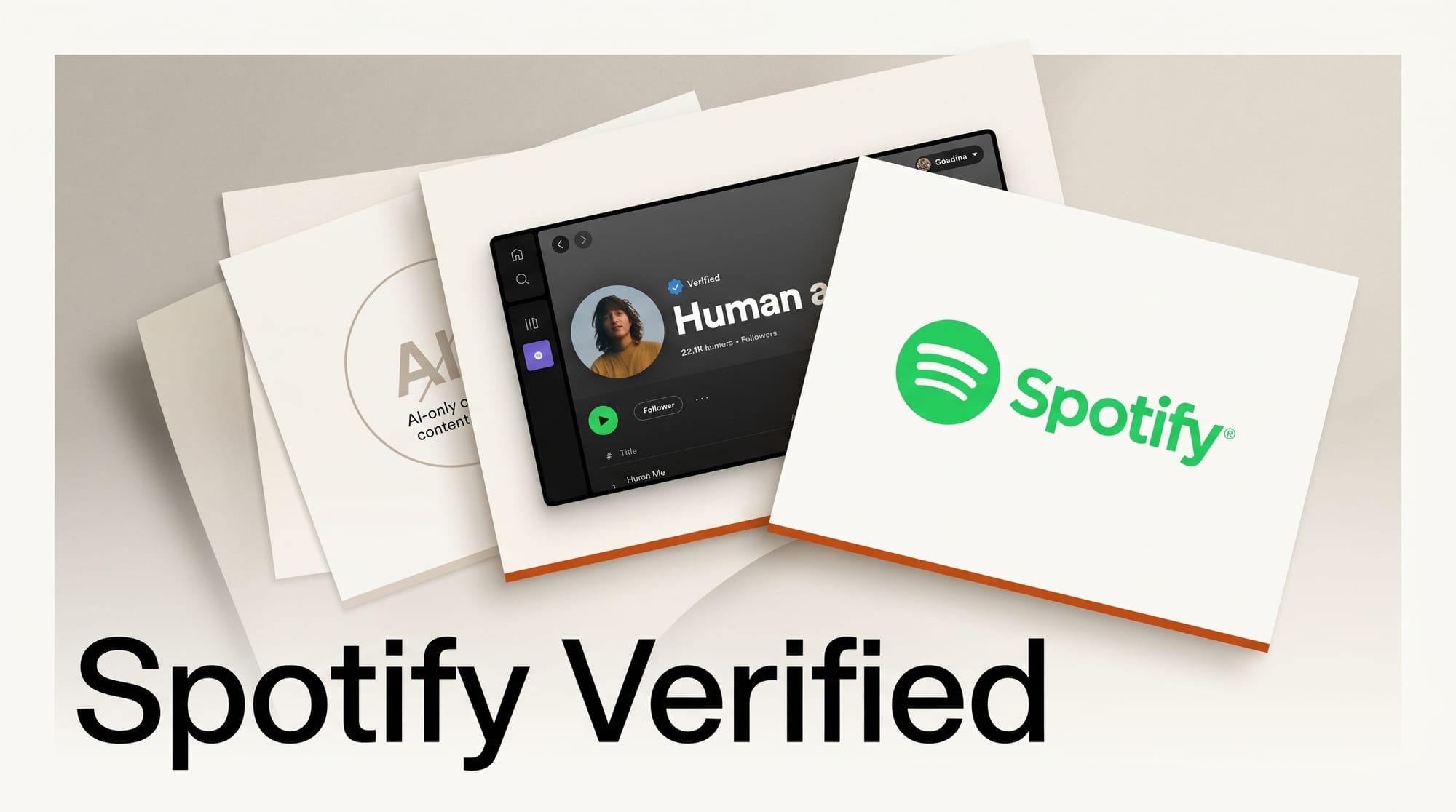
Spotify launched Verified by Spotify on April 30, 2026, a new trust badge that appears on artist profiles and search results across the platform. At launch, over 99 percent of artists that listeners actively search for will carry the badge. Profiles representing primarily AI-generated or AI-persona artists will not qualify.
The move signals that Spotify is drawing a formal line between human creators and AI-generated artist profiles, even as the company acknowledges the policy will need to evolve as AI music tools become more embedded in everyday creative work.
What Happened
The Verified by Spotify badge is a light green checkmark with "Verified by Spotify" text displayed on an artist profile and next to the artist name in search results. Spotify says the badge signals that a profile has been reviewed and meets its criteria for authenticity and trust. Verification uses a combination of automated analysis and human review.
Spotify said the rollout would reach hundreds of thousands of artists, primarily independent creators across all genres and career stages. At launch, the badge explicitly excludes "profiles that appear to primarily represent AI-generated or AI-persona artists," though the company noted it will continue developing its approach as authenticity becomes more complex to assess.
Why It Matters
The Verified by Spotify badge is the first formal platform-level distinction between human and AI-origin artists on any major streaming service. BBC coverage of the launch noted that the move comes as AI-generated music has flooded streaming platforms, prompting listener confusion about which profiles represent real artists. For working musicians, the badge creates a visible credibility marker tied to real-world presence: concert dates, merchandise, linked social accounts, and consistent listener engagement over time.
The badge also matters commercially. A verified checkmark in search results affects how listeners perceive and click on an artist. Spotify has not said whether the badge influences algorithmic placement, but platforms routinely use verification status as a trust signal in recommendation systems. Independent musicians who rely on Spotify for discovery have a new incentive to ensure their profile signals align with Spotify requirements.
Key Details
The three eligibility criteria Spotify outlined are:
- Sustained engagement: Consistent listener activity over time, not a single popularity spike
- Platform compliance: Content and account behavior that conform to Spotify policies
- Real artist signals: Identifiable presence on and off platform, including concert dates, merchandise, and linked social accounts
Profiles that "primarily represent" AI-generated or AI-persona artists are not eligible at launch. Spotify did not define a precise threshold for what constitutes "primarily" AI-generated, leaving ambiguity for hybrid workflows. An artist who uses AI tools to produce stems, masters tracks with AI, or generates visual assets with AI but performs live and maintains an active social presence would likely qualify under the current criteria.
The AI music space has expanded quickly. Tools like ElevenLabs ElevenMusic give independent musicians remixing and publishing capabilities that did not exist two years ago. Spotify has not said whether using these tools affects verification eligibility, provided the artist is a real human with a real audience.
What to Do Next
Musicians who want to qualify for Verified by Spotify should connect their profile through Spotify for Artists, which is where the review process operates. The checklist that matters most is practical: maintain active tour or show dates in the profile, link social accounts, and build consistent monthly listeners over time rather than relying on one viral moment.
If your process uses AI production tools, the badge criteria focus on whether the artist behind the profile is a real human with real-world presence, not on which software was used to make the music. For a broader map of where AI fits into the modern music production stack, the AI music and audio guide covers the current landscape of tools from generation to mastering.