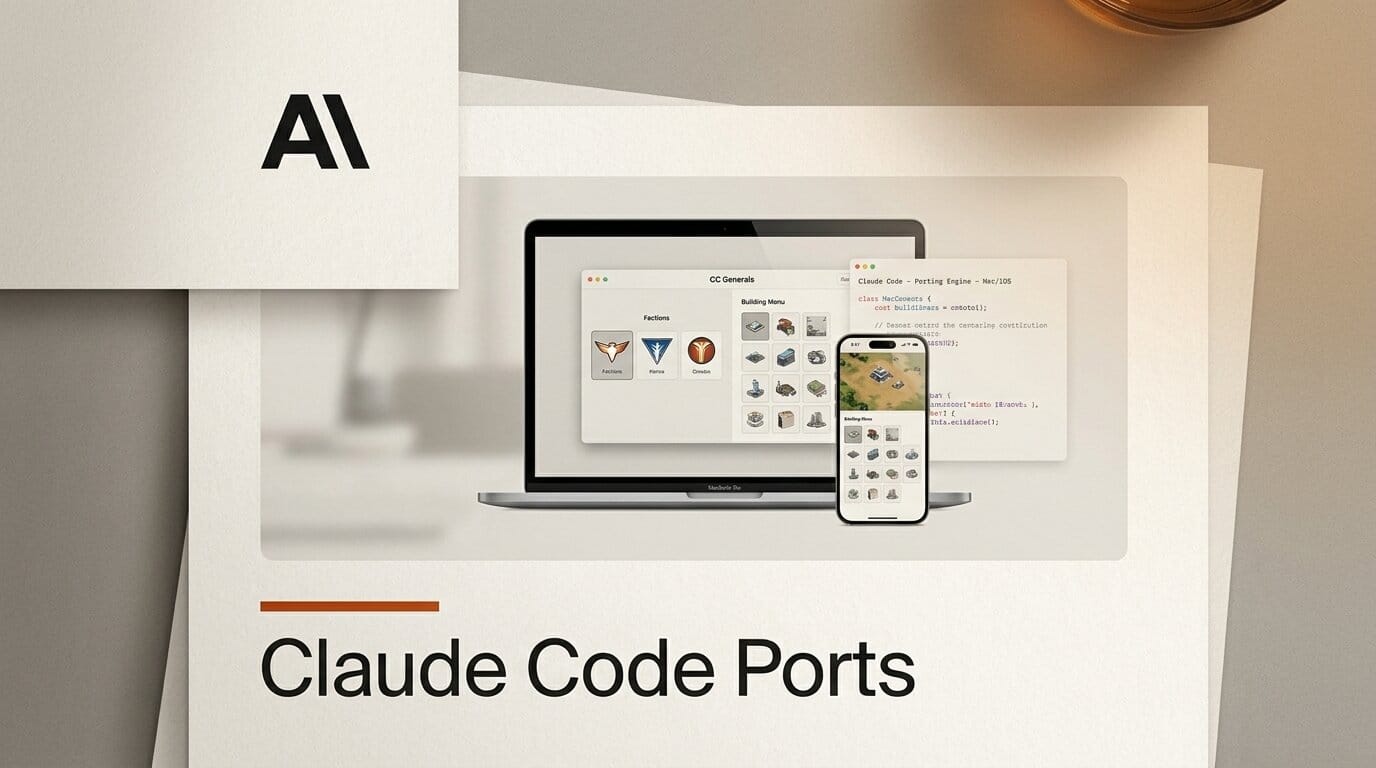
An AI coding agent just shipped something most engineering teams would budget months for. Claude Code, running Anthropic's Fable model, engineered a native port of the 2003 real-time strategy classic Command and Conquer Generals: Zero Hour to Apple Silicon, iPhone, and iPad, with designer Ammaar Reshi directing and playtesting on real devices. The project hit the top of Hacker News on July 4.
What This Enables for Builders
The port is a working proof that an AI coding agent can take on large legacy C++ modernization, not just greenfield scripts. The hard part was graphics: the original game renders through DirectX 8, which does not exist on Apple platforms. Claude Code wired up a translation pipeline that routes DirectX 8 through DXVK to Vulkan and then MoltenVK to Metal, then added touch controls so an RTS built for a mouse plays on a phone. If you maintain an aging codebase, the same pattern applies: point the agent at the source, define the target platform, and let it grind through the API translation and build scripts while you direct and test.
Why It Matters for Creators
Anthropic's Fable model is the same Mythos-class flagship that came back online on July 1, and this port shows what it does outside a chat window. For indie developers and creative technologists, the takeaway is that porting, preservation, and cross-platform builds are no longer gated behind a specialist graphics engineer. The full engineering log is published in the repo as an unedited human-plus-AI collaboration record, so you can read exactly how the agent reasoned through each blocker.
Key Details
Source base: EA released the full Zero Hour source under GPL v3 at electronicarts/CnC_Generals_Zero_Hour, and this build layers on the fbraz3/GeneralsX macOS and Linux fork.
Render stack: DXVK plus MoltenVK translate the DirectX calls to Metal, with SDL, OpenAL Soft, and FFmpeg handling input, audio, and video.
Assets: No game assets ship with the repo. You supply your own from an authorized Steam copy (around $5) via the included asset script.
Platforms: macOS on Apple Silicon, iPhone, and iPad. The iOS build needs Xcode and an Apple Developer team ID to sign.
What to Do Next
Clone the repo, run the macOS build and deploy scripts, and point the asset fetcher at your Steam install to see the port on your own machine. Builders sitting on legacy C or C++ projects should treat the published port log in the docs folder as a template for their own agent-driven modernization; the Hacker News discussion collects additional community context and caveats.