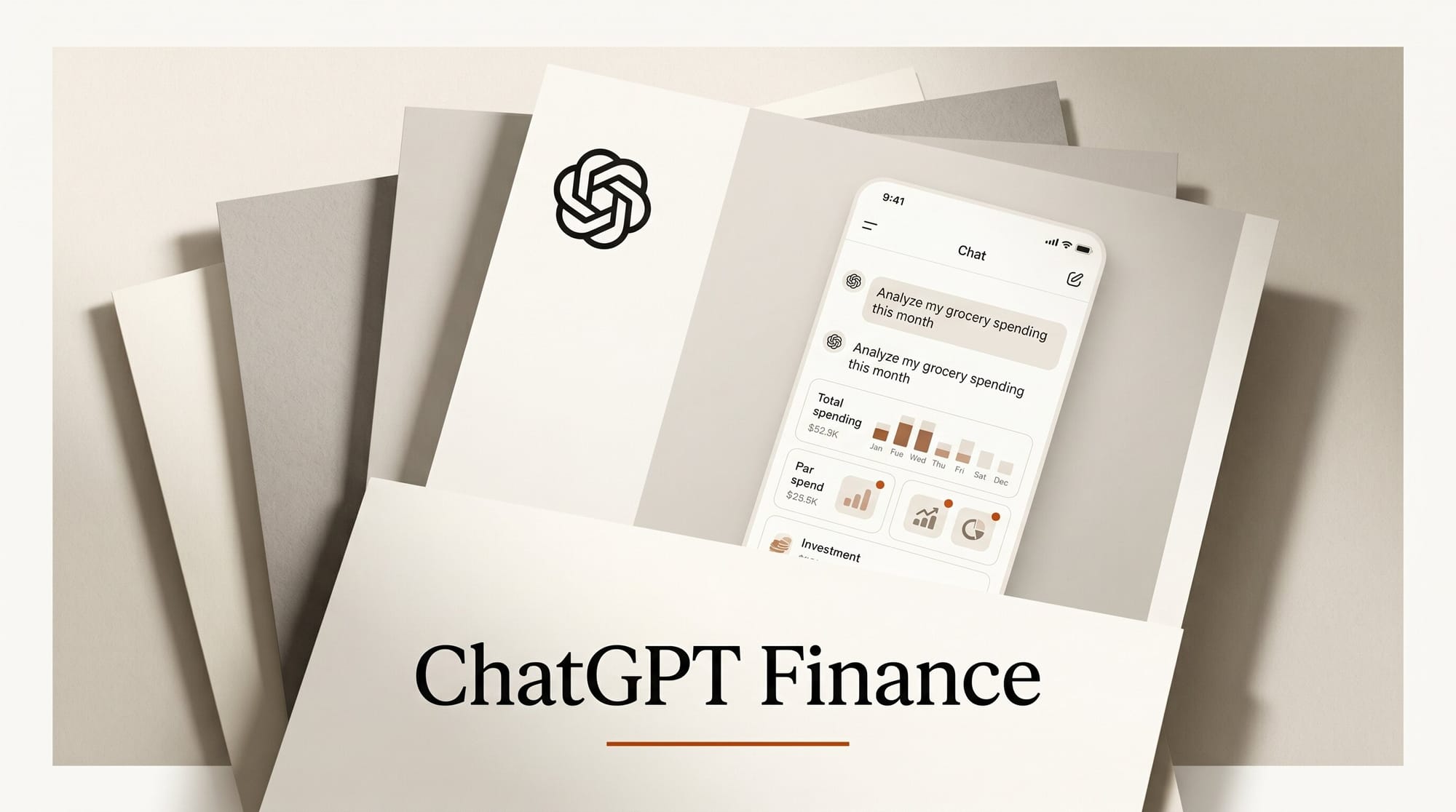
OpenAI launched ChatGPT Personal Finance on May 15, 2026, giving Pro subscribers in the United States the ability to connect bank accounts through Plaid and ask natural language questions about spending, cash flow, and investments. The feature connects to over 12,000 financial institutions including Chase, Schwab, Fidelity, Robinhood, American Express, and Capital One.
What Happened
OpenAI partnered with Plaid, the financial data aggregator used by apps like Venmo and Betterment, to bring live banking data directly into ChatGPT conversations. Once connected, users see a dashboard covering portfolio performance, spending by category, active subscriptions, and upcoming payments. The AI can answer questions like "How much did I spend on software tools last quarter?" or "Which subscriptions can I cut to save $200 a month?"
The integration is read-only. ChatGPT can view balances, transactions, investments, and liabilities but cannot move money or access full account numbers. Connections are managed through Plaid token-based authentication, meaning banking passwords never touch OpenAI servers.
Why It Matters for Independent Creators
Freelancers and independent creators often run their entire business from a single bank account with no dedicated accounting software. According to TechCrunch, OpenAI designed this feature for users who want conversational access to financial data rather than a traditional dashboard. That maps directly to how solo creators already work: they ask questions in plain language, not spreadsheets.
With real transaction data in context, ChatGPT can identify which AI tool subscriptions are most expensive, flag recurring charges that have increased quietly, and help project cash flow during slow creative seasons. This follows a pattern of OpenAI expanding ChatGPT beyond pure chat into a platform that acts on real-world data. Intuit integration is announced as coming soon, which would let creators analyze how a project sale affects their taxes or whether they qualify for a business credit card.
Key Details
- Availability: ChatGPT Pro subscribers in the United States, on the web and iOS
- Access: Select "Finances" in the sidebar or type "@Finances, connect my accounts" in any conversation
- Institutions: 12,000+ including Chase, Schwab, Fidelity, Robinhood, American Express, Capital One
- Data visible: Balances, transactions, investments, liabilities (read-only, no account numbers)
- Data removal: Disconnecting removes synced data within 30 days
- Coming soon: Intuit integration for tax impact and credit analysis
Creator Outcome: Three Prompts to Try This Week
If you are a ChatGPT Pro subscriber, connect your business bank account and try these queries:
- "List every recurring subscription charge from the past 90 days and flag any that increased." Surfaces tool cost creep faster than manually reviewing statements.
- "Compare my income from the last three months and project next month based on the pattern." Useful for freelancers with variable project cycles.
- "Which spending category grew the most this quarter compared to last quarter?" Helps audit whether AI tool subscriptions are returning value relative to cost.
This is the first time ChatGPT has accessed live, structured external data tied directly to users finances. It signals where agentic AI is heading: less chat interface, more operating layer for your actual business. Full coverage at 9to5Mac and Engadget.