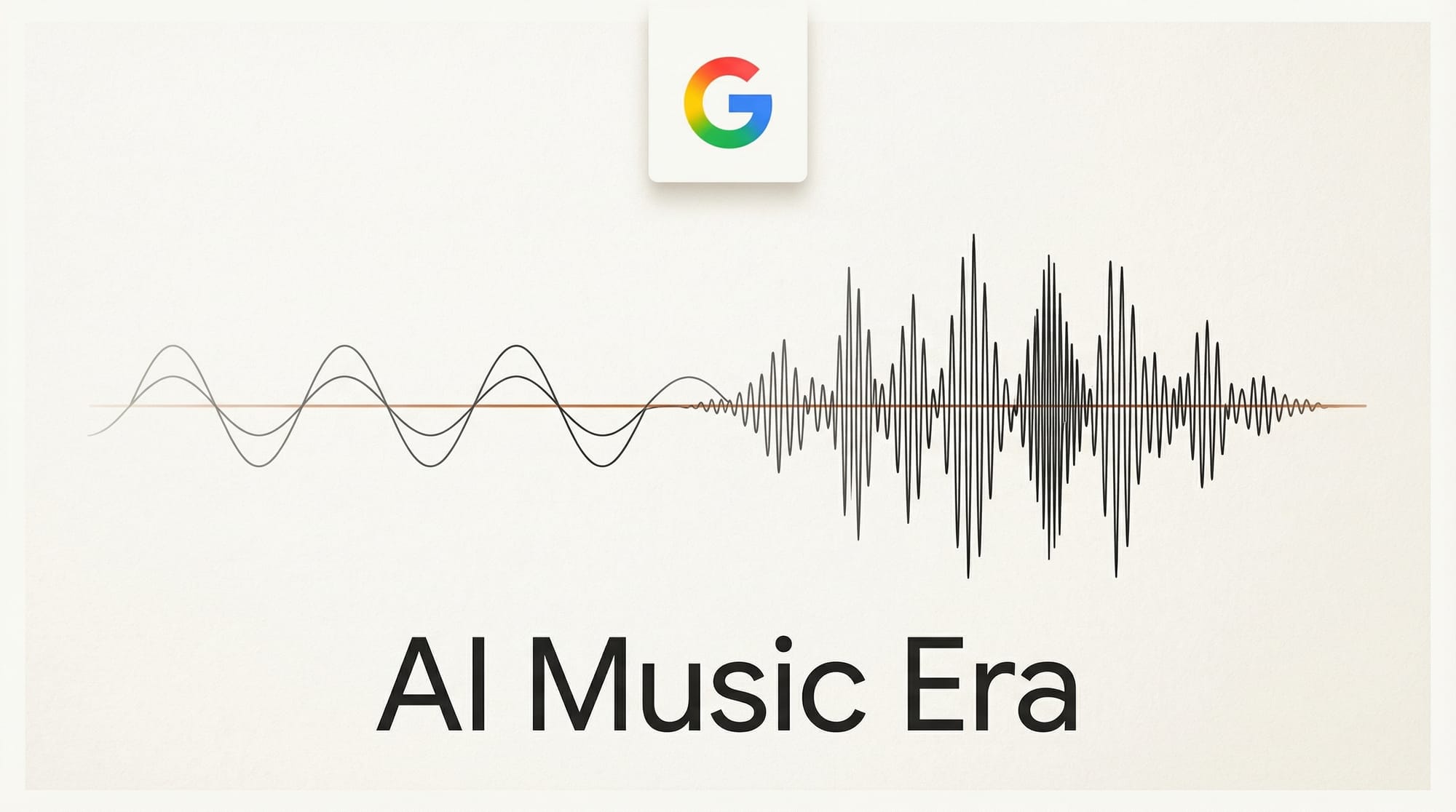
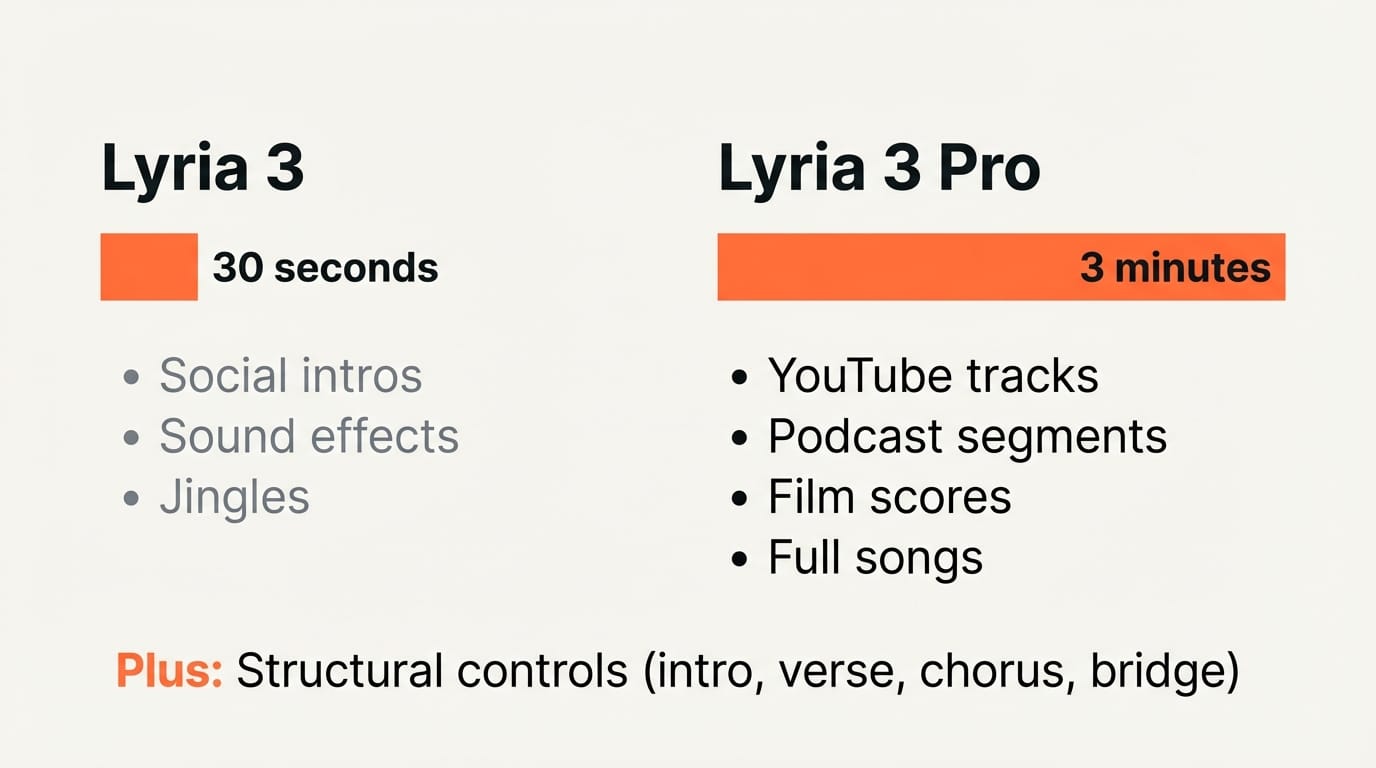
Google launched Lyria 3 Pro on March 25, a music generation model that creates full-length tracks up to three minutes with structural controls for intros, verses, choruses, and bridges. The release coincides with the integration of the acquired ProducerAI platform and a developer API through Gemini. One day after OpenAI shut down Sora, Google is staking its claim as the only major tech company investing across the entire creative AI stack.
Background
Google's music generation ambitions started with Lyria 1 in late 2023, followed by Lyria 2 in mid-2025 with instrumental-only output capped at 30 seconds. Lyria 3 launched February 18, 2026, keeping the 30-second limit but adding vocal generation in multiple languages. Lyria 3 Pro, announced five weeks later, removes the duration ceiling and adds song structure awareness.
In parallel, Google acquired ProducerAI (formerly Riffusion) in February 2026. Riffusion started as an open-source hobby project by Seth Forsgren and Hayk Martiros in December 2022, went viral, raised $4 million from Greycroft, and rebranded to ProducerAI in July 2025. The acquisition brought the entire team into Google Labs and DeepMind, where the platform now runs on Lyria 3, Gemini, and Veo.
The timing is deliberate. OpenAI discontinued Sora on March 24, retreating from consumer creative AI. Google launched Lyria 3 Pro the next day, signaling the opposite strategy: deeper investment in creative tools across music, video, and image generation.
Deep Analysis
Three Minutes Changes Everything
The jump from 30 seconds to three minutes is not incremental. Thirty-second clips serve social media intros and sound effects. Three minutes covers a full YouTube background track, podcast segment, or short film score. It moves AI music generation from a novelty into a functional production tool.
More significant than duration is structural control. Users can prompt Lyria 3 Pro for specific arrangements: a quiet piano intro building into a verse, a chorus with full instrumentation, a bridge that strips back to vocals. The DeepMind team trained the model on compositions with labeled sections, teaching it how professional tracks are arranged rather than treating songs as continuous audio streams.
Vocals in multiple languages across genres from pop to funk expand the addressable use cases. Combined with crisp audio quality and structural awareness, Lyria 3 Pro produces output that is closer to a first draft than a demo reel. For creators who need background music and cannot justify licensing fees or hiring a composer, the gap between "AI-generated" and "good enough for production" just narrowed considerably.
The Developer API Opens a New Market Layer
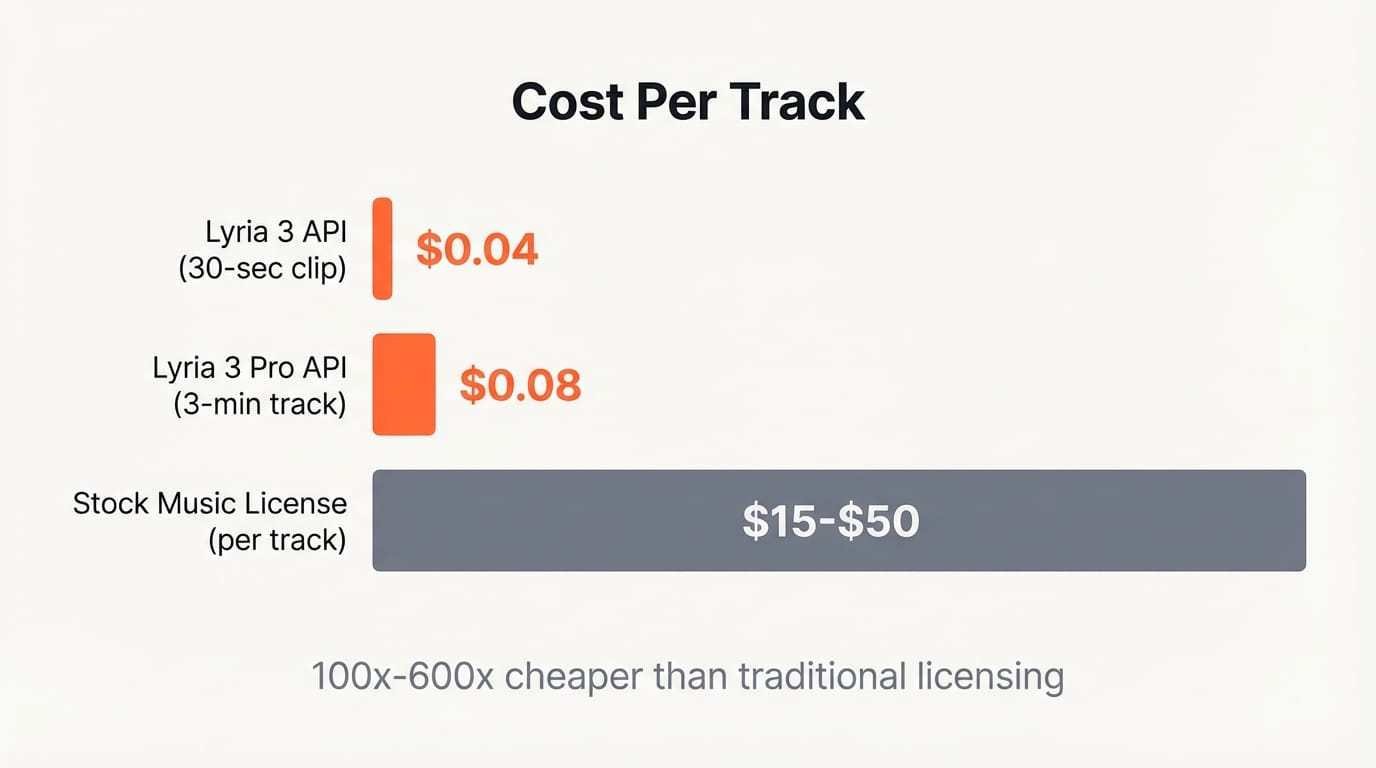
Google released Lyria 3 for developers through the Gemini API at $0.04 per 30-second clip and $0.08 per full three-minute track. For context, licensing a single stock music track typically costs $15 to $50. At eight cents per generation, developers can offer "generate a soundtrack" as a feature in video editors, game engines, and podcast platforms at negligible marginal cost.
This is the first time a major tech company has offered music generation as an API primitive at scale. Suno built its own model. ElevenLabs built its own model. Smaller creative tools had to either build from scratch, license from a startup, or go without. Google's API changes that calculus. Any app with a Gemini API key can now add music generation, the same way they might add text completion or image recognition.
The enterprise play through Vertex AI extends this further. Large-scale content platforms, ad networks, and media companies can integrate music generation into automated workflows. The Lyria 3 model card shows Google has built the safety infrastructure (SynthID watermarking, content deduplication filters) that enterprise customers require before deploying generative audio.
ProducerAI Adds the Creative Layer Google Lacked
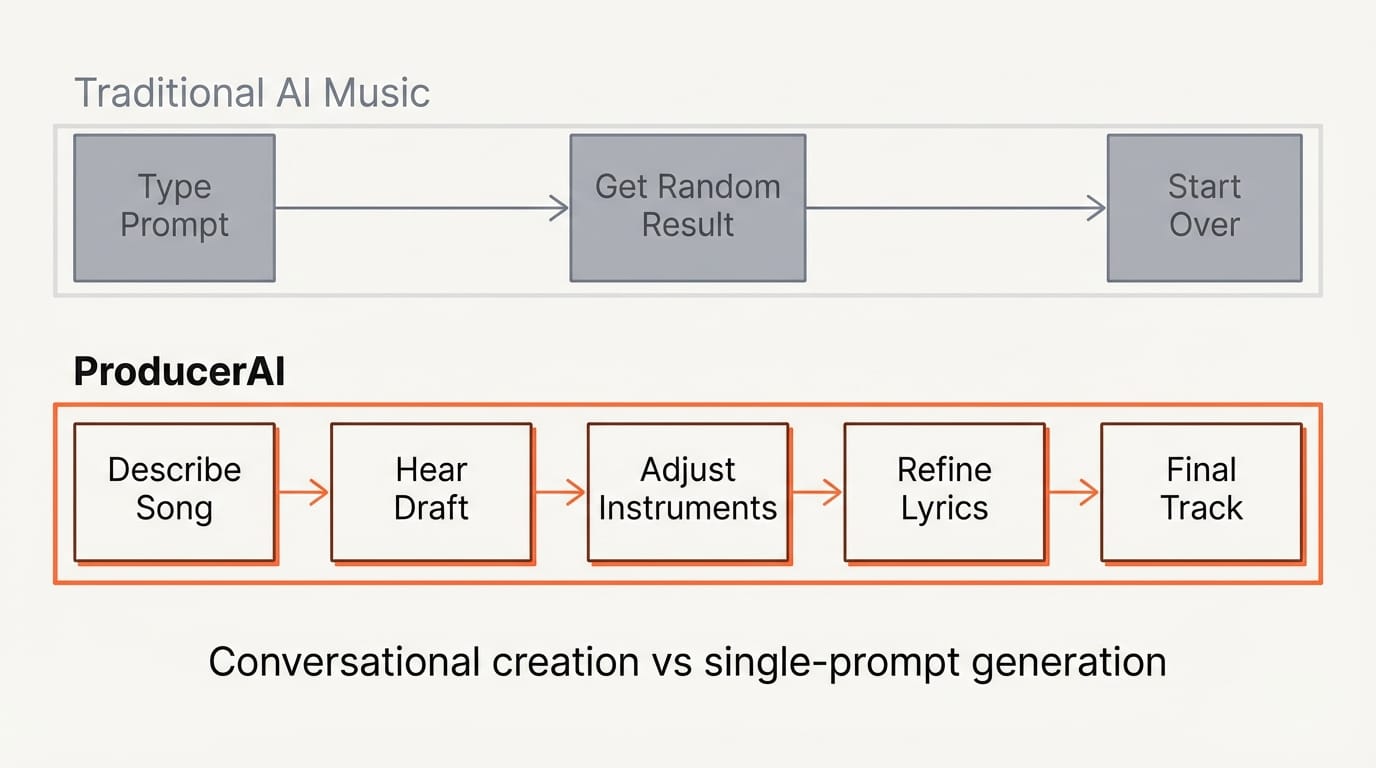
Google's weakness in creative AI has always been user experience. Its models are technically strong, but the interfaces feel like engineering demos. ProducerAI solves this. The platform offers conversational music creation where users iterate on tracks through natural language rather than submitting a single prompt and hoping for the best.
Key distinction from competitors: ProducerAI is not what its founders call a "slot machine." Instead of typing a prompt and getting a random result, users have a back-and-forth conversation with the AI, requesting changes to specific instruments, adjusting effects, and rendering new lyrics. The planned "Spaces" feature will let artists create custom instruments and effects through natural language descriptions.
The acquisition brought notable music industry relationships. The Chainsmokers, Wyclef Jean, and other artists tested Lyria during development. Wyclef used it on his track "Back From Abu Dhabi." These connections give Google credibility with professional musicians that pure technology companies typically lack. ProducerAI's pricing tiers (free to $48 per month) also give Google a direct-to-creator revenue model alongside API fees.
The Competitive Landscape Shifts
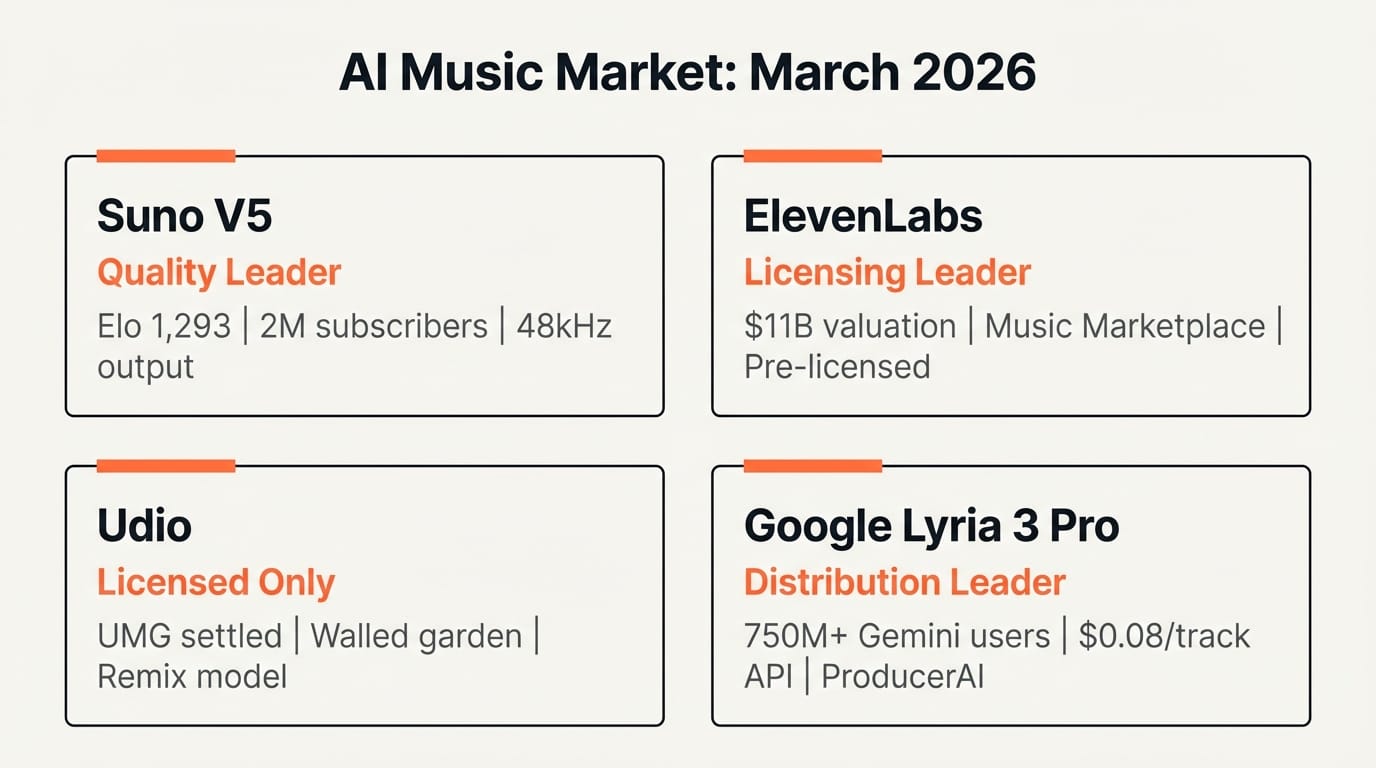
The AI music market has four serious players. Suno V5 leads on audio quality with the highest Elo score (1,293), 48kHz broadcast-quality output, multi-stem export, and a built-in DAW. Two million paid subscribers generate seven million tracks per day. ElevenLabs raised $500 million at an $11 billion valuation and launched a Music Marketplace for creators to monetize AI-generated tracks. Udio is pivoting to a fully licensed model after settling with Universal Music Group, rebuilding as a "walled garden" for remixes and mash-ups.
Google's advantage is distribution. Lyria 3 Pro is embedded in the Gemini app (750 million-plus monthly active users), Google Vids, ProducerAI, and Vertex AI for enterprise. No competitor has this breadth. Suno has the best model. ElevenLabs has the strongest licensing position. But Google has the largest user base and the deepest API integration story.
The unresolved tension is legal. A 118-page class action lawsuit filed March 6 alleges Google trained Lyria on roughly 44 million clips extracted from YouTube. The case names Google as both the platform that hosts the music and the company that trained on it, a dual role that Suno and Udio do not share. How Google resolves this will determine whether its distribution advantage translates to lasting market position or becomes a legal liability.
Impact on Creators
For video creators, podcasters, and game developers, Lyria 3 Pro means background music is now functionally free. Eight cents per track with structural controls eliminates the need for stock music subscriptions for many use cases. The quality is not yet at the level of a professional composer, but for YouTube videos, social content, and indie games, it clears the bar.
Music producers face a more complex picture. ProducerAI positions itself as a collaborator rather than a replacement, and its conversational interface supports iterative creative workflows. But the pricing ($0.08 per generated track at the API level) puts downward pressure on the stock music and production music markets. Spotify deleted 75 million AI-generated tracks last year, and roughly 50,000 new AI tracks upload daily. The flood will accelerate.
All output carries SynthID watermarks, which means AI-generated music can be detected and potentially filtered by platforms that choose to do so. Creators should understand that Lyria 3 Pro tracks are permanently marked as AI-generated, which may affect distribution on platforms that implement AI content policies.
Key Takeaways
- Lyria 3 Pro extends AI music generation from 30-second clips to three-minute tracks with full song structure control, crossing the threshold from novelty to production tool.
- The developer API at $0.08 per track enables any app to add music generation, creating a new market layer that previously required building a dedicated model.
- Google's ProducerAI acquisition adds a conversational creative interface and music industry relationships that pure technology approaches lack.
- Google is now the only major tech company investing across the full creative AI stack (text, image, video, music) as OpenAI retreats from creative tools.
- An active class action lawsuit over training data from YouTube remains the biggest risk to Google's music generation ambitions.
What to Watch
Watch the class action lawsuit closely. If Google is forced to license training data retroactively or restrict Lyria's output, the cost structure changes dramatically. Suno and ElevenLabs, which have proactively built licensing relationships, would benefit from any legal outcome that raises Google's costs.
ProducerAI's full integration timeline matters. The "Spaces" feature for custom instruments via natural language could differentiate Google from the prompt-in, track-out model that every competitor uses. If Google can make music creation genuinely iterative and collaborative through AI, it would open workflows that current tools cannot support. The Flowtonik AI DAW is betting on a similar vision of AI-assisted music production.
Finally, watch Google Vids. Automatic soundtrack generation inside a video editor removes a significant friction point in content creation. If the Lyria integration works well, Google Vids becomes a compelling end-to-end creation tool for creators who want video, audio, and music in one workflow.
This story was covered by Creative AI News.
Subscribe for free to get the weekly digest every Tuesday.