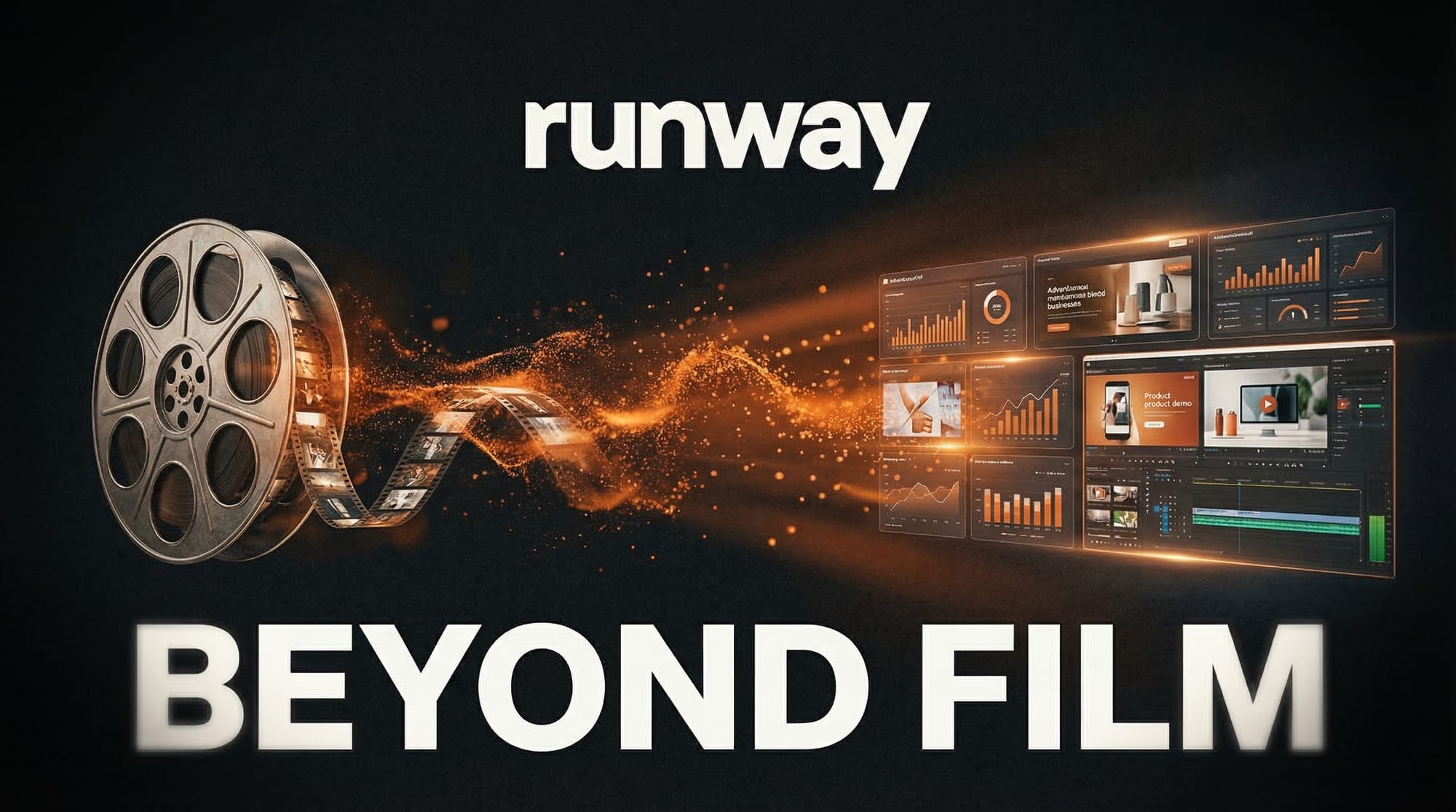
Runway launched an internal incubator called Runway Labs on March 12, 2026, to explore applications of its generative video and world model technology outside filmmaking. Co-founder Alejandro Matamala Ortiz is leading the new team, which targets healthcare, education, gaming, retail, and training as its first expansion areas.
What Happened
Runway has been the default name in AI video generation for filmmakers since its Gen-1 model debuted in 2023. Its current models, Gen-4 and Gen-4 Turbo, produce high-quality video from text and image inputs. But until now, the company's product roadmap has focused almost entirely on creative professionals in film, advertising, and content production.
Runway Labs changes that direction. The new incubator is an internal team dedicated to finding non-creative applications for Runway's core technology. The initial focus spans five sectors: healthcare (surgical simulation and medical training), education (interactive learning environments), gaming (real-time asset and cutscene generation), retail (virtual try-on and product visualization), and industrial training (safety simulations and procedural walkthroughs).
Matamala Ortiz, who co-founded Runway alongside CEO Cristobal Valenzuela, is running the incubator directly. That level of founder involvement signals this is not a side experiment. Runway is treating enterprise and industrial applications as a core growth vector.
Why It Matters for Creators
For creators already using Runway, this expansion could mean better models. Enterprise clients in healthcare and training demand higher accuracy, physical consistency, and longer coherent outputs than typical creative workflows. If Runway builds models that satisfy those requirements, the improvements will flow back into the creative tools.
The move also reflects a broader pattern in generative AI video. Companies that started with creative use cases are discovering that the technology has higher-value applications in enterprise. Luma's Creative AI Agents already demonstrated this shift by targeting advertising agencies with orchestrated production pipelines. Runway Labs takes it further by moving into industries where video generation has never been applied at scale.
For independent creators, the competitive landscape matters too. As Runway invests engineering resources in enterprise features, competitors like Kling 3.0 and LTX Video 2.3 may gain ground on the creative side. Creators should keep testing multiple platforms rather than committing exclusively to one provider.
What to Do Next
If you work in healthcare, education, gaming, retail, or training and have been exploring AI video, watch Runway's announcements for early access programs. Enterprise incubators at this stage typically recruit pilot partners before opening general availability.
For filmmakers and content creators, nothing changes immediately. Gen-4 and Gen-4 Turbo remain Runway's flagship creative tools. But pay attention to model updates over the next six months. Enterprise-driven improvements to physical accuracy and scene consistency will benefit everyone using the platform.
If you are building workflows that depend on AI video, diversify your toolchain. The AI video market is expanding rapidly, and no single provider will dominate every use case. Test your core workflows across at least two platforms to avoid lock-in as the market evolves.
This story was covered by Creative AI News.
Subscribe for free to get the weekly digest every Tuesday.